Red Yucca
Scientific Name: Hesperaloe parviflora
Plant Family: Asparagaceae
Native Region: Chihuahuan Desert of Texas and northern Mexico
Brief Description
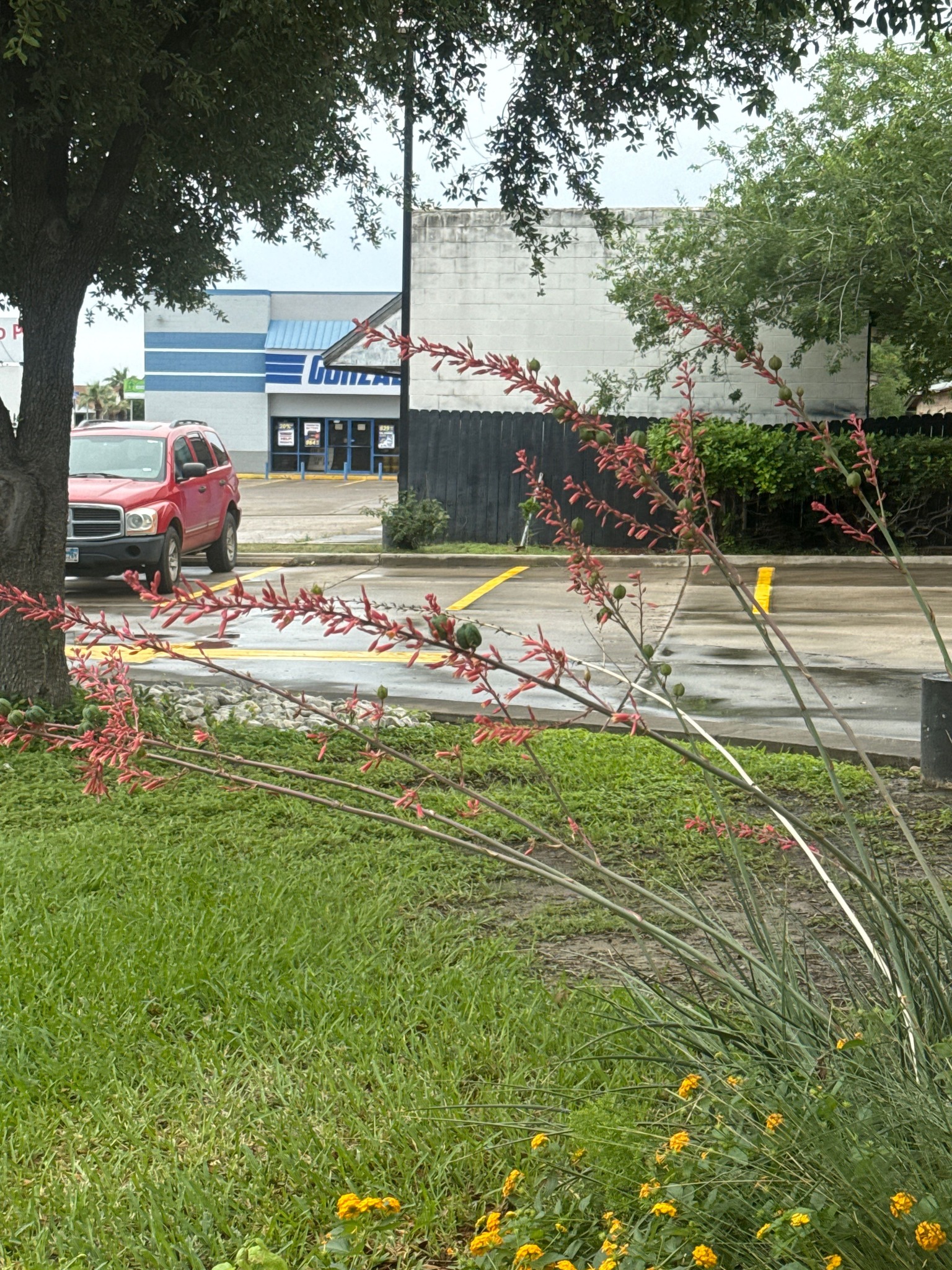
A stemless evergreen succulent with arching, grass-like blue-green leaves that have white fraying fibers along the edges. It produces tall, slender stalks with tubular red or coral flowers.
Care Instructions
Low-maintenance. Plant in full sun with well-draining soil. Water sparingly once established; avoid overwatering to prevent root rot. No heavy fertilization required.
Medicinal Value
We do not currently provide medicinal value for plant identifications.
Sunlight
Full sun (6+ hours per day) for best blooming, but can tolerate light shade.
Watering
Very low; drought-tolerant. Water every 2-3 weeks in summer if no rain. Over-watering causes yellowing and root rot.
Soil
Well-drained sandy or gravelly soil; adaptable to various pH levels but prefers slightly alkaline.
Hardiness Zone
Zones 5 to 10; very heat and cold tolerant.
Growth Habit
Perennial succulent forming a clump. Reaches 2-3 feet tall/wide, with flower spikes reaching up to 5 feet.
Bloom Season
Spring through mid-summer; produces spikes of tubular, coral-red to pink flowers that attract hummingbirds.
Toxicity
Generally considered non-toxic to humans. Saponins in some Yucca-like plants may cause mild stomach upset in pets if large quantities are ingested.
Propagation
Easily propagated by seed or by dividing the offsets (pups) from the base of the parent plant in spring.
Common Pests & Issues
Aphids on flower stalks and root rot in damp, heavy soils. Scale insects may occasionally occur.
Similar Species
Yucca filamentosa (Adam's Needle) has wider, stiffer leaves and white flowers. Aloe species have fleshier leaves with spines.
Interesting Facts
Despite its common name, it is not a true Yucca but belongs to the Hesperaloe genus. Its flowers are highly attractive to hummingbirds and bees.
Created At: 2026-04-19T17:22:00.025319