Oregano
Scientific Name: Origanum vulgare
Plant Family: Lamiaceae (Mint family)
Native Region: The Mediterranean region and Western and Southwestern Eurasia; naturalized in many parts of North America.
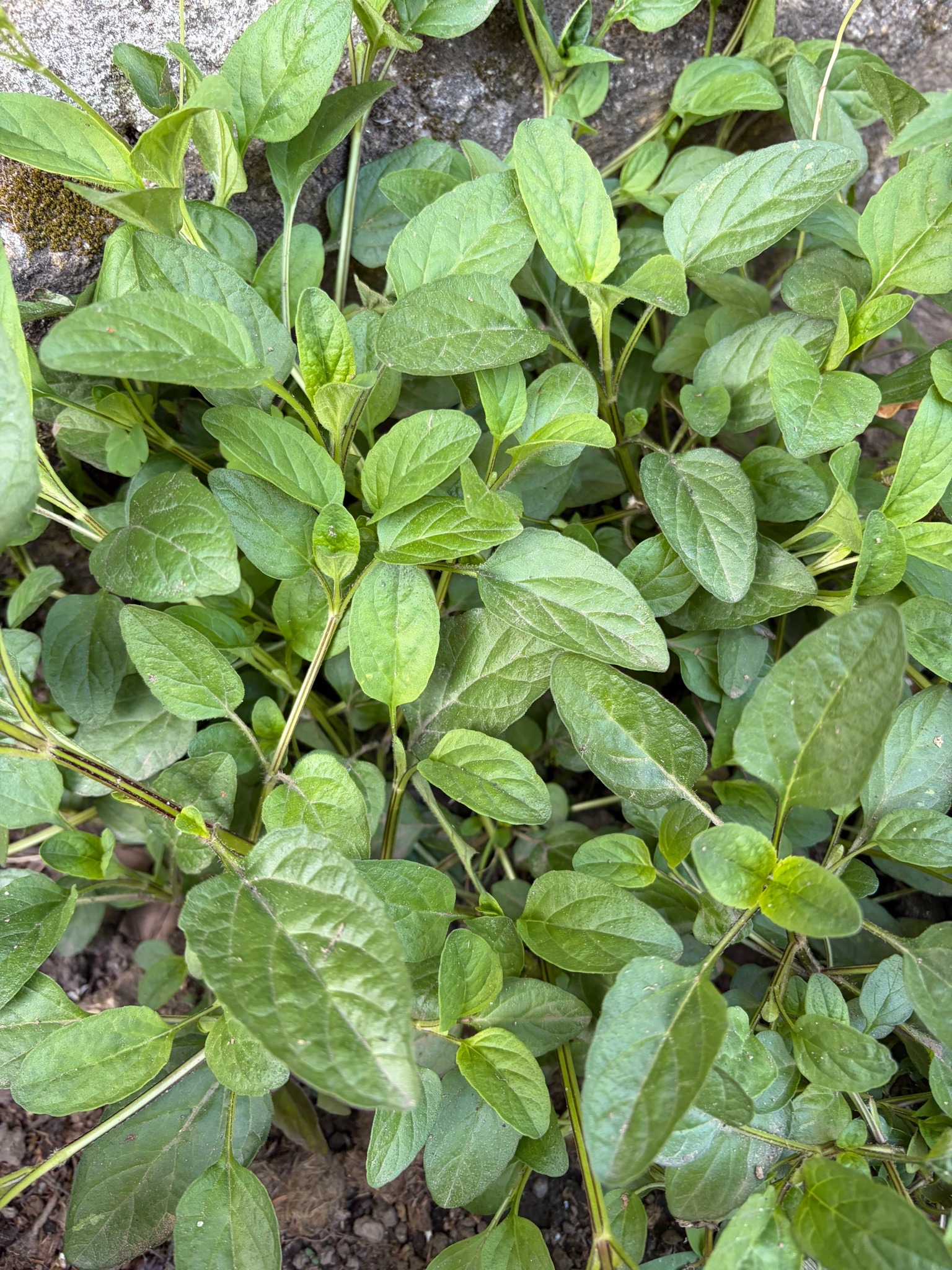
Brief Description
A perennial herb known for its aromatic, small, oval, grayish-green leaves and square stems. It grows in dense clumps or as a low-spreading groundcover.
Care Instructions
Oregano is a hardy plant. It thrives in full sun and well-drained soil. Avoid overwatering; allow the soil to dry out between sessions. Prune back regularly to encourage bushy growth and prevent the plant from becoming woody.
Medicinal Value
We do not currently provide medicinal value for plant identifications.
Sunlight
Full sun (6-8 hours per day) for the best flavor and oil production; can tolerate partial shade in hot climates.
Watering
Low to moderate watering. Once established, it is fairly drought-tolerant. Water only when the top inch of soil feels dry. Signs of overwatering include yellowing leaves and root rot.
Soil
Well-drained, sandy or loamy soil with a neutral to slightly alkaline pH (6.5 to 8.0). It generally performs better in poor soil than in overly rich, moist soil.
Hardiness Zone
USDA Zones 4 through 10; it is very cold hardy but may die back to the ground in severe winters.
Growth Habit
Herbaceous perennial. It can grow up to 1-2 feet tall and spread 1.5 feet wide. It has a mounding or trailing growth habit.
Bloom Season
Mid-summer to early autumn. Produces tiny white, pink, or purple flowers on spikes, which are attractive to pollinators like bees and butterflies.
Toxicity
Generally non-toxic to humans in food quantities. However, it can cause digestive upset in cats, dogs, and horses if consumed in large amounts (concentrated oils are more problematic).
Propagation
Easily propagated by stem cuttings in spring or summer, root division in spring/fall, or by seed (though seeds may not always come true to variety).
Common Pests & Issues
Susceptible to root rot if soil drainage is poor. Pests include aphids, spider mites, and leaf miners, though they are rarely a significant problem.
Similar Species
Sweet Marjoram (Origanum majorana) which has a milder, sweeter taste and lacks the 'heat' of oregano. Wild Marjoram is also very similar but often less flavorful.
Interesting Facts
Oregano’s name comes from the Greek words 'oros' (mountain) and 'ganos' (joy), meaning 'joy of the mountains'. Ancient Greeks believed that if cows grazed on oregano, their meat would be tastier.
Created At: 2026-04-22T16:16:53.751271