Pin Oak
Scientific Name: Quercus palustris
Plant Family: Fagaceae
Native Region: Central and Eastern United States and Southeastern Canada
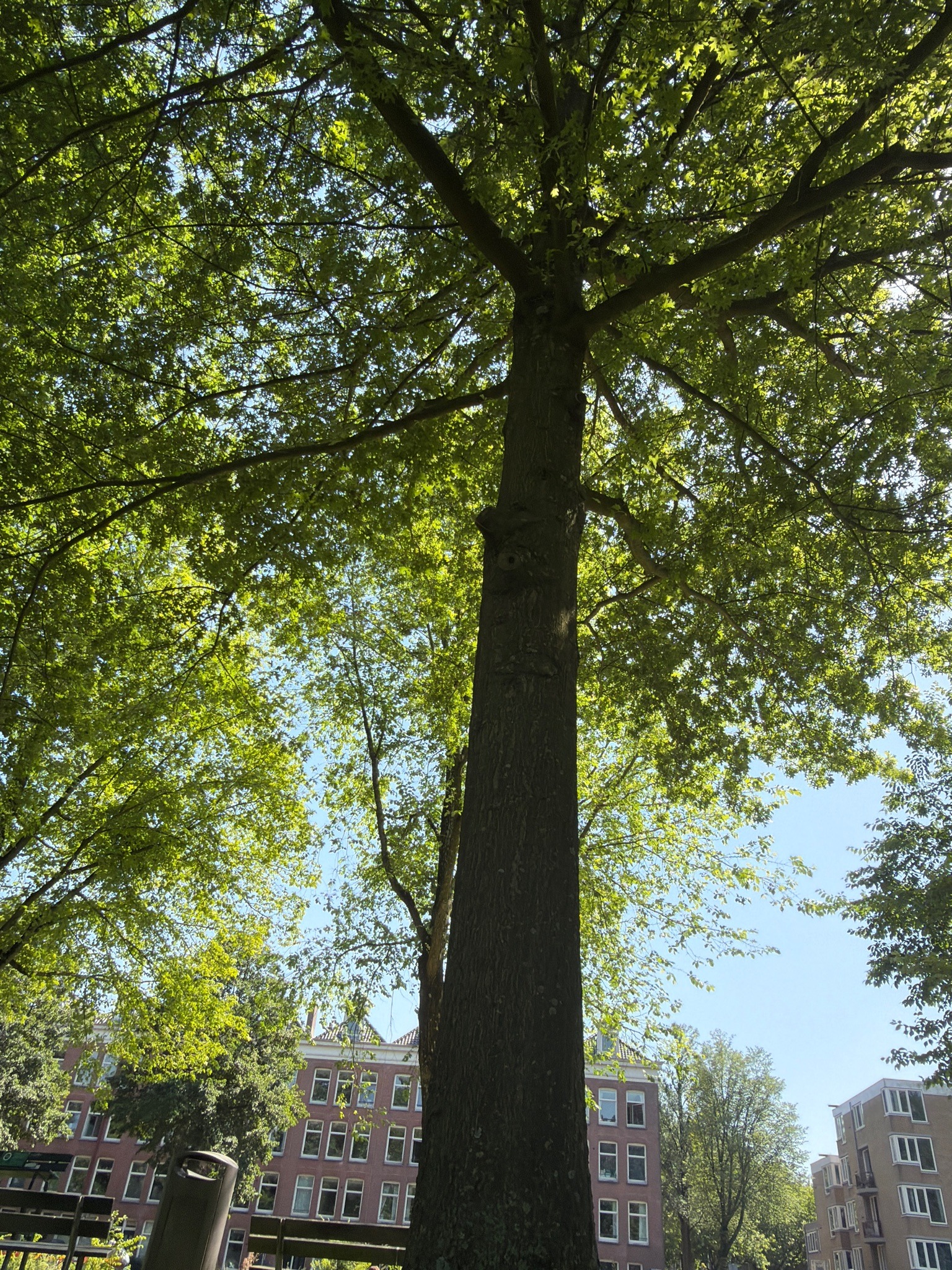
Brief Description
A medium-sized deciduous tree known for its unique branching pattern, where upper branches point up, middle branches are horizontal, and lower branches droop downwards. It has deeply lobed, glossy green leaves that turn bronze or red in fall.
Care Instructions
Thrives in full sun with moist, acidic, well-drained soil. It is tolerant of wet soil and urban conditions but highly susceptible to iron chlorosis in high-pH alkaline soils.
Medicinal Value
We do not currently provide medicinal value for plant identifications.
Sunlight
Full sun, requiring at least 6 hours of direct sunlight per day.
Watering
Prefers moist soil; fairly high water needs compared to other oaks. It can tolerate occasional flooding but becomes stressed in severe droughts.
Soil
Rich, moist, acidic soils (pH 5.0 to 6.5). Avoid alkaline soils to prevent leaf yellowing.
Hardiness Zone
4 to 8
Growth Habit
Pyramidal in youth, becoming more oval/rounded with age. Fast-growing for an oak, reaching 50-70 feet in height with a 25-40 foot spread.
Bloom Season
Spring (April-May). Produces inconspicuous yellow-green catkins (male) and small reddish spikes (female).
Toxicity
The acorns and young leaves contain tannins, which are mildly toxic to horses, dogs, and cats if consumed in large quantities, potentially causing gastrointestinal upset.
Propagation
Primarily by seed (acorns) sown in autumn or stratified for spring planting. Cuttings are extremely difficult.
Common Pests & Issues
Leaf chlorosis (yellowing) in alkaline soil, oak wilt, anthracnose, and pests like spongy moths and gall wasps.
Similar Species
Scarlet Oak (Q. coccinea), which has deeper sinuses and doesn't have the drooping lower branches, and Black Oak (Q. velutina), which has larger, less deeply lobed leaves.
Interesting Facts
The name 'palustris' is Latin for 'of the marsh,' referring to its preference for wet habitats. It is one of the most popular ornamental oaks in the U.S. because of its fast growth and ease of transplanting.
Created At: 2026-06-24T13:47:05.773163