Purple Passionfruit
Scientific Name: Passiflora edulis
Plant Family: Passifloraceae
Native Region: Southern Brazil through Paraguay and northern Argentina
Brief Description
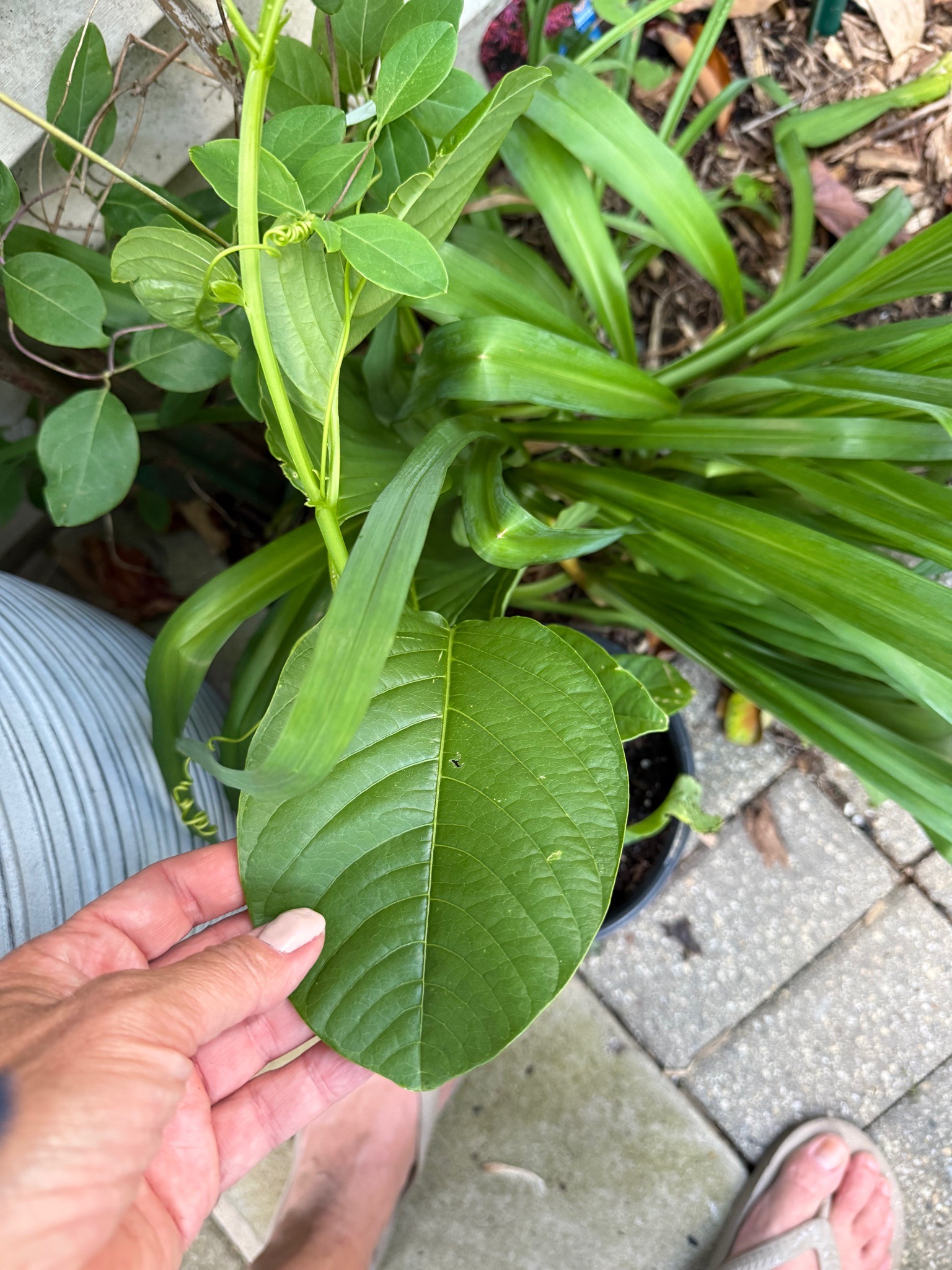
A vigorous, climbing evergreen vine known for its complex, exotic flowers and delicious purple fruit. It features glossy green, usually three-lobed leaves (though young leaves can be unlobed) and climbing tendrils.
Care Instructions
Provide a sturdy trellis for climbing. Place in a warm, sunny spot protected from wind. Water regularly to keep soil moist but not soggy, and feed with a balanced fertilizer during the growing season.
Medicinal Value
We do not currently provide medicinal value for plant identifications.
Sunlight
Full sun, requiring at least 6 to 8 hours of direct light per day for best fruit production.
Watering
Regular and consistent watering is essential, especially when fruiting. Avoid waterlogging; water when the top inch of soil feels dry.
Soil
Well-draining, fertile soil rich in organic matter. Prefers a slightly acidic to neutral pH (5.5 to 6.5).
Hardiness Zone
9-11 (USDA). It is frost-sensitive and may die back to the ground in zone 9.
Growth Habit
Perennial evergreen vine; can grow 15 to 30 feet long with a spreading habit using tendrils to climb.
Bloom Season
Spring to autumn. Produces 2-3 inch wide white flowers with a prominent purple filamentous corona.
Toxicity
The fruit is edible when ripe. However, leaves and unripe fruit contain cyanogenic glycosides and can be toxic if ingested in large quantities by humans or pets.
Propagation
Easily propagated by seed (though variability occurs) or by softwood cuttings to ensure identical fruit quality.
Common Pests & Issues
Prone to Fusarium wilt, root-knot nematodes, and pests like aphids, spider mites, and gulf fritillary butterfly caterpillars.
Similar Species
Maypop (Passiflora incarnata) which is more cold-hardy and has more deeply serrated leaves; Giant Granadilla (Passiflora quadrangularis) which has winged stems.
Interesting Facts
The 'passion' in the name refers to the Passion of Christ, as 16th-century Spanish missionaries saw symbols of the crucifixion in the flower's unique structure.
Created At: 2026-06-19T00:20:50.566855