English Oak
Scientific Name: Quercus robur
Plant Family: Fagaceae
Native Region: Europe, North Africa, and Western Asia
Brief Description
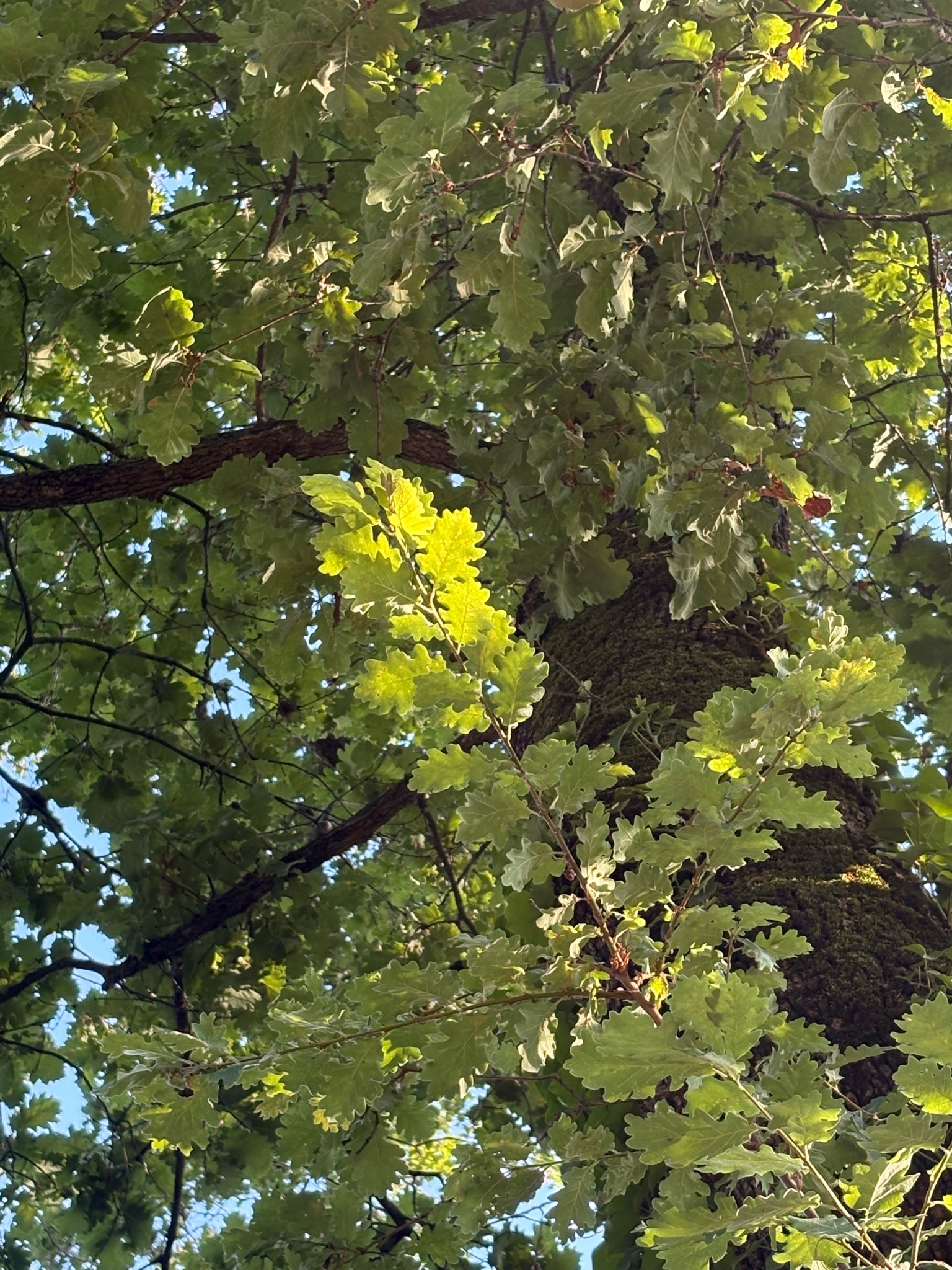
A large, long-lived deciduous tree characterized by deeply fissured bark and lobed leaves with very short stalks. It produces acorns in cups on long stems (peduncles).
Care Instructions
Requires full sun and plenty of space to grow. Young trees need regular watering to establish roots, but mature trees are quite drought-tolerant. Minimal pruning is needed except to remove dead wood.
Medicinal Value
We do not currently provide medicinal value for plant identifications.
Sunlight
Full sun; requires at least 6-8 hours of direct sunlight per day for optimal growth.
Watering
Moderate; young trees need deep weekly watering during dry spells. Mature trees are deeply rooted and generally only require supplemental water during extreme drought.
Soil
Prefers deep, well-draining, fertile loams but is adaptable to clay and sandy soils. Prefers neutral to slightly acidic pH (5.0-7.5).
Hardiness Zone
4 - 8
Growth Habit
Perennial deciduous tree; slow to moderate growth rate. Can reach 70-100 feet tall and wide with a broad, spreading crown.
Bloom Season
Late Spring; produces inconspicuous yellowish-green catkins (male) and small spikes (female).
Toxicity
Acorns and young leaves contain gallotannins which can be toxic to horses, cattle, and sheep if consumed in large quantities. Generally low risk to humans unless large quantities of raw acorns are eaten.
Propagation
Primarily by seed (acorns) sown immediately after falling in autumn. Can also be propagated via grafting for specific cultivars.
Common Pests & Issues
Susceptible to powdery mildew, oak wilt, and pests like the oak processionary moth or aphids. Healthy trees are generally resilient.
Similar Species
White Oak (Quercus alba) - distinguished by leaves with longer petioles (stems) and acorns on shorter stalks compared to the English Oak's long-stalked acorns.
Interesting Facts
The English Oak is a symbol of strength and endurance; some specimens in Europe are estimated to be over 1,000 years old. It is an essential ecological host for hundreds of species of insects and fungi.
Created At: 2026-06-07T16:51:45.555328