Chaste Tree (Vitex)
Scientific Name: Vitex agnus-castus
Plant Family: Lamiaceae (Mint family)
Native Region: Mediterranean region and Central Asia; naturalized in many parts of the southern United States
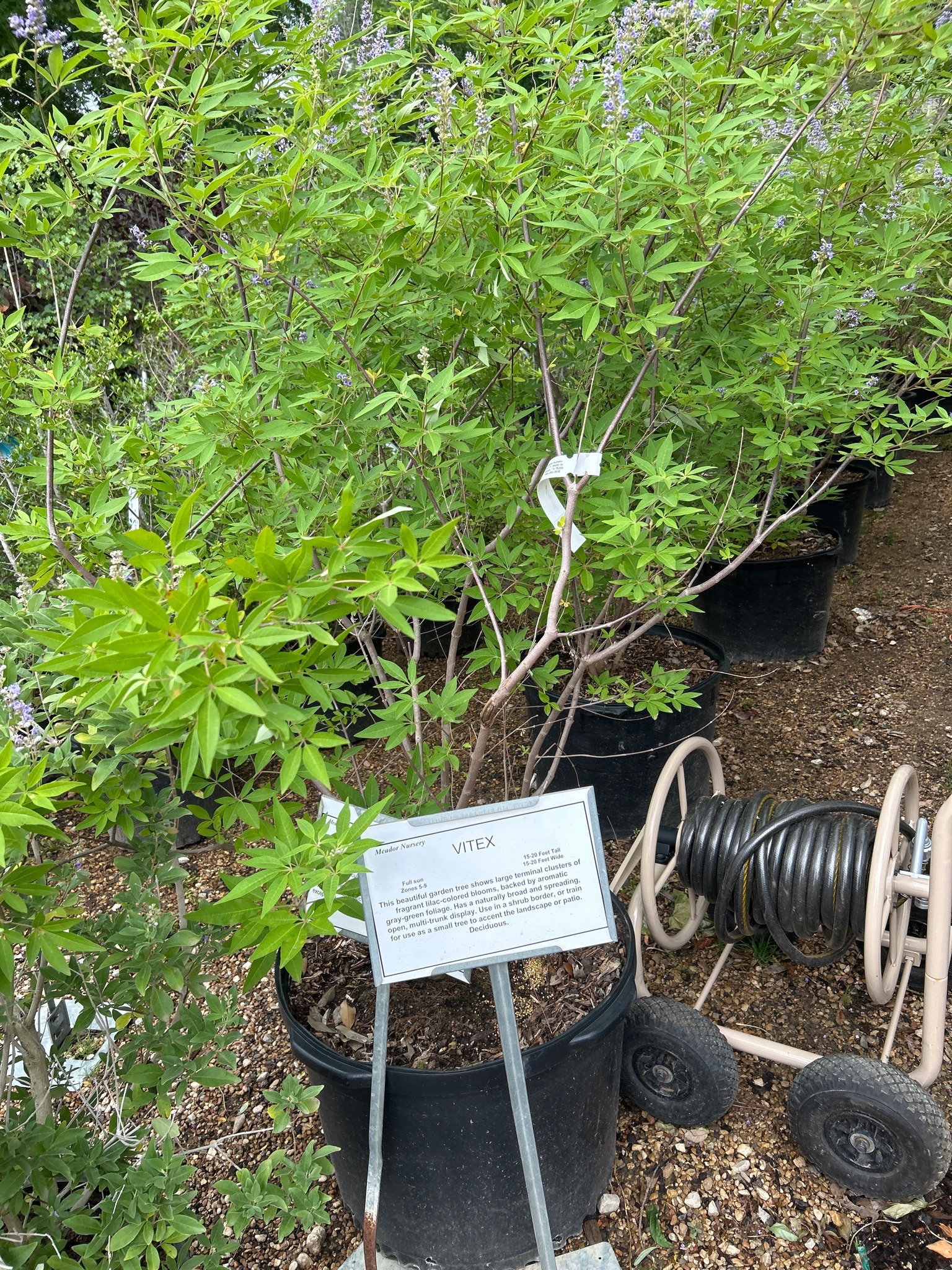
Brief Description
A deciduous large shrub or small multi-trunked tree known for its aromatic, palmately compound leaves and upright spikes of lavender-blue flowers.
Care Instructions
Plant in full sun and well-draining soil. Once established, it is very drought-tolerant. Prune back in winter to shape and encourage heavy blooming the following summer.
Medicinal Value
We do not currently provide medicinal value for plant identifications.
Sunlight
Full sun (at least 6-8 hours per day)
Watering
Low to medium. Water regularly until established; mature plants are highly drought-tolerant and prefer drying out between waterings.
Soil
Adaptable to various soils but requires excellent drainage. Prefers slightly acidic to neutral pH (6.0-7.5).
Hardiness Zone
USDA Zones 6-9
Growth Habit
Perennial shrub or small tree; typically reaches 10-20 feet tall and wide with a fast growth rate.
Bloom Season
Summer (Late spring through early fall); features 3-6 inch long spikes of fragrant violet, blue, or lavender flowers.
Toxicity
Generally non-toxic to humans and pets, though ingestion of berries may affect hormone levels and is not recommended.
Propagation
Easy to propagate from softwood cuttings in early summer or by seed in the spring.
Common Pests & Issues
Relatively pest-free. Root rot can occur in poorly drained soils; leaf spot may appear in high humidity.
Similar Species
Buddleja (Butterfly Bush) which has similar flower spikes but simple leaves, whereas Vitex has palmately compound (finger-like) leaves.
Interesting Facts
The common name 'Chaste Tree' comes from the ancient belief that it suppressed libido; Athenian women used the leaves in their beds to remain chaste during festivals.
Created At: 2026-05-19T17:51:10.318562