Coconut Palm
Scientific Name: Cocos nucifera
Plant Family: Arecaceae
Native Region: Indo-Pacific region, between Southeast Asia and Melanesia; now naturalized in tropical regions worldwide.
Brief Description
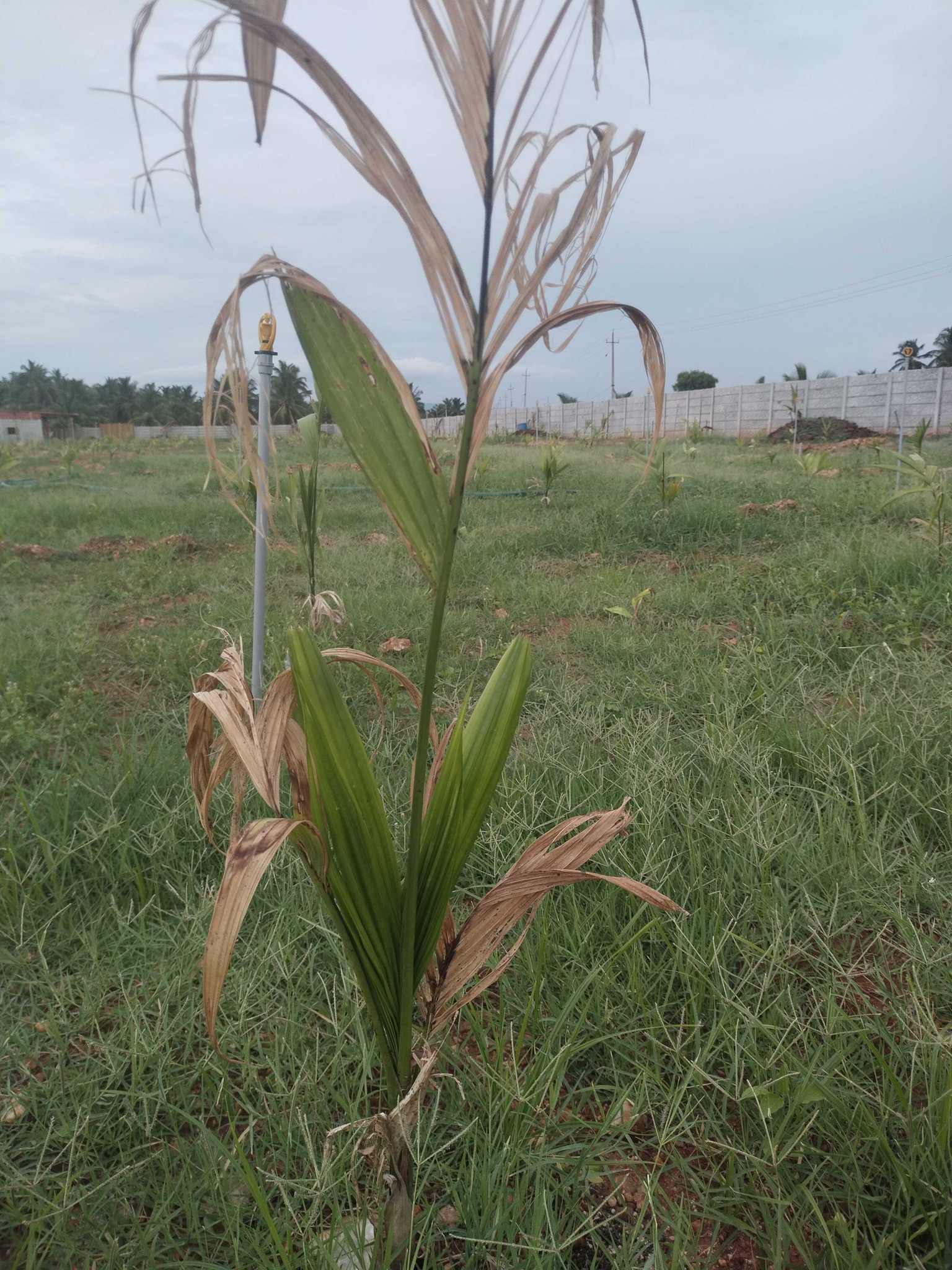
A large, iconic palm tree known for its single tall trunk, pinnate (feather-like) fronds, and large drupe fruit (coconuts). The specimen shown is a young seedling or sapling with several browned, desiccated leaves indicating stress.
Care Instructions
Requires full sun, frequent deep watering (especially when young), and well-draining soil. Fertilize with a palm-specific fertilizer high in potassium, manganese, and magnesium. This young specimen appears to be suffering from water stress or transplant shock.
Medicinal Value
We do not currently provide medicinal value for plant identifications.
Sunlight
Full sun (6+ hours per day). Young saplings can tolerate some light shade but thrive in direct light as they mature.
Watering
High. Requires frequent watering to keep soil moist but not waterlogged. Once established, they are somewhat drought-tolerant but produce better with consistent moisture. Brown leaves indicate underwatering or salt burn.
Soil
Well-draining sandy or loamy soils. Extremely salt-tolerant. Prefers a pH range of 5.0 to 8.0.
Hardiness Zone
USDA zones 10-11; very sensitive to frost and freezing temperatures.
Growth Habit
Arborescent (tree-like) perennial. Can reach heights of 60-100 feet with a canopy spread of 20-30 feet. Growth rate is moderate.
Bloom Season
Year-round in tropical climates. Produces small, yellowish white flowers on branched inflorescences followed by large green or yellow fruits.
Toxicity
Non-toxic to humans, dogs, and cats. The fruit is edible, though the fibrous husk is a choking hazard for pets.
Propagation
Primarily by seed (planting the entire mature coconut half-buried in moist soil).
Common Pests & Issues
Lethal Yellowing (phytoplasma), scale insects, palm aphids, spider mites, and nutrient deficiencies (especially potassium and manganese which cause leaf browning).
Similar Species
May be confused with other feather palms like the Queen Palm (Syagrus romanzoffiana) or Date Palm (Phoenix dactylifera), but distinguished by its unique large fruit and smooth, ringed gray trunk.
Interesting Facts
The coconut is often called the 'Tree of Life' because every part of it—from the roots and trunk to the leaves and fruit—has a practical or nutritional use.
Created At: 2026-06-22T13:01:38.025738