Blue Star Juniper / Flaky Juniper
Scientific Name: Juniperus squamata 'Blue Star'
Plant Family: Cupressaceae
Native Region: The species is native to the Himalayas and China; this cultivar is a garden origin.
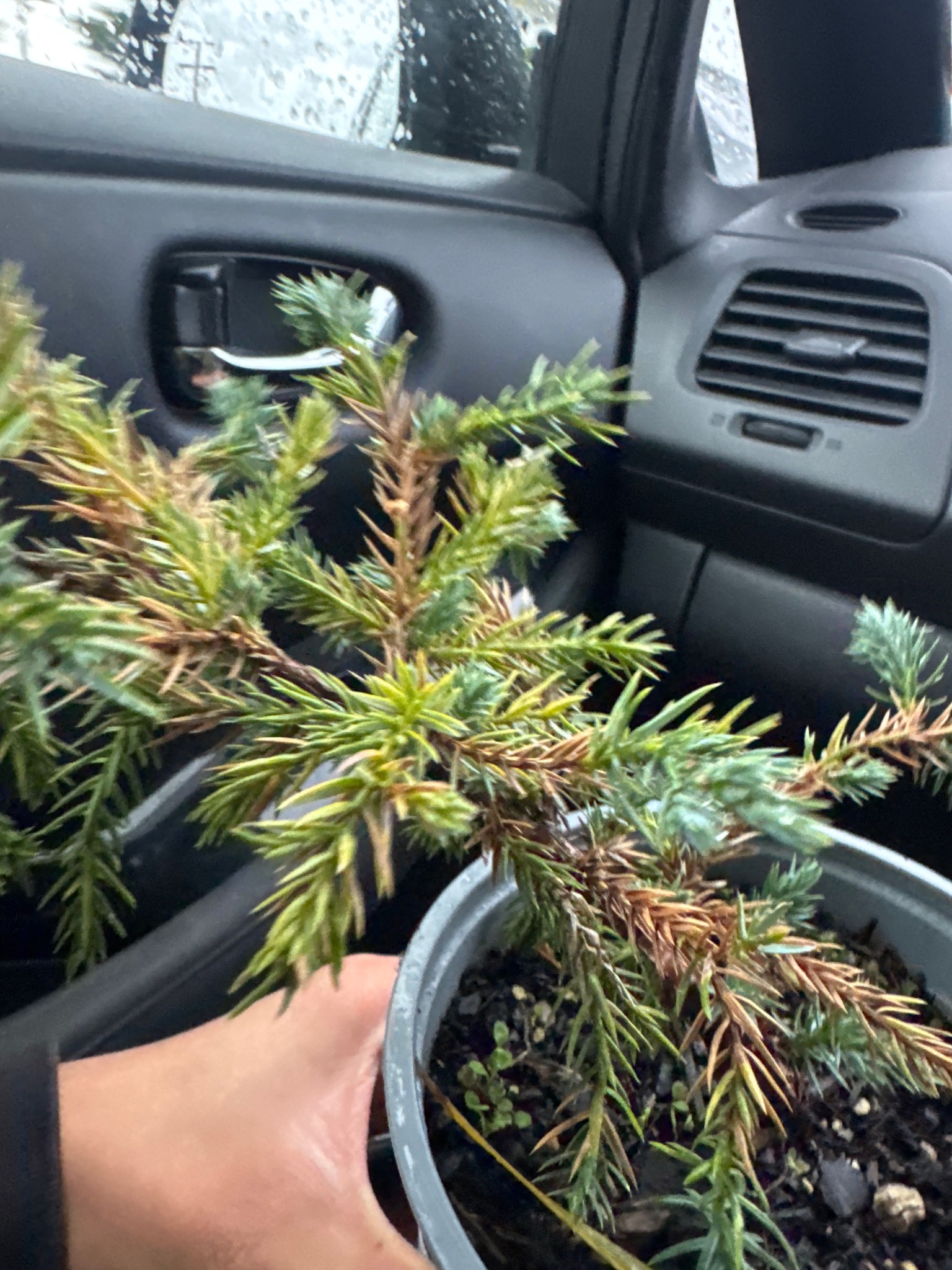
Brief Description
A slow-growing, dwarf evergreen conifer known for its dense, mounding habit and sparkling silver-blue needle-like foliage that grows in awl-shaped triplets.
Care Instructions
This plant requires very little maintenance once established. It needs full sun and extremely well-draining soil to prevent root rot. Avoid overwatering and provide a slow-release fertilizer in early spring.
Medicinal Value
We do not currently provide medicinal value for plant identifications.
Sunlight
Full sun (6+ hours per day). It can tolerate some light shade but will lose its vibrant blue color and become leggy.
Watering
Low to medium. Water regularly during the first growing season to establish a deep root system. Once established, it is quite drought-tolerant. Overwatering is the most common cause of death.
Soil
Well-drained, sandy or gravelly soils. It tolerates a wide range of pH (5.0 to 8.0) but cannot stand 'wet feet' or heavy clay.
Hardiness Zone
4 to 8
Growth Habit
Perennial evergreen shrub with a slow-growing, mounding, or globose habit. Mature size is usually 2-3 feet tall and 3-4 feet wide.
Bloom Season
Non-flowering; it is a gymnosperm that produces small, berry-like cones rather than flowers.
Toxicity
Mildly toxic to humans and pets if ingested, causing stomach upset. The prickly foliage can also cause skin irritation (dermatitis) in sensitive individuals.
Propagation
Propagated via semi-hardwood cuttings taken in late summer or autumn. Seed propagation is difficult and will not result in 'True to type' cultivars.
Common Pests & Issues
Root rot from poor drainage, spider mites in hot/dry weather, and Phomopsis blight. Ensure good air circulation to prevent fungal issues.
Similar Species
Juniperus procumbens 'Nana' (Green Mound Juniper), which is more prostrate and green, or Juniperus horizontalis 'Blue Chip', which is a low-growing groundcover.
Interesting Facts
The 'Blue Star' variety was discovered as a branch mutation (a 'sport') of the cultivar 'Meyeri' in the Netherlands in the 1950s.
Created At: 2026-04-19T04:53:20.204910