Tiger Lily
Scientific Name: Lilium lancifolium
Plant Family: Liliaceae
Native Region: East Asia (China, Japan, Korea, and the Russian Far East)
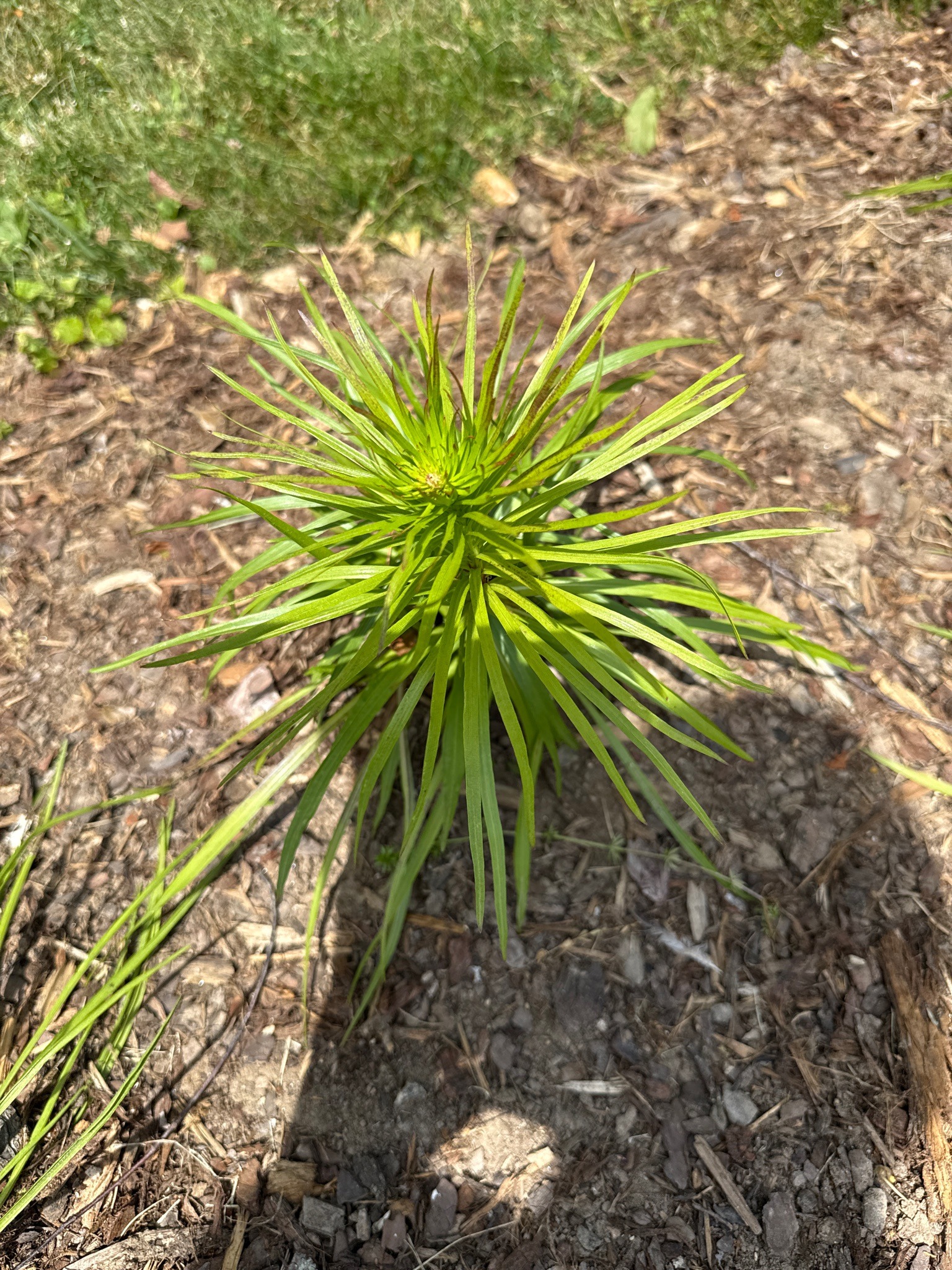
Brief Description
A bulbous perennial known for its tall stems covered in numerous lance-shaped leaves arranged in a spiral or whorled pattern. Mature plants produce large, downward-facing orange flowers with dark spots.
Care Instructions
Plant in full sun to partial shade in well-draining soil. Keep the soil consistently moist but not waterlogged. Mulch the base to keep roots cool. Apply a balanced fertilizer in early spring.
Medicinal Value
We do not currently provide medicinal value for plant identifications.
Sunlight
Full sun to partial shade (at least 6 hours of direct sunlight for best blooms).
Watering
Moderate; requires about 1 inch of water per week. Drought tolerant once established but prefers consistent moisture.
Soil
Rich, well-draining loam or sandy soil; slightly acidic to neutral pH (5.5 to 7.0).
Hardiness Zone
USDA Zones 3-9
Growth Habit
Upright bulbous perennial; typically grows 2-5 feet tall with a spread of 6-12 inches.
Bloom Season
Mid to late summer (July and August); produces bright orange tepals with black-purple spots.
Toxicity
Highly toxic to cats (causing kidney failure); generally non-toxic to dogs and humans, though some may have allergic reactions.
Propagation
Easily propagated via bulbils (small black bulbs that form in leaf axils), bulb scales, or division of bulbs in autumn.
Common Pests & Issues
Red lily leaf beetles are a major pest; susceptible to lily mosaic virus and bulb rot in poorly drained soil.
Similar Species
Turk's Cap Lily (Lilium superbum) - distinguished by lack of bulbils in leaf axils and a green star pattern in the center of the flower.
Interesting Facts
The Tiger Lily is unique because it produces 'bulbils' in the axils of its leaves, which can fall to the ground and grow into new plants.
Created At: 2026-05-16T18:21:28.205112