Snapdragon
Scientific Name: Antirrhinum majus
Plant Family: Plantaginaceae
Native Region: Mediterranean region, from Morocco and Portugal north to southern France and east to Turkey and Syria.
Brief Description
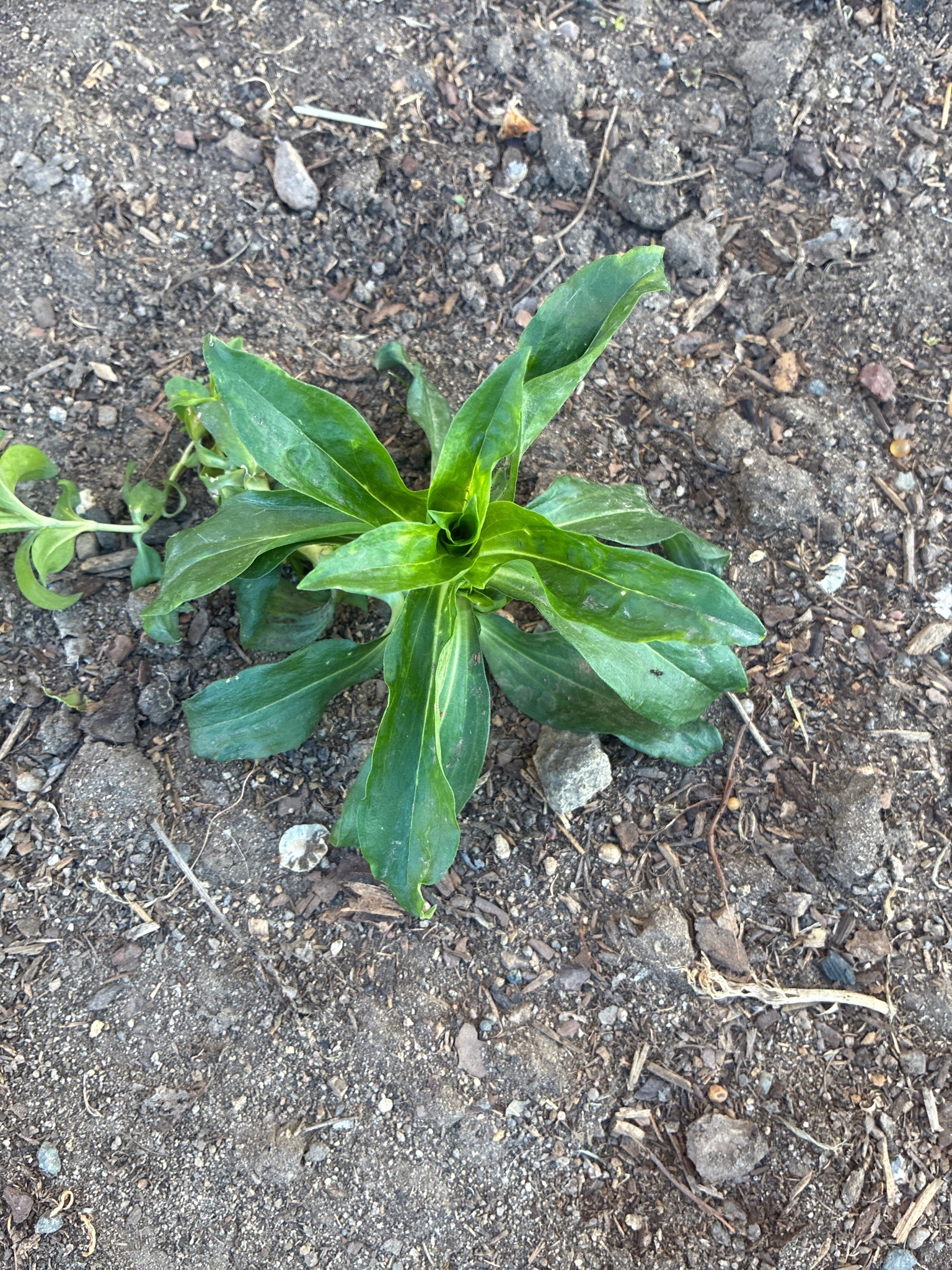
A popular garden flower characterized by lance-shaped, dark green leaves and unique 'labiate' flowers that resemble a dragon's face. The specimen shown is in its vegetative stage, forming a basal rosette of smooth-edged, vibrant green leaves.
Care Instructions
Provide full sun and well-draining soil. Provide regular water, especially during dry spells, but avoid overhead watering to prevent rust. Pinch back young plants to encourage bushier growth and deadhead spent blooms to prolong flowering.
Medicinal Value
We do not currently provide medicinal value for plant identifications.
Sunlight
Full sun (6-8 hours per day) for best flowering, though it can tolerate partial shade in hotter climates.
Watering
Consistent moisture is necessary, but the soil should not be soggy. Water when the top inch of soil feels dry. Drought can stunt growth.
Soil
Rich, well-draining loamy soil with a neutral pH (6.2 to 7.0).
Hardiness Zone
Zones 7-10 (often grown as an annual in colder zones).
Growth Habit
Short-lived herbaceous perennial usually treated as an annual. Growth ranges from dwarf varieties (6-15 inches) to tall types reaching 3-4 feet.
Bloom Season
Spring and autumn; they prefer cooler temperatures and may stop blooming during the peak heat of summer.
Toxicity
Generally considered non-toxic to humans, dogs, cats, and horses.
Propagation
Typically propagated by seeds (sown indoors 8-10 weeks before last frost) or by stem cuttings in summer.
Common Pests & Issues
Highly susceptible to rust (fungal disease), aphids, and spider mites. Good air circulation is vital to prevent mildew and rot.
Similar Species
Linaria (Toadflax) has similar spurred flowers, but typical Snapdragon flowers are larger and lack a long spur. Penstemon foliage can also look similar when young.
Interesting Facts
The common name comes from the way the flower's 'mouth' snaps open when the sides are squeezed. In folklore, snapping or carrying the flower was said to protect against charms and curses.
Created At: 2026-04-24T01:44:52.558748