Snake Plant (also known as Mother-in-Law's Tongue)
Scientific Name: Dracaena trifasciata (formerly Sansevieria trifasciata)
Plant Family: Asparagaceae
Native Region: Tropical West Africa (Nigeria to Congo)
Brief Description
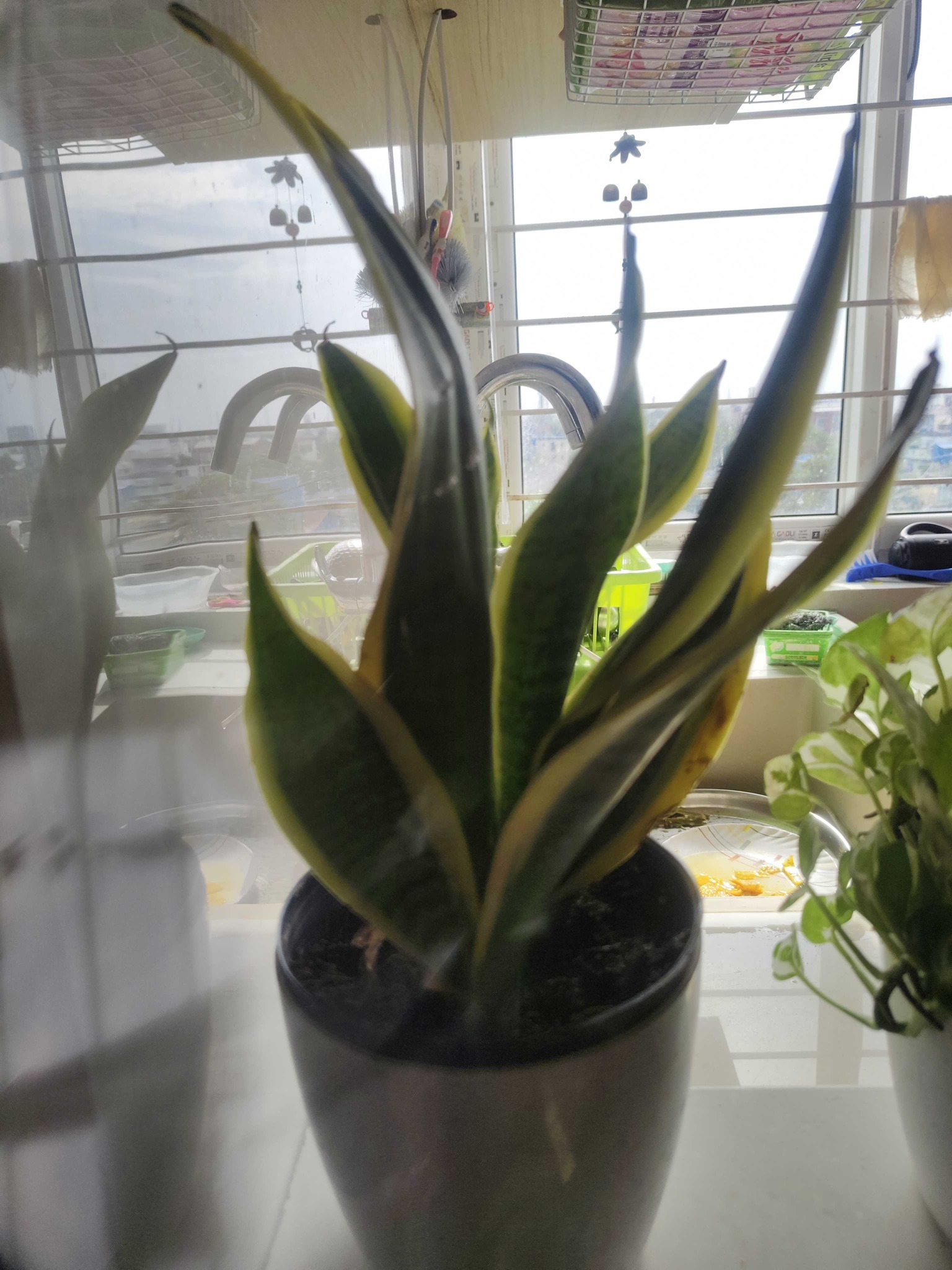
A hardy succulent with stiff, sword-like leaves that grow vertically. The 'Laurentii' variety shown has dark green centers with horizontal banding and distinctive yellow margins.
Care Instructions
Thrives on neglect. Place in indirect light and water only when the soil is completely dry. Avoid overwatering to prevent root rot. Feed with a balanced liquid fertilizer once or twice during the growing season.
Medicinal Value
We do not currently provide medicinal value for plant identifications.
Sunlight
Versatile; prefers bright indirect light but can tolerate low light or full sun. Ideal is 6-8 hours of indirect light.
Watering
Low watering needs. Water every 2-6 weeks depending on temperature and light. Soil must dry out completely between waterings. Drought-tolerant.
Soil
Well-draining, sandy or cactus potting mix. Prefers a pH range of 4.5 to 7.0 (slightly acidic to neutral).
Hardiness Zone
USDA zones 10-12; not frost-tolerant.
Growth Habit
Perennial evergreen; upright rosette form. Can reach 2 to 4 feet tall indoors. Slow to moderate growth rate.
Bloom Season
Rarely blooms indoors; if it does, it produces small, greenish-white, lily-like flowers on long stalks in spring, which are highly fragrant.
Toxicity
Mildly toxic to cats and dogs if ingested, causing nausea, vomiting, and diarrhea due to saponins. Toxic to humans if eaten.
Propagation
Easily propagated by leaf cuttings (though 'Laurentii' may lose its yellow edge) or by dividing the rhizomes during repotting.
Common Pests & Issues
Root rot from overwatering is the most common issue. Pests like mealybugs or spider mites may occasionally appear. Leaf scarring can occur from physical damage.
Similar Species
Dracaena guineensis (shorter, no yellow edges) and Dracaena angolensis (cylindrical leaves). It is distinguished from others by its flat, wide leaves and yellow variegated borders.
Interesting Facts
Research by NASA has shown the Snake Plant is one of the few plants that can convert carbon dioxide into oxygen at night, making it an ideal bedroom plant.
Created At: 2026-06-26T10:08:03.118193