Giant White Bird of Paradise
Scientific Name: Strelitzia nicolai
Plant Family: Strelitziaceae
Native Region: South Africa; subtropical and tropical regions globally
Brief Description
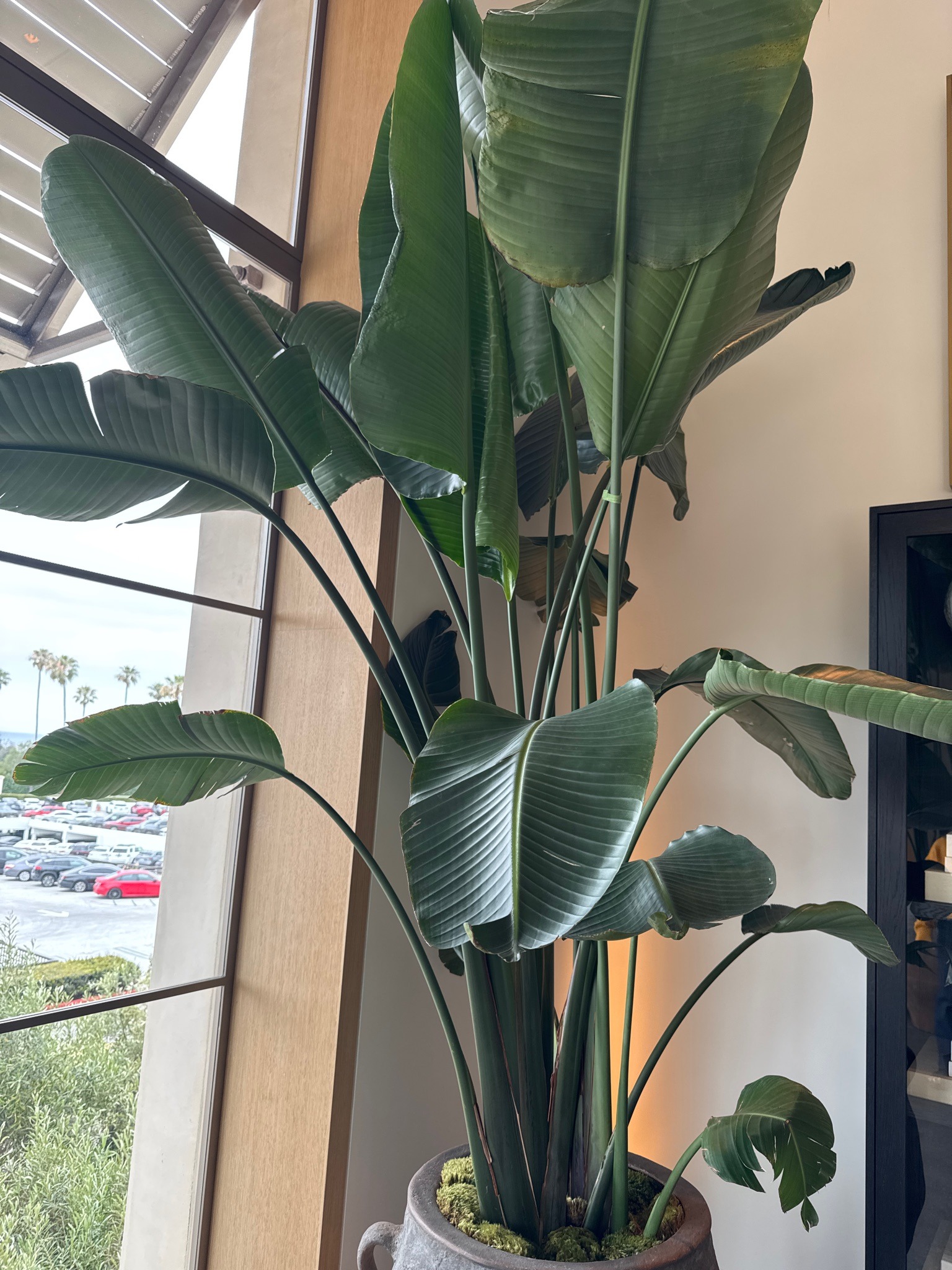
A tree-like plant with large, arching banana-like leaves arranged in a fan-like shape. It produces large, unique white and blue flowers shaped like a bird's head.
Care Instructions
Provide bright indirect light or full sun. Water when the top 1-2 inches of soil are dry. Use well-draining soil and fertilize monthly during the growing season with a balanced liquid fertilizer.
Medicinal Value
We do not currently provide medicinal value for plant identifications.
Sunlight
Bright indirect light to full sun. Indoors, it needs at least 4-6 hours of bright light near a south or west-facing window.
Watering
Moderate watering; allow soil to dry out slightly between waterings. Drought-tolerant once established but prefers consistent moisture. Overwatering leads to root rot.
Soil
Rich, well-draining loamy soil with a slightly acidic to neutral pH (6.1 to 7.5).
Hardiness Zone
USDA Zones 9b - 11; can survive short frosts but prefers temperatures above 55°F (13°C).
Growth Habit
Evergreen perennial; clumping, tree-like habit. Can reach 20-30 feet tall outdoors and 6-10 feet indoors.
Bloom Season
Year-round in tropical climates, typically spring and summer elsewhere. Flowers are white and blue-black.
Toxicity
Mildly toxic to humans, dogs, and cats. Ingestion can cause nausea, vomiting, and drowsiness.
Propagation
Propagated by division of underground rhizomes or by seed (though seeds take several months to germinate).
Common Pests & Issues
Susceptible to mealybugs, scale, and spider mites. Leaf splitting is common and natural as the plant matures. Brown leaf edges usually indicate low humidity or underwatering.
Similar Species
Strelitzia regina (Orange Bird of Paradise) which is much smaller with orange flowers; Musa species (Banana plants) which have thinner leaves and different growth patterns.
Interesting Facts
Despite looking like a banana tree, it is actually closely related to the ginger family. The 'Giant White' variety is much larger than its orange-flowered cousin and can grow as tall as a small house.
Created At: 2026-04-25T20:18:10.888403