Sword Fern (likely Tuberous Sword Fern)
Scientific Name: Nephrolepis cordifolia
Plant Family: Lomariopsidaceae / Nephrolepidaceae
Native Region: Pantropical; native to parts of Asia, Australia, and potentially the Americas
Brief Description
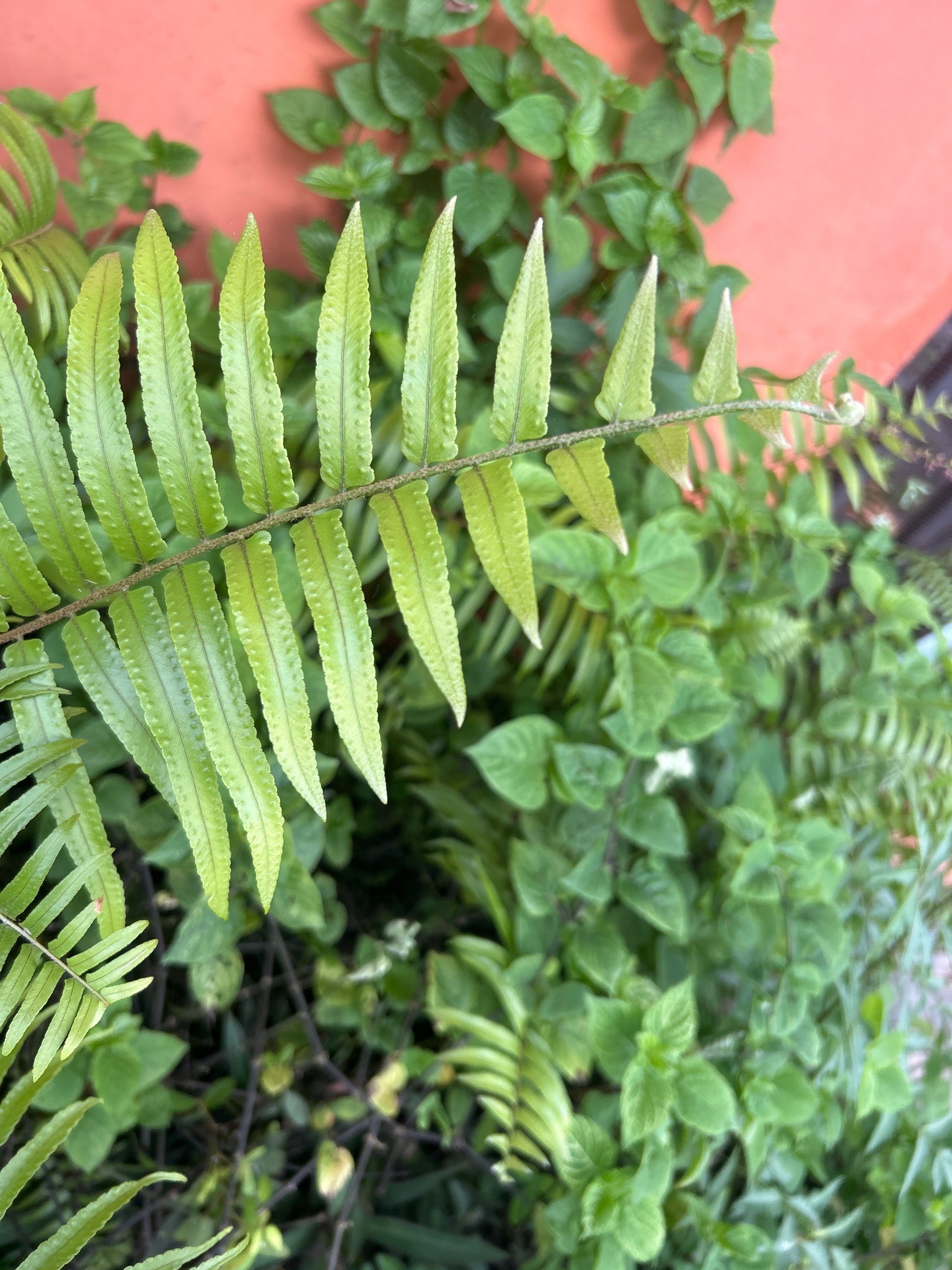
A terrestrial or epiphytic fern featuring upright or arching pinnate fronds. The leaflets (pinnae) are narrow, slightly serrated, and arranged alternately along a dark brown, scaly rachis.
Care Instructions
Thrives in humid environments with bright indirect light. Keep soil consistently moist but well-drained. Fertilize with a balanced liquid fertilizer at half strength during the growing season.
Medicinal Value
We do not currently provide medicinal value for plant identifications.
Sunlight
Partial shade to full shade; prefers bright, indirect light (4-6 hours). Avoid direct afternoon sun which can scorch the fronds.
Watering
Consistent moisture is key. Water when the top inch of soil feels dry. Sensitive to drought; fronds will turn brown and crispy if underwatered.
Soil
Rich, loamy, and well-draining soil with a slightly acidic to neutral pH (5.5 - 7.0).
Hardiness Zone
9-11 (USDA); can be grown indoors as a houseplant in colder climates.
Growth Habit
Clumping perennial fern. Spreads via underground rhizomes and tubers. Can reach 2-3 feet in height and width.
Bloom Season
Non-flowering; reproduces via spores located in sori on the underside of fronds.
Toxicity
Generally considered non-toxic to humans, dogs, and cats, making it a safe choice for pet owners.
Propagation
Most commonly propagated by dividing the root clump and tubers in spring, or via spores in a controlled environment.
Common Pests & Issues
Susceptible to spider mites, scale, and mealybugs. Root rot can occur if soil is waterlogged. Low humidity leads to brown tips.
Similar Species
Nephrolepis exaltata (Boston Fern) looks very similar but lacks the underground tubers found in N. cordifolia.
Interesting Facts
Commonly known as the 'fishbone fern' due to its leaf structure. It is considered an invasive species in Florida and other warm regions because it spreads aggressively through its tubers.
Created At: 2026-05-05T20:28:50.801675