Rosemary
Scientific Name: Salvia rosmarinus
Plant Family: Lamiaceae (Mint family)
Native Region: Mediterranean region; now naturalized worldwide in temperate climates
Brief Description
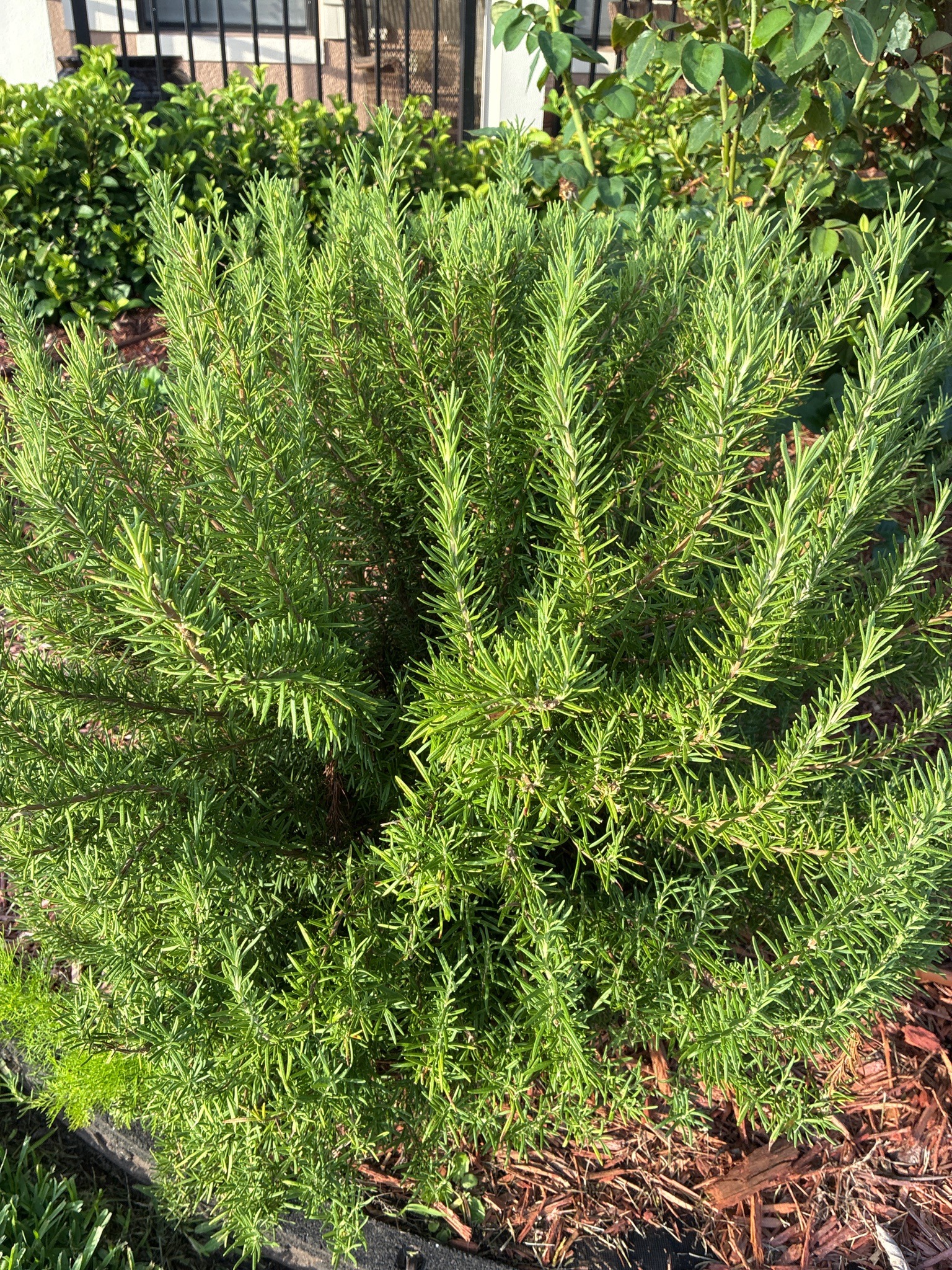
An aromatic, evergreen shrub with needle-like leaves and woody stems. It is highly fragrant and commonly used in cooking.
Care Instructions
Provide full sun and well-draining soil. Avoid overwatering as it is prone to root rot. Prune regularly to maintain shape and encourage new growth. Minimal fertilization required.
Medicinal Value
We do not currently provide medicinal value for plant identifications.
Sunlight
Full sun, at least 6 to 8 hours of direct light per day.
Watering
Low to moderate. Drought-tolerant once established. Water when the top inch of soil feels dry. Sensitive to overwatering.
Soil
Sandy, well-draining soil with a slightly acidic to neutral pH (6.0 to 7.0).
Hardiness Zone
8-11 (some cultivars are hardy to zone 7)
Growth Habit
Perennial evergreen shrub; reaches 2-6 feet tall and wide depending on variety and pruning.
Bloom Season
Spring and summer; produces small, two-lipped flowers in shades of blue, purple, pink, or white.
Toxicity
Generally non-toxic to humans, dogs, and cats. Large ingestions of the essential oil can be irritating.
Propagation
Best propagated through stem cuttings in spring or summer. Can also be grown from seed, though germination is slow.
Common Pests & Issues
Root rot from overwatering, powdery mildew in humid conditions, and pests like spider mites or aphids.
Similar Species
Lavender (Lavandula) has similar foliage but different flowers and fragrance; Grevillea rosmarinifolia has similar needles but very different red bird-like flowers.
Interesting Facts
In ancient folklore, rosemary was associated with remembrance and was often used at weddings and funerals. Its name comes from the Latin 'ros marinus', meaning 'dew of the sea'.
Created At: 2026-06-01T11:31:17.080479