Pomegranate
Scientific Name: Punica granatum
Plant Family: Lythraceae
Native Region: Native to the region extending from Iran to northern India; widely cultivated throughout the Mediterranean, Middle East, and California.
Brief Description
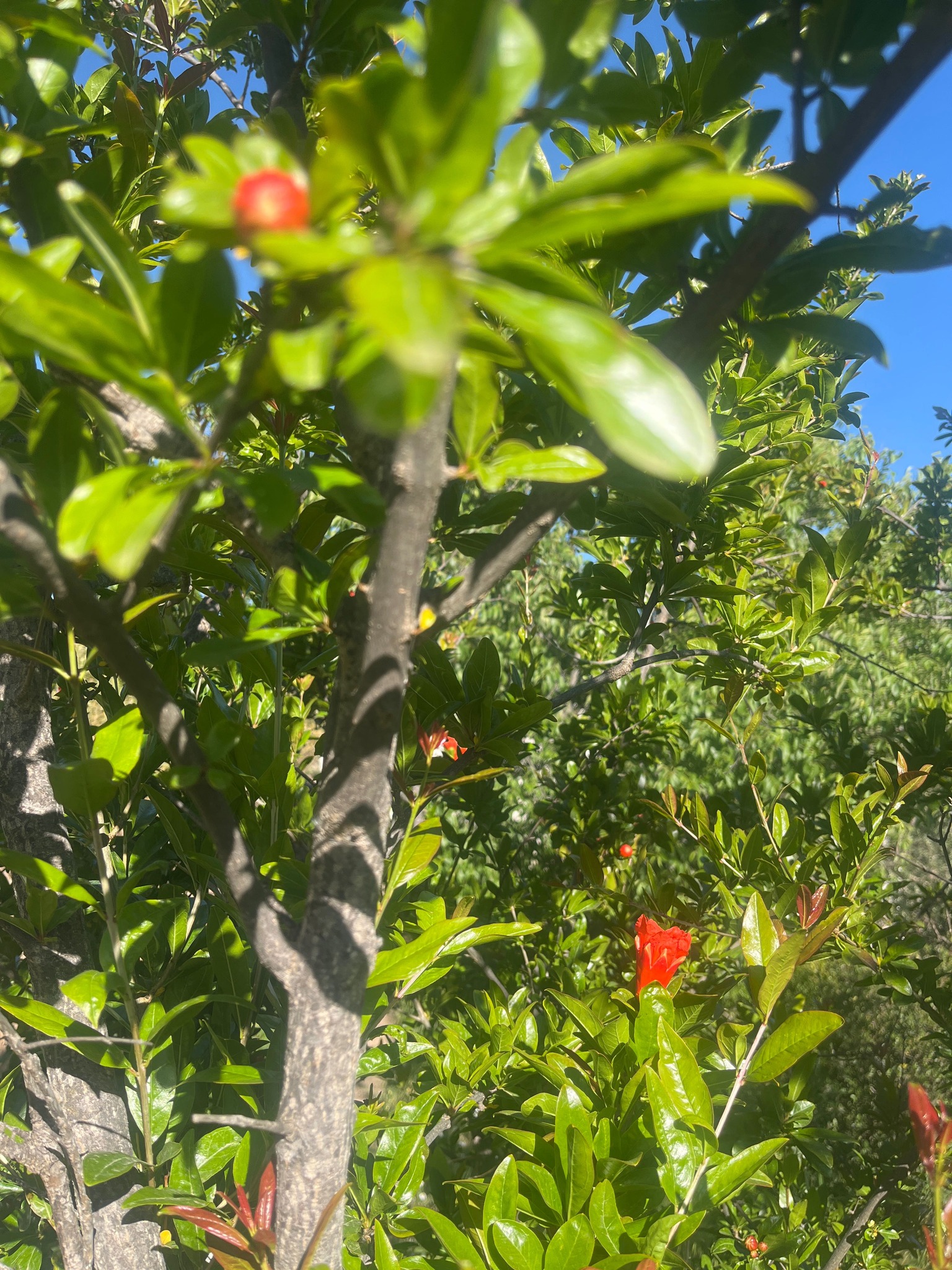
A deciduous shrub or small tree with glossy, leathery green leaves and vibrant orange-red trumpet-shaped flowers. It eventually produces round, leathery-skinned fruit containing seeds surrounded by juicy red pulp.
Care Instructions
Requires full sun for fruit production. Water regularly when young, but established plants are drought-tolerant. Prefers well-draining soil and benefits from balanced fertilization in spring.
Medicinal Value
We do not currently provide medicinal value for plant identifications.
Sunlight
Full sun, at least 6 to 8 hours of direct light daily for flower and fruit development.
Watering
Moist but well-drained. Young plants need weekly watering; once established, it is remarkably drought-tolerant though regular water improves fruit quality.
Soil
Adaptable to various soils (loam, sandy, or clay) as long as there is good drainage. Prefers a pH between 5.5 and 7.0.
Hardiness Zone
7 to 11 (USDA). Most varieties are cold hardy down to about 10-15 degrees Fahrenheit.
Growth Habit
Multi-stemmed deciduous shrub or small tree. Mature height and spread typically reach 10 to 20 feet.
Bloom Season
Late spring to summer. Flowers are typically bright orange-red, 1 inch across, with a distinct leathery calyx.
Toxicity
Generally non-toxic to humans. Some parts of the bark and roots contain alkaloids that can be toxic in very large quantities, but the fruit is safe for humans and pets.
Propagation
Most commonly propagated by hardwood cuttings in winter or softwood cuttings in summer. Can also be grown from seed though traits may vary.
Common Pests & Issues
Pests include aphids, whitefly, and pomegranate butterflies in some regions. Fungal leaf spot or fruit rot can occur in humid climates.
Similar Species
Crepe Myrtle (Lagerstroemia) has similar leaves and is in the same family, but lacks the leathery flower base and distinct pomegranate fruit.
Interesting Facts
The pomegranate is one of the oldest known fruits in the world, often symbolizing fertility and abundance in various cultures and mythologies.
Created At: 2026-05-16T16:21:40.901807