Ivy Geranium
Scientific Name: Pelargonium peltatum
Plant Family: Geraniaceae
Native Region: South Africa
Brief Description
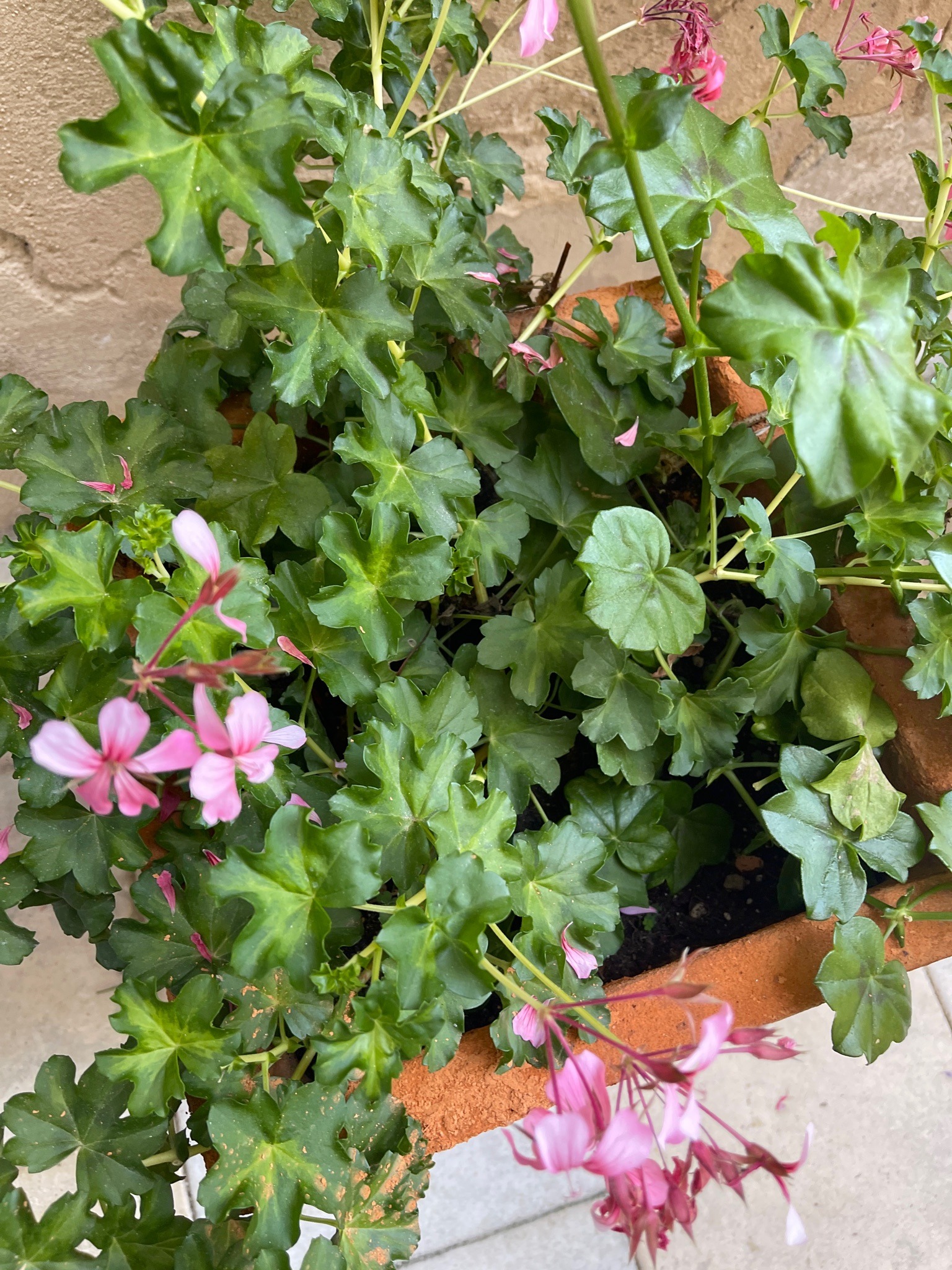
A trailing evergreen perennial with glossy, fleshy, ivy-shaped leaves and clusters of simple or double flowers in shades of pink, red, white, or purple.
Care Instructions
Place in a bright spot with morning sun and afternoon shade in hot climates; water thoroughly when the top inch of soil feels dry, and feed every two weeks during the growing season with a balanced fertilizer.
Medicinal Value
We do not currently provide medicinal value for plant identifications.
Sunlight
Partial to full sun; requires at least 6 hours of light, but benefits from afternoon shade in very hot regions to prevent leaf scorch.
Watering
Moderate watering; allow the soil to dry slightly between waterings. Overwatering can lead to edema or root rot.
Soil
Well-draining, loamy or sandy potting mix; pH range 6.0 to 7.0.
Hardiness Zone
USDA Zones 9-11; often grown as an annual in cooler climates.
Growth Habit
Trailing or climbing evergreen perennial; can reach a height of 1-3 feet and a spread/trail of up to 5 feet.
Bloom Season
Spring through early autumn; produces clusters (umbels) of five-petaled flowers.
Toxicity
Mildly toxic to cats, dogs, and horses if ingested; may cause vomiting, diarrhea, and dermatitis.
Propagation
Easily propagated by stem cuttings taken in spring or summer; can also be grown from seeds.
Common Pests & Issues
Susceptible to aphids, spider mites, and whiteflies. Cultural issues include edema (corky spots on leaves) due to inconsistent watering.
Similar Species
Zonal Geranium (Pelargonium x hortorum), which has upright growth and fuzzy, circular leaves rather than smooth, lobed, ivy-like leaves.
Interesting Facts
The species name 'peltatum' refers to its peltate leaves, where the petiole (leaf stalk) is attached to the center of the leaf blade rather than the edge.
Created At: 2026-06-23T15:05:15.430888