Saw Palmetto
Scientific Name: Serenoa repens
Plant Family: Arecaceae
Native Region: Southeastern United States, specifically Florida, Georgia, South Carolina, and Alabama.
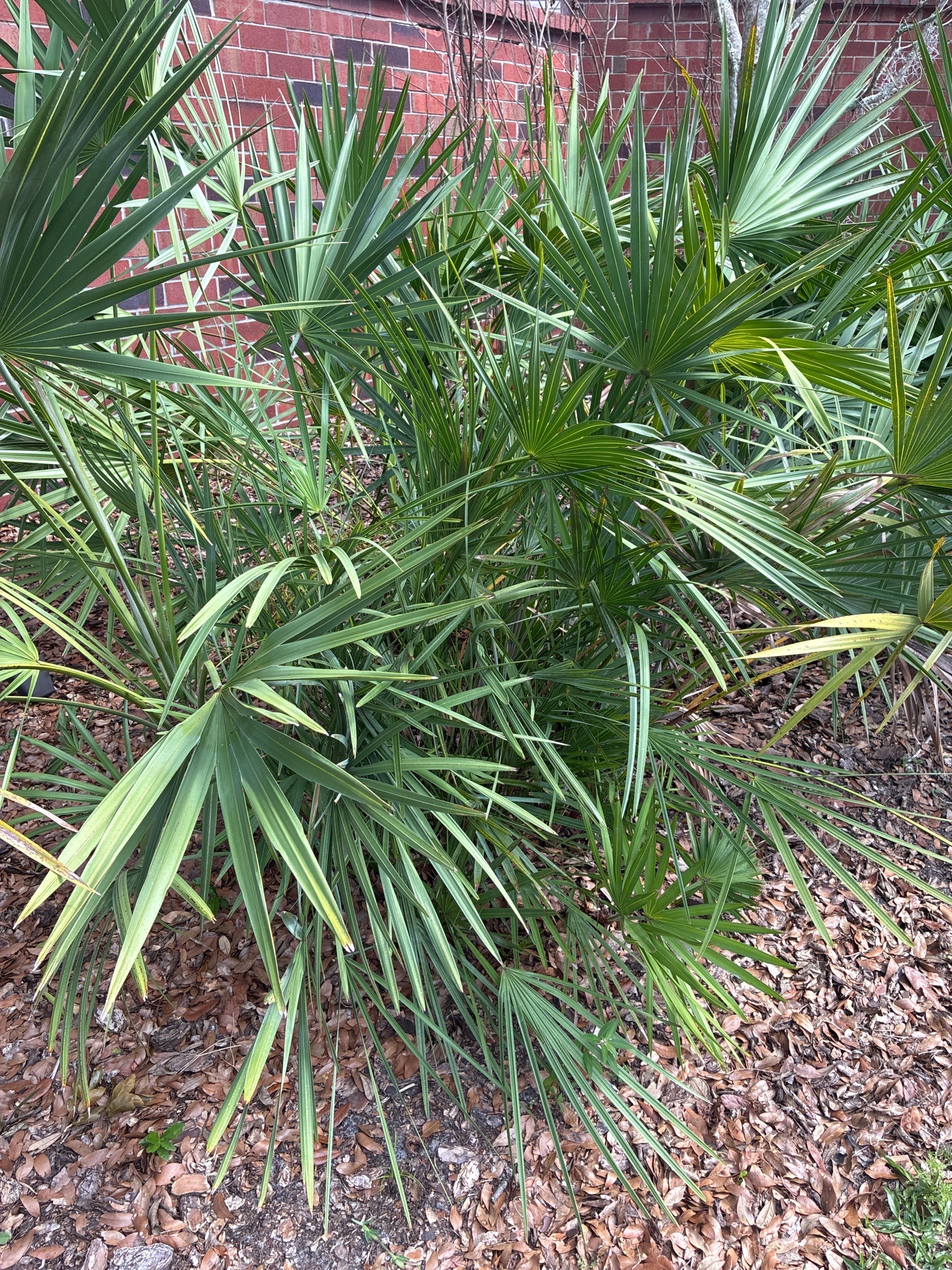
Brief Description
A small, hardy palm with fan-shaped fronds and sharp, saw-like teeth along the leaf stems (petioles). It usually grows in a low-creeping shrub form.
Care Instructions
Extremely low maintenance. Thrives in well-drained soil and can tolerate both full sun and deep shade. Once established, it is highly drought-tolerant and requires little to no fertilization.
Medicinal Value
We do not currently provide medicinal value for plant identifications.
Sunlight
Versatile; thrives in full sun but is extremely shade-tolerant. Best growth occurs with at least 4-6 hours of sunlight.
Watering
Moderate watering until established; highly drought-tolerant thereafter. Over-watering in poorly drained soil can lead to root rot.
Soil
Prefers well-drained, sandy soils but is adaptable to various soil types including muck or clay. pH preference is slightly acidic to neutral (5.5-7.5).
Hardiness Zone
8-11
Growth Habit
Perennial, slow-growing evergreen shrub. Typically reaches 5-10 feet in height and spreads horizontally via underground rhizomes.
Bloom Season
Spring (April to July); produces small, creamy-white, fragrant flowers on stalks that develop into yellow then black drupes (berries) by autumn.
Toxicity
Non-toxic to humans, dogs, and cats. The sharp spines on the petioles can cause physical injury if handled without gloves.
Propagation
Primarily by seed, though germination is very slow (several months). Can occasionally be divided from offsets, though transplanting is difficult due to deep root systems.
Common Pests & Issues
Generally pest-free, but may occasionally be affected by palmetto weevils or leaf spot in overly humid/wet conditions.
Similar Species
Sabal minor (Dwarf Palmetto) which lacks the saw-toothed petioles and grows from a central underground bulb rather than a creeping trunk. Needle Palm (Rhapidophyllum hystrix) features long needles at the base rather than teeth on the stems.
Interesting Facts
Saw palmetto is a vital food source for wildlife, including black bears and various insects. Some specimens are estimated to be over 500 years old due to their slow growth and resilience to fire.
Created At: 2026-05-18T20:25:49.197908