Boxwood
Scientific Name: Buxus sempervirens
Plant Family: Buxaceae
Native Region: Western and Southern Europe, Southwest Asia, and North Africa
Brief Description
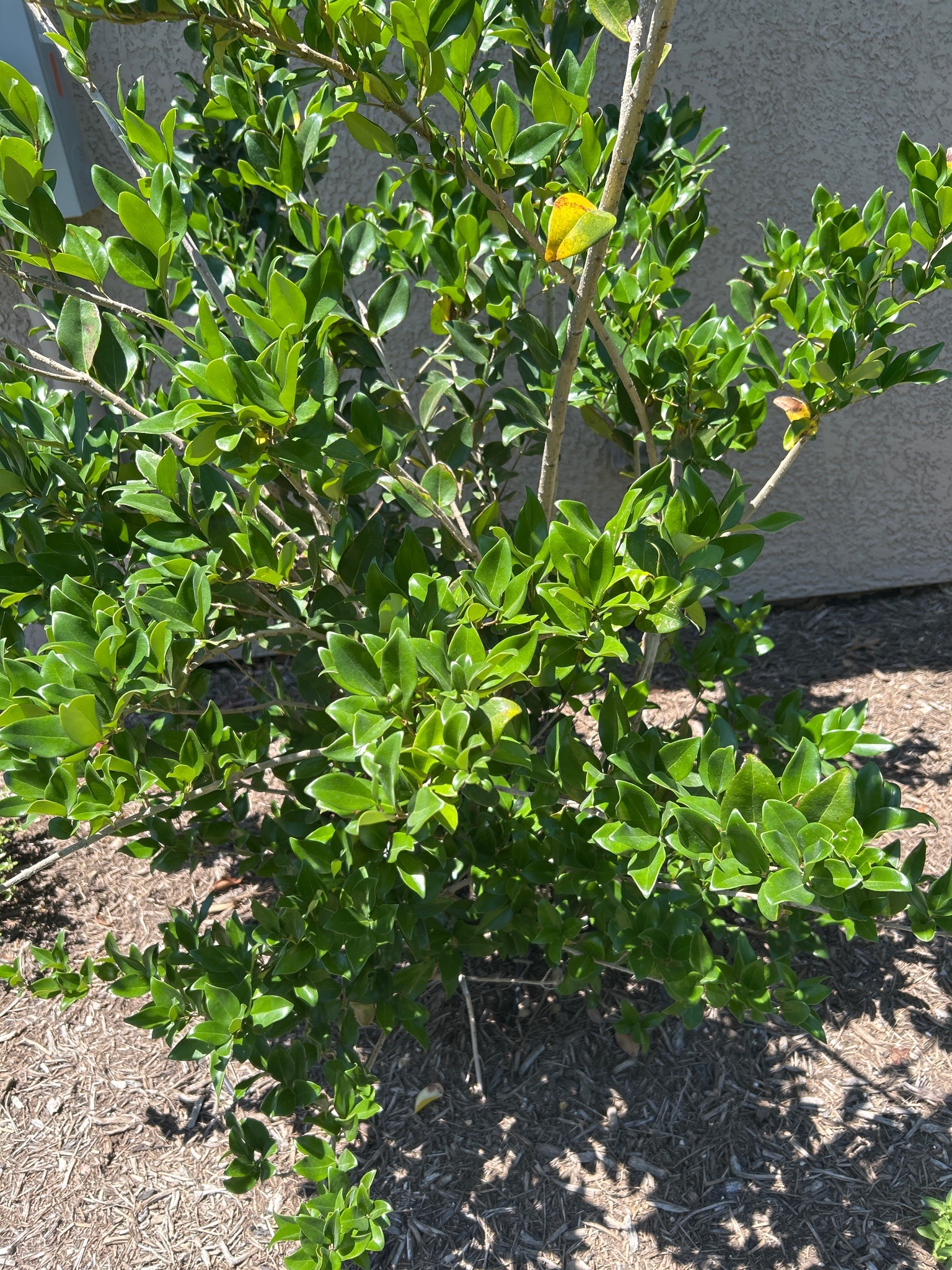
A dense, evergreen shrub with small, rounded, glossy green leaves that grow in an opposite arrangement. It is frequently used for hedges and topiary due to its compact nature.
Care Instructions
Requires well-drained soil and partial shade to full sun. Mulch to keep roots cool and water regularly until established. Fertilize in early spring before new growth appears.
Medicinal Value
We do not currently provide medicinal value for plant identifications.
Sunlight
Full sun to partial shade (4-6 hours of light). In hot climates, afternoon shade is preferred to prevent leaf scorch.
Watering
Moderate watering; weekly or more frequently in extreme heat. Drought-tolerant once established, but prefers consistently moist, well-drained soil. Avoid waterlogging.
Soil
Loamy, well-drained soil with a neutral to slightly alkaline pH (6.5 to 7.5). Susceptible to root rot in heavy clay.
Hardiness Zone
5 through 9
Growth Habit
Slow-growing evergreen perennial shrub with a rounded, compact habit. Can grow 5 to 15 feet tall if not pruned, with a similar spread.
Bloom Season
Spring (April-May). Produces inconspicuous, tiny, pale yellow-green flowers without petals. Notable for fragrance rather than appearance.
Toxicity
Toxic to humans, dogs, cats, and horses. Contains alkaloids that can cause vomiting, diarrhea, and in rare cases, respiratory failure if large quantities are ingested.
Propagation
Typically propagated by semi-hardwood cuttings in summer or evening. Use rooting hormone and maintain high humidity for best results.
Common Pests & Issues
Boxwood blight (fungal), boxwood leafminer, and boxwood mites. Root rot can occur if soil remains constantly saturated.
Similar Species
Japanese Holly (Ilex crenata), which looks similar but has alternate leaf arrangement, whereas Boxwood has opposite leaf arrangement.
Interesting Facts
Boxwood is one of the oldest known garden plants, with records of its use in formal gardens dating back to Roman times. Its wood is so dense that it will sink in water.
Created At: 2026-05-12T18:10:06.738653