Bougainvillea
Scientific Name: Bougainvillea glabra
Plant Family: Nyctaginaceae
Native Region: South America (Brazil, Peru, and Argentina); now naturalized in tropical and subtropical regions worldwide.
Brief Description
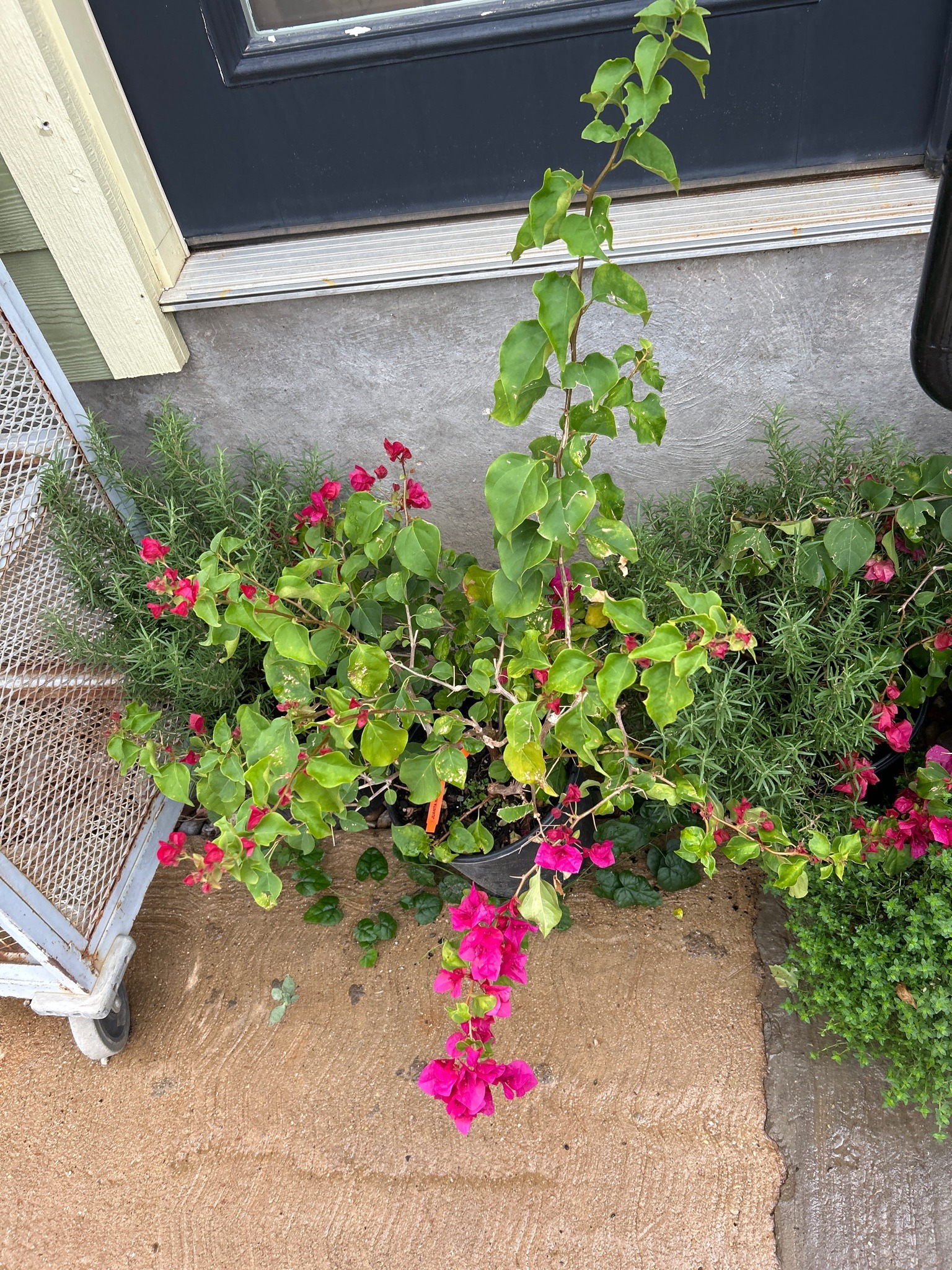
A thorny, woody vine or shrub known for its vibrant, papery bracts that surround small white flowers. The leaves are heart-shaped or oval and alternate along the stems.
Care Instructions
Requires full sun and well-draining soil. It is drought-tolerant once established and performs best when allowed to dry out between waterings. Fertilize regularly during the growing season with a high-potassium fertilizer to encourage blooming.
Medicinal Value
We do not currently provide medicinal value for plant identifications.
Sunlight
Full sun, at least 6 to 8 hours of direct light per day for optimal blooming.
Watering
Deep but infrequent watering. Allow the top 2 inches of soil to dry out. Over-watering can lead to root rot and fewer blooms.
Soil
Well-drained, slightly acidic soil (pH 5.5 to 6.5). It is sensitive to peat-heavy soils that retain too much moisture.
Hardiness Zone
9-11; very frost-sensitive and should be brought indoors or protected in colder climates.
Growth Habit
Perennial evergreen vine or shrub. Can climb 15-40 feet or be kept as a container plant. Fast-growing in warm conditions.
Bloom Season
Spring through fall in cooler climates; year-round in tropical areas. Blooms consist of tiny white tubes surrounded by colorful pink, red, or purple bracts.
Toxicity
Mildly toxic to humans if ingested; the sap can cause skin irritation or contact dermatitis. Thorns can cause physical injury.
Propagation
Typically propagated through semi-hardwood cuttings or tip cuttings in early summer using rooting hormone.
Common Pests & Issues
Aphids, mealybugs, and spider mites. Leaf spot can occur in humid environments. Lack of blooming is usually due to over-watering or insufficient light.
Similar Species
Mandevilla (lacks thorns, different flower shape) and Tecoma capensis (different leaf structure).
Interesting Facts
What most people call flowers are actually modified leaves called bracts; the true flowers are the tiny white centers. It was named after Louis Antoine de Bougainville, a French Navy admiral.
Created At: 2026-05-19T18:04:13.960827