Polka Dot Begonia (Angel Wing Begonia)
Scientific Name: Begonia maculata
Plant Family: Begoniaceae
Native Region: Southeast Brazil
Brief Description
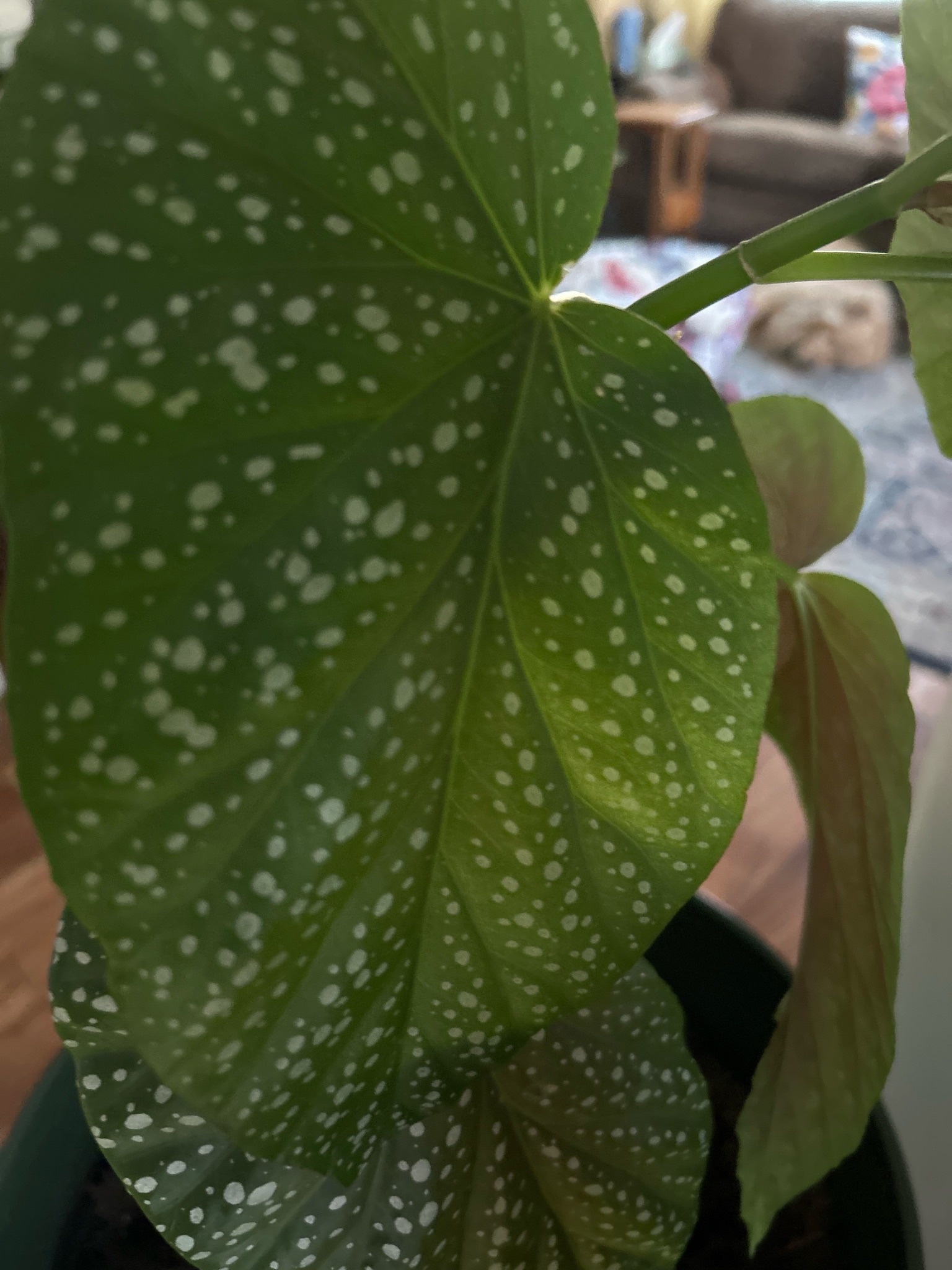
A striking cane-like begonia featuring large, olive-green wing-shaped leaves speckled with silver dots and deep red undersides.
Care Instructions
Thrives in bright indirect light and high humidity. Allow the top inch of soil to dry before watering. Feed with balanced fertilizer monthly during spring and summer.
Medicinal Value
We do not currently provide medicinal value for plant identifications.
Sunlight
Bright, filtered indirect light; 6-8 hours daily. Avoid direct afternoon sun which can scorch leaves.
Watering
Water when the top 1-2 inches of soil feel dry. Needs consistent moisture but is sensitive to overwatering and root rot.
Soil
Well-draining, light potting mix often containing peat, perlite, and pine bark. pH 6.1 to 7.5.
Hardiness Zone
USDA Zones 10-11; not frost-tolerant.
Growth Habit
Perennial cane-like begonia. Can reach 3-5 feet tall indoors with a spread of 1-2 feet. Moderate to fast growth rate.
Bloom Season
Spring through autumn; produces clusters of white or pink bell-shaped flowers on a single stem.
Toxicity
Toxic to cats, dogs, and horses if ingested. Contains calcium oxalates which cause oral irritation and vomiting.
Propagation
Easily propagated via stem cuttings in water or moist soil, preferably during the active growing season.
Common Pests & Issues
Susceptible to powdery mildew, botrytis, and leaf spot if humidity is high without airflow. Pests include mealybugs and spider mites.
Similar Species
Begonia 'Lucerna' (often confused but has slightly different spotting) and Begonia 'Tamaya'. Distinguishable by its dramatic silver polka dots and stark red undersides.
Interesting Facts
The plant is named 'maculata' meaning 'spotted' in Latin. Many believe the red undersides of the leaves significantly inspired Christian Louboutin's famous red-soled shoes.
Created At: 2026-05-09T02:04:19.401130