Japanese Spiraea
Scientific Name: Spiraea japonica
Plant Family: Rosaceae
Native Region: East Asia (Japan, China, Korea) and widely naturalized in North America
Brief Description
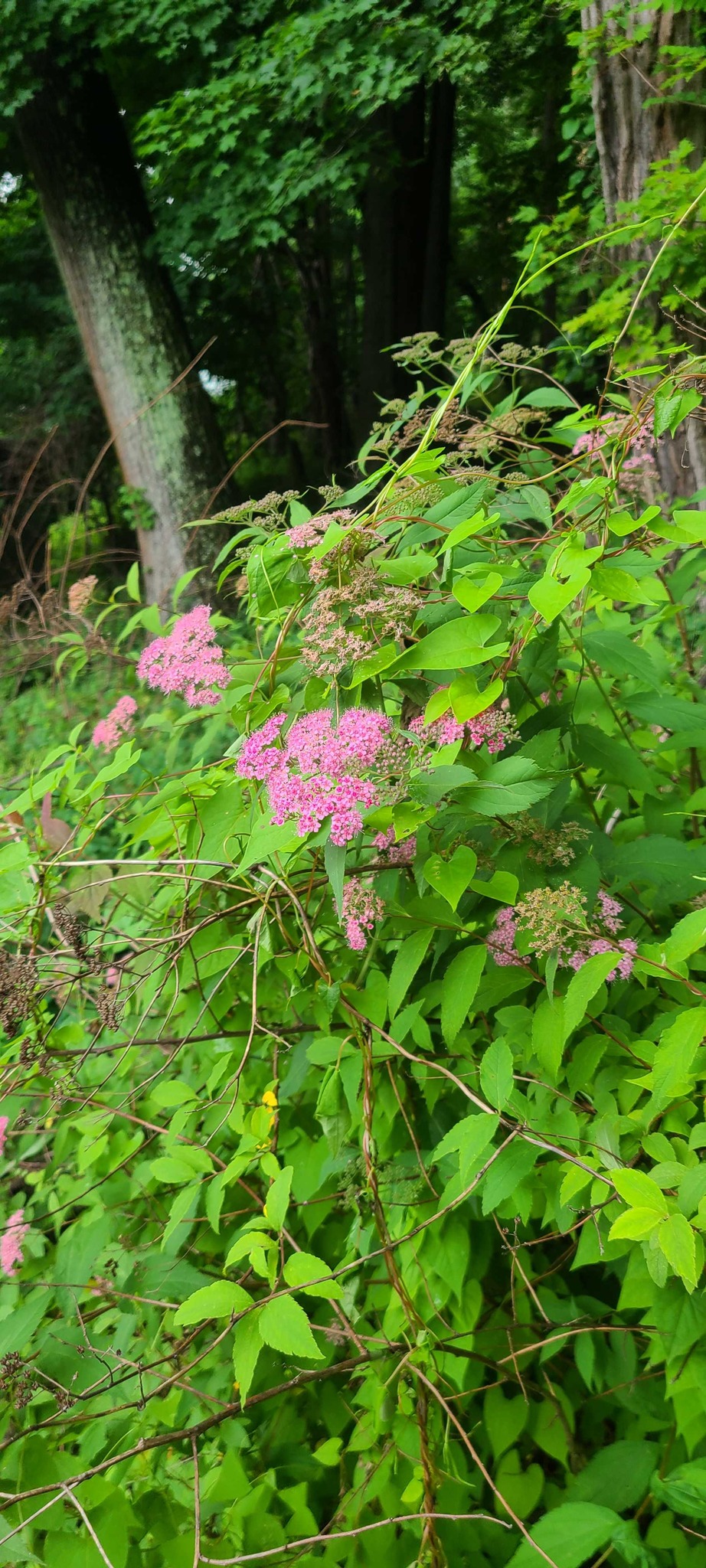
A deciduous shrub known for its flat-topped clusters of tiny pink or rosy-red flowers and serrated, lance-shaped green leaves. It often has a dense, mounded growth habit.
Care Instructions
Low-maintenance. Provide full sun to partial shade in well-draining soil. Water regularly until established, and prune after flowering to maintain shape and encourage re-blooming.
Medicinal Value
We do not currently provide medicinal value for plant identifications.
Sunlight
Full sun to partial shade; prefers at least 6 hours of direct sunlight for best flowering.
Watering
Average water needs; water weekly or more often in extreme heat. Once established, it is moderately drought-tolerant.
Soil
Adaptable to various soil types including clay, but prefers moist, well-draining loamy soil with a neutral to slightly acidic pH (6.0-7.0).
Hardiness Zone
3 to 8
Growth Habit
Perennial shrub with a mounded, multi-stemmed growth habit. Typically reaches 4-6 feet in height and spread, though many cultivars are smaller.
Bloom Season
Late spring to mid-summer; produces flat-topped clusters (corymbs) of pink or white flowers.
Toxicity
Generally considered non-toxic to humans and common pets, though ingestion of any plant material may cause mild stomach upset.
Propagation
Easily propagated through softwood cuttings in summer or by seed in the autumn.
Common Pests & Issues
Susceptible to aphids, leaf spots, and powdery mildew. Can be invasive in certain natural woodland areas of the Eastern US.
Similar Species
Spiraea douglasii (Western Spiraea) which has steeple-shaped flower clusters, and Spiraea alba (Meadowsweet) which typically has white flowers.
Interesting Facts
The genus name 'Spiraea' comes from the Greek word 'speira', meaning wreath, referring to the flexible branches being suitable for weaving into garlands.
Created At: 2026-06-28T17:47:16.188993