Dawn Redwood
Scientific Name: Metasequoia glyptostroboides
Plant Family: Cupressaceae
Native Region: South-central China; currently cultivated worldwide in temperate regions.
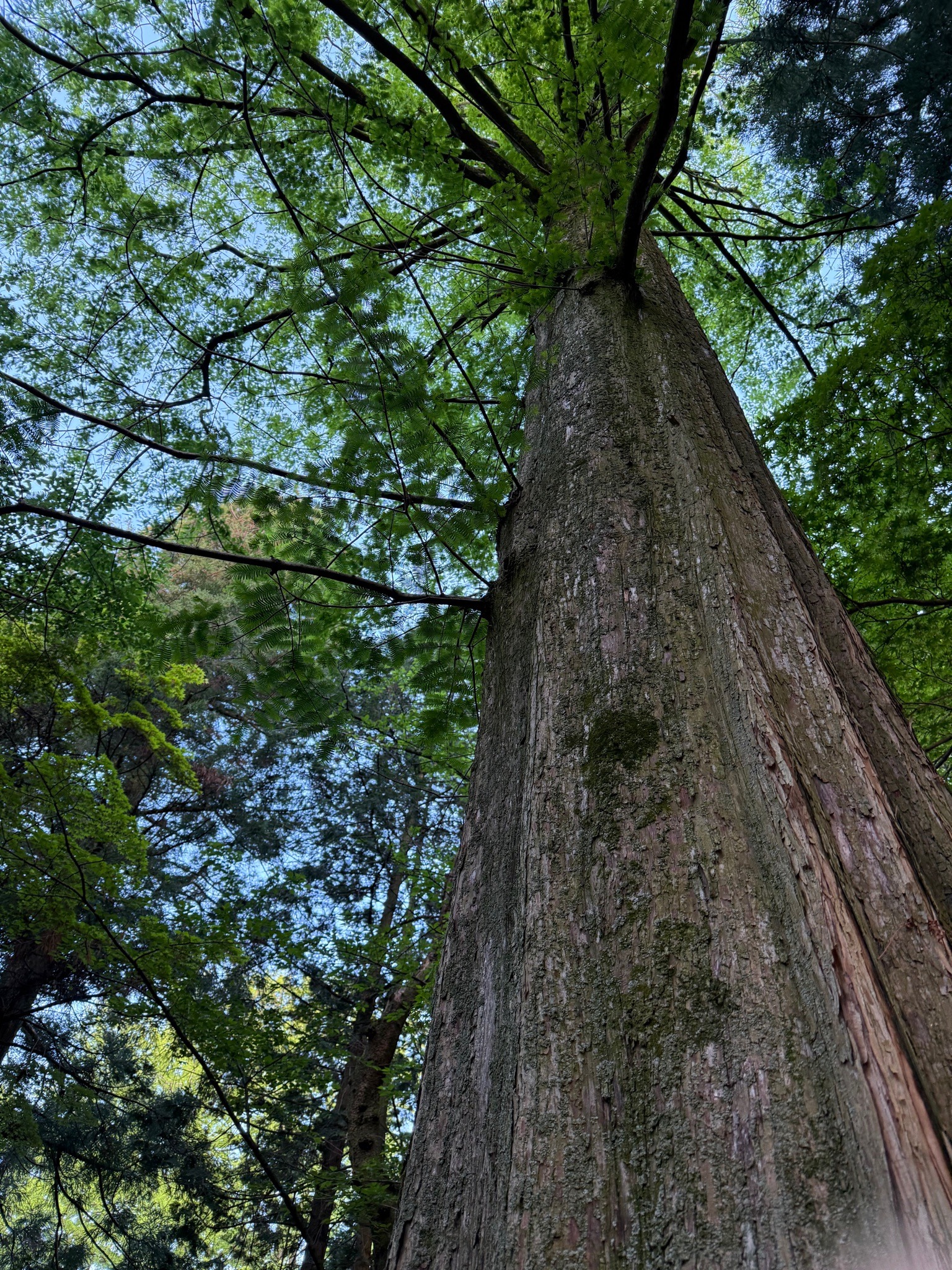
Brief Description
A fast-growing, deciduous conifer with a pyramidal shape, featuring feathery, fern-like bright green needles that turn reddish-bronze in autumn. It has distinctive reddish-brown, fluted bark.
Care Instructions
Thrives in full sun and moist, well-draining soil. Requires plenty of space to grow. Mulch to retain moisture during dry spells; relatively low maintenance once established.
Medicinal Value
We do not currently provide medicinal value for plant identifications.
Sunlight
Full sun (6+ hours per day); can tolerate partial shade but growth may be slower and less dense.
Watering
High; prefers moist to wet soil. Drought-tolerant once mature, but young trees need frequent watering (1-2 times per week during dry periods).
Soil
Acidic to neutral, moist, deep, and well-drained loamy soils. Can tolerate standing water for short periods.
Hardiness Zone
4 to 8
Growth Habit
Deciduous perennial tree. Pyramidal growth form reaching 70-100 feet tall and 15-25 feet wide at a fast rate.
Bloom Season
Non-flowering; produces small, globose cones (pollen and seed cones) in early spring.
Toxicity
Non-toxic to humans, dogs, or cats; however, ingestion of any plant material can cause mild stomach upset in pets.
Propagation
Easily propagated by semi-hardwood or hardwood cuttings in late summer or winter, and occasionally from seed.
Common Pests & Issues
Japanese beetles may eat foliage; can suffer from canker or spider mites if stressed by extreme heat or drought.
Similar Species
Bald Cypress (Taxodium distichum) is very similar but has alternate leaf arrangement, whereas Dawn Redwood has opposite leaves.
Interesting Facts
The Dawn Redwood was known only from fossils until a living specimen was discovered in 1941 in the Sichuan-Hubei region of China. It is considered a 'living fossil'.
Created At: 2026-05-13T15:56:01.377884