Woodland Sage
Scientific Name: Salvia nemorosa
Plant Family: Lamiaceae (Mint family)
Native Region: Europe, Western Asia, and Northern Africa; widely naturalized in North America
Brief Description
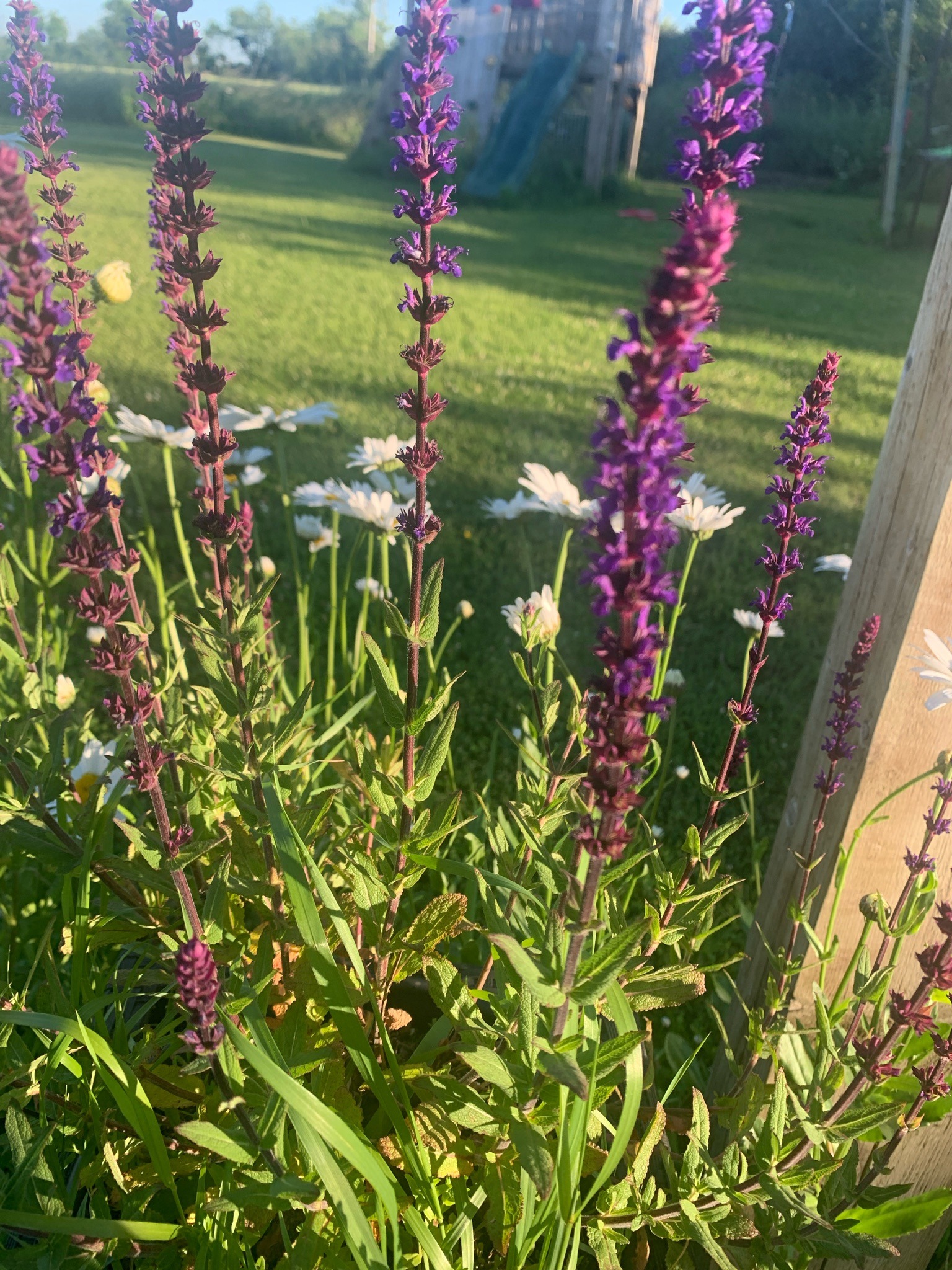
A clump-forming perennial with upright, square-stemmed flower spikes bearing many tiny violet-purple flowers and wrinkled, lance-shaped, aromatic green leaves.
Care Instructions
Thrives in full sun with well-drained soil. Regular deadheading helps extend the bloom period. Do not overwater once established as it is relatively drought-tolerant.
Medicinal Value
We do not currently provide medicinal value for plant identifications.
Sunlight
Full sun (at least 6-8 hours per day)
Watering
Medium; water regularly until established, then drought-tolerant. Best to water when the top 1-2 inches of soil are dry. Avoid soggy roots.
Soil
Well-drained soil; tolerates various types including sandy, loamy, or clay-based if drainage is good. Prefers pH 6.0 to 7.0.
Hardiness Zone
USDA Zones 4 through 8
Growth Habit
Perennial; upright clumping habit reaching 12 to 36 inches in height and spread. Moderate growth rate.
Bloom Season
Late spring to early summer, often with a second flush in late summer if deadheaded. Bears tube-shaped purple flowers on dense spikes.
Toxicity
Generally non-toxic to humans, dogs, cats, and horses.
Propagation
Can be propagated through seed, basal cuttings in spring, or by root division in early spring or autumn.
Common Pests & Issues
Susceptible to powdery mildew, leaf spot, and rust in humid conditions. Pests include aphids, whiteflies, and spider mites. Slugs may attack young foliage.
Similar Species
Salvia sylvestris (Hybrid Sage) and Salvia x superba are very similar and often confused. Salvia nemorosa is distinguished by its shorter stature and more compact flower spikes compared to Salvia pratensis.
Interesting Facts
The Latin name 'nemorosa' means 'of the woods,' though it typically thrives in open meadows. It is highly deer and rabbit resistant due to the aromatic oils in its foliage.
Created At: 2026-06-23T19:12:19.965119