Lily of the Nile
Scientific Name: Agapanthus praecox
Plant Family: Amaryllidaceae
Native Region: South Africa
Brief Description
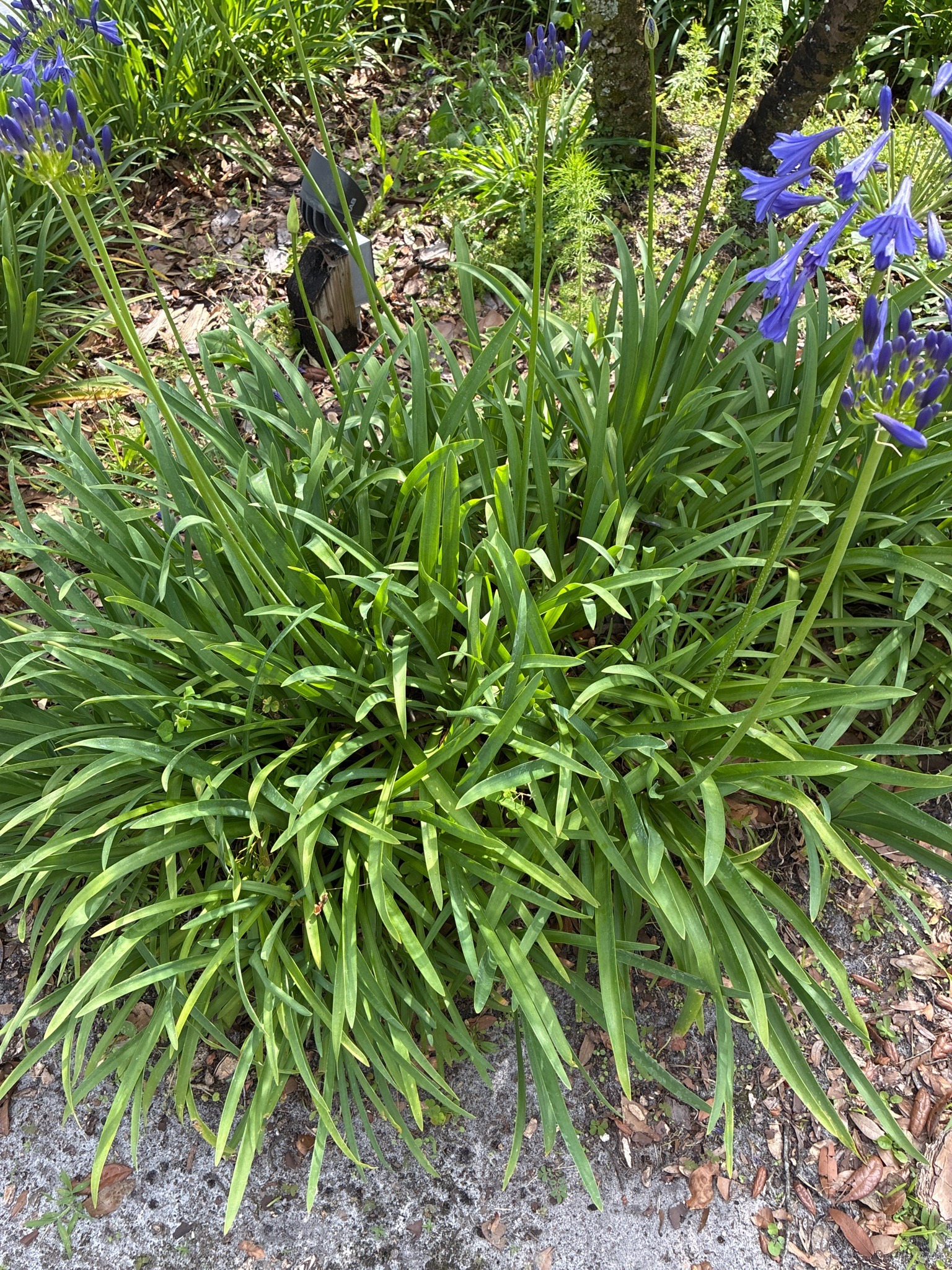
A clump-forming perennial with deep green, strap-like leaves and tall stalks topped with spherical clusters of trumpet-shaped blue or white flowers.
Care Instructions
Provide full sun to light shade and well-draining soil. Water regularly during the growing season but avoid waterlogged conditions. Apply a balanced fertilizer in spring and summer.
Medicinal Value
We do not currently provide medicinal value for plant identifications.
Sunlight
Full sun to partial shade (at least 6 hours of direct sunlight for best blooming).
Watering
Moderate watering; keep soil moist during spring and summer, and reduce frequency in winter. Relatively drought-tolerant once established.
Soil
Rich, fertile, well-draining soil; pH 5.5 to 7.0.
Hardiness Zone
8-11 (USDA)
Growth Habit
Herbaceous perennial reaching 2-4 feet tall and wide; clump-forming with a moderate growth rate.
Bloom Season
Early to late summer; features globose clusters of blue, purple, or white tubular flowers.
Toxicity
Low to moderate toxicity; the sap can cause skin irritation (dermatitis), and ingestion may cause mouth pain and stomach upset in humans and pets.
Propagation
Commonly by division of clumps in spring or autumn; can also be grown from seed though it takes longer to flower.
Common Pests & Issues
Prone to snails and slugs; root rot in heavy, wet soils; occasionally spider mites or aphids.
Similar Species
Look-alikes include Clivia (shorter stalks, orange flowers) and Blue Dawn Flower (vining), but Agapanthus is distinguished by its unique tall umbels and strap leaves.
Interesting Facts
The name Agapanthus comes from the Greek words 'agape' (love) and 'anthos' (flower). It is often used in landscaping for erosion control on slopes.
Created At: 2026-05-18T20:24:28.598410