Ficus Ginseng (Banyan Fig)
Scientific Name: Ficus microcarpa
Plant Family: Moraceae
Native Region: Native to Southeast Asia, southern China, and Australia; widely naturalized in tropical climates globally.
Brief Description
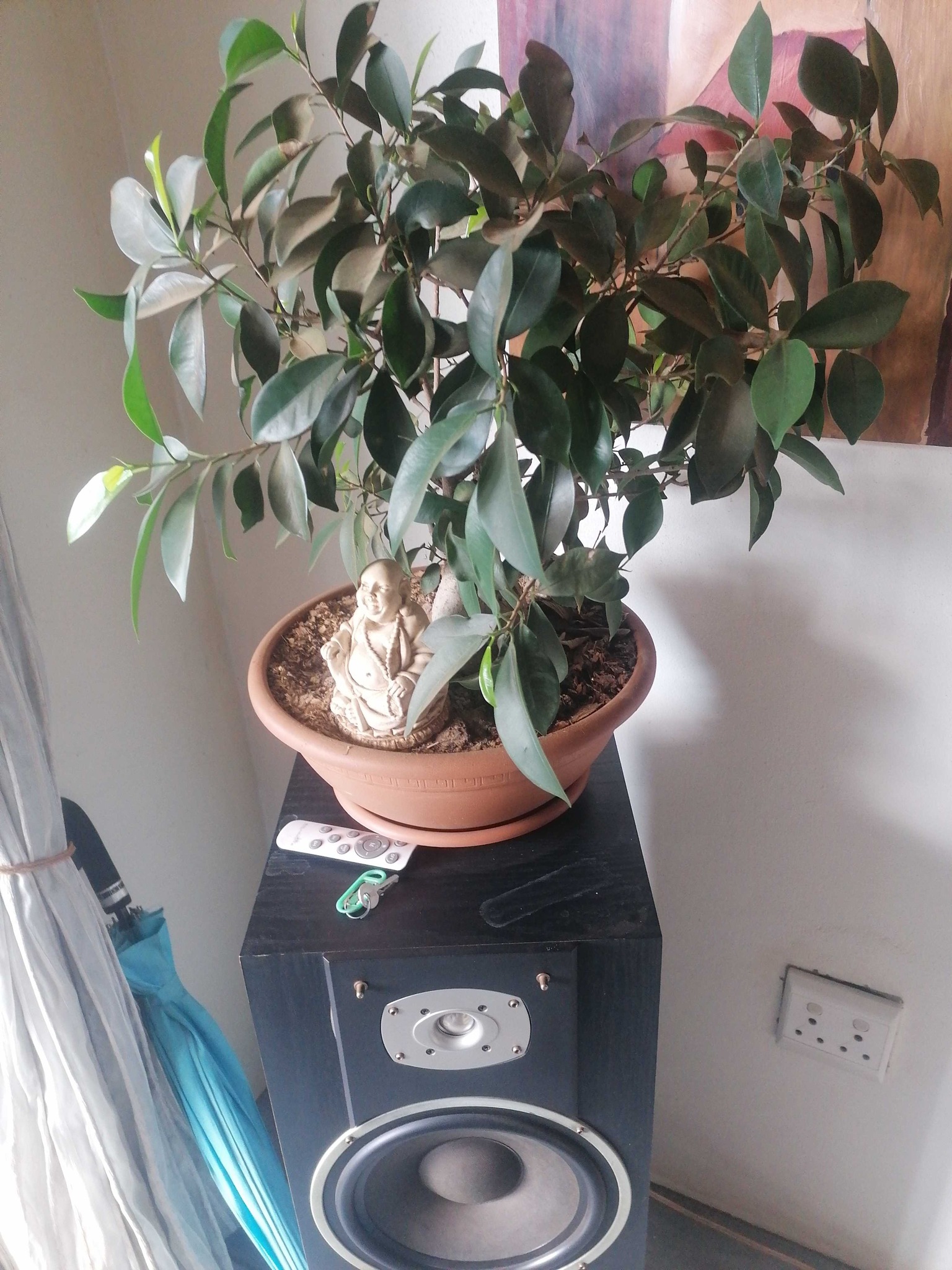
An evergreen tree known for its thick, bulbous aerial roots that resemble ginseng roots, supporting a dense canopy of small, dark green, oval glossy leaves.
Care Instructions
Thrives in bright indirect light with consistent moisture and high humidity. Avoid frequent movement as it is sensitive to environmental changes. Feed monthly during growing season.
Medicinal Value
We do not currently provide medicinal value for plant identifications.
Sunlight
Bright, indirect light. Can tolerate 2-4 hours of direct morning sun; needs protection from harsh afternoon rays.
Watering
Water when the top inch of soil feels dry. Highly sensitive to overwatering; ensure excellent drainage to prevent root rot.
Soil
Well-draining potting mix, ideally a blend of peat, perlite, and pine bark. Prefers a pH between 6.0 and 7.5.
Hardiness Zone
Zones 10-12; not frost-tolerant, prefers temperatures above 60°F (15°C).
Growth Habit
Perennial evergreen tree often grown as bonsai. Can reach 1-3 feet indoors, but up to 40+ feet in the wild.
Bloom Season
Rarely flowers indoors. In nature, it produces small, green to yellow bulb-like syconia (figs) throughout the year.
Toxicity
Toxic to humans, cats, and dogs. Contact with the milky sap can cause dermatitis; ingestion leads to vomiting and oral irritation.
Propagation
Most commonly propagated through softwood or semi-hardwood stem cuttings or air layering during the spring and summer.
Common Pests & Issues
Mass leaf drop is common if moved or overwatered. Susceptible to spider mites, scale insects, and mealybugs in dry indoor air.
Similar Species
Ficus benjamina (Weeping Fig), which has thinner, more pointed leaves and lacks the thick, bulbous ginseng-like roots.
Interesting Facts
Commonly known as the 'Potbelly Fig' due to its swollen trunk; it is one of the most popular species for beginning bonsai enthusiasts due to its hardiness.
Created At: 2026-06-22T12:51:32.912168