Bougainvillea
Scientific Name: Bougainvillea spectabilis
Plant Family: Nyctaginaceae (Four o'clock family)
Native Region: South America, primarily Brazil, Peru, and Argentina
Brief Description
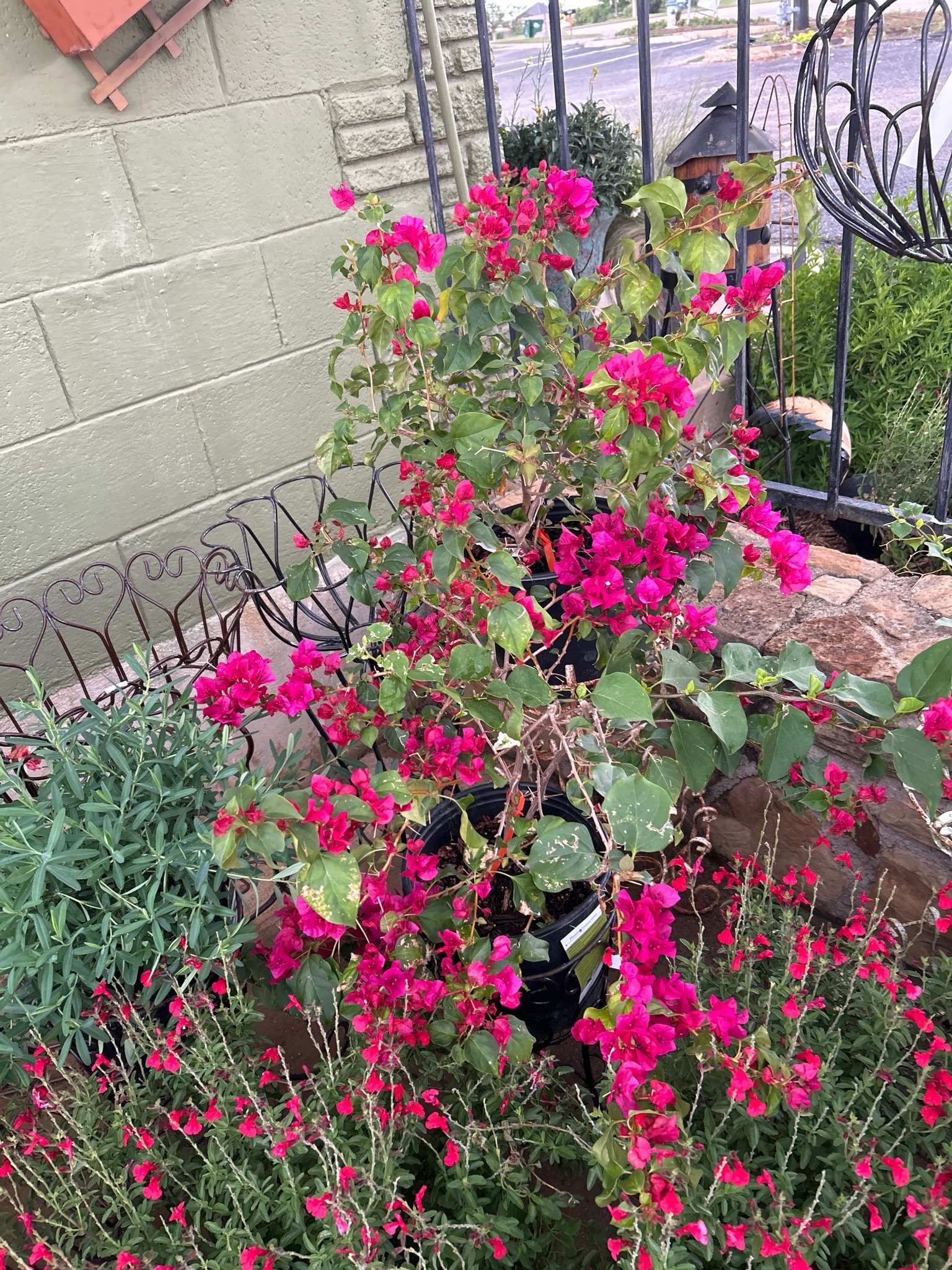
A woody climbing perennial vine or shrub known for its vibrant, papery, petal-like bracts that surround small white flowers. It has thorny stems and heart-shaped green leaves.
Care Instructions
Provide full sun for at least 6 hours a day. Water deeply but infrequently, allowing the soil to dry out between waterings. Use well-draining soil and a balanced fertilizer during the growing season with high potassium.
Medicinal Value
We do not currently provide medicinal value for plant identifications.
Sunlight
Full sun, requiring at least 6-8 hours of direct sunlight per day for the best bloom production.
Watering
Low to moderate watering needs; it is drought-tolerant once established. Over-watering can lead to root rot and fewer blooms.
Soil
Well-draining, gritty or loamy soil. Prefers slightly acidic pH between 5.5 and 6.0.
Hardiness Zone
USDA zones 9-11; it is frost-sensitive and should be brought indoors in cooler climates.
Growth Habit
Perennial evergreen woody vine or shrub; can reach 15-30 feet in height with support, or be kept small via pruning. Fast growth rate.
Bloom Season
Year-round in tropical climates; spring through autumn in temperate zones. Bracts can be pink, purple, red, orange, or yellow.
Toxicity
Mildly toxic to humans and pets. Skin contact with the sap can cause dermatitis; ingestion may cause mild digestive upset. Thorns can cause physical injury.
Propagation
Most commonly propagated via semi-hardwood cuttings or tip cuttings taken in spring or summer. Can also be propagated by layering.
Common Pests & Issues
Susceptible to aphids, spider mites, and leaf miners. Root rot from over-watering is common. Leaf spot may occur in high humidity.
Similar Species
Often confused with Mandevilla or Trumpet Vine, but distinguished by its papery bracts and sharp thorns on the stems.
Interesting Facts
The 'flowers' are actually colorful bracts; the true flowers are the tiny white/cream tubes in the center. It was named after Louis Antoine de Bougainville, a French admiral.
Created At: 2026-05-19T17:59:09.819178