Lemon Tree
Scientific Name: Citrus limon
Plant Family: Rutaceae
Native Region: South Asia (primarily North Eastern India)
Brief Description
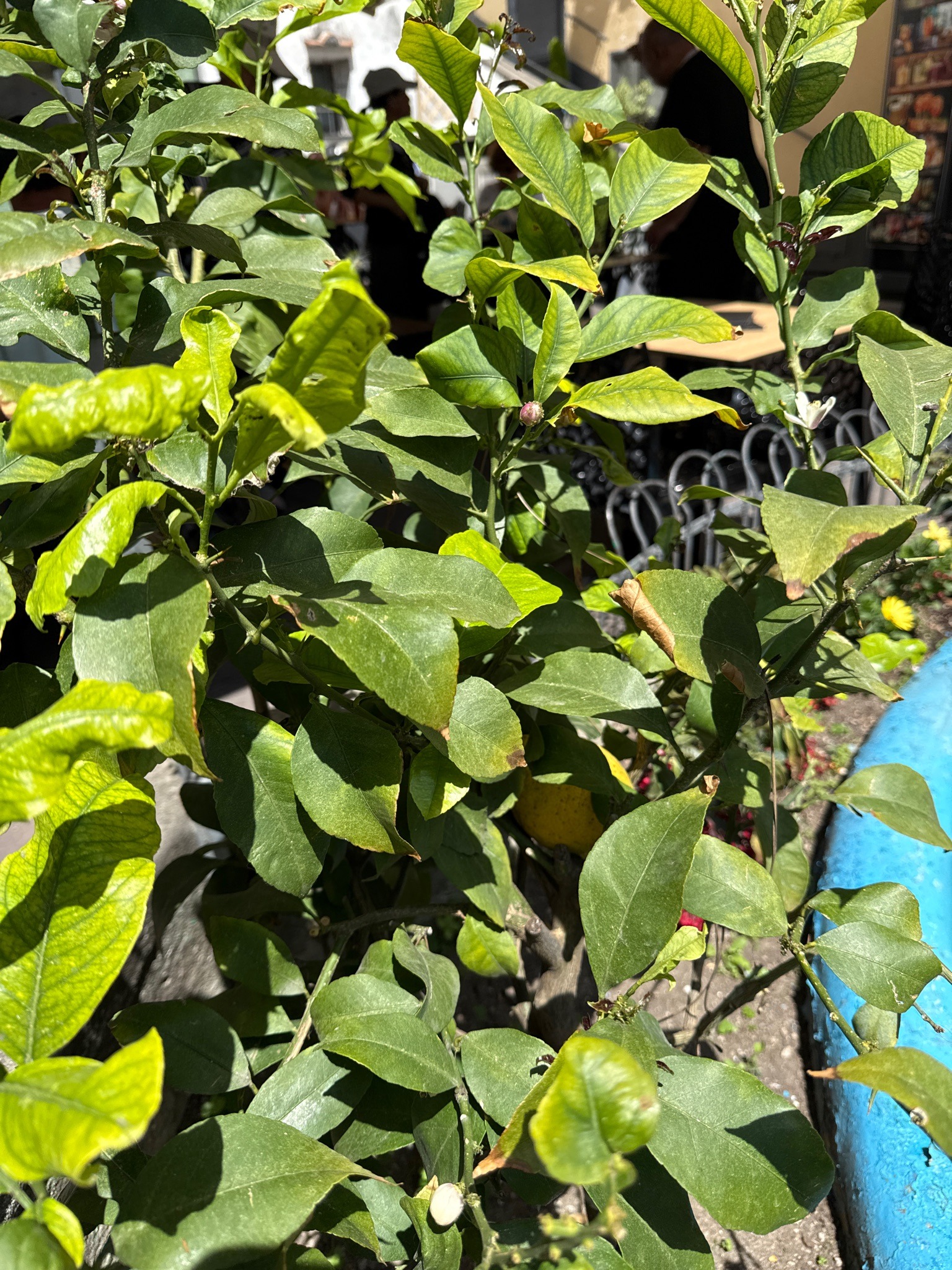
An evergreen citrus tree with serrated oval leaves, thorny branches, and fragrant white flowers that produce yellow oval fruits.
Care Instructions
Requires full sun, well-draining acidic soil, and consistent moisture without waterlogging. Feed with a citrus-specific fertilizer during the growing season.
Medicinal Value
We do not currently provide medicinal value for plant identifications.
Sunlight
Full sun, at least 6 to 8 hours of direct sunlight per day.
Watering
Water deeply once the top 2 inches of soil feel dry. They are moderately drought tolerant once established but fruit production requires regular hydration.
Soil
Loamy, well-draining soil with a slightly acidic pH (5.5 to 6.5).
Hardiness Zone
USDA zones 9-11; sensitive to frost and cold temperatures below 32°F (0°C).
Growth Habit
Perennial evergreen tree; can reach 10-20 feet in height with a spread of 10-15 feet, though dwarf varieties are smaller.
Bloom Season
Can bloom year-round in warm climates, but primarily in spring; flowers are white with 5 petals and highly fragrant.
Toxicity
Leaves and stems contain limonene which can be mildly toxic to dogs, cats, and horses if ingested in large quantities, causing gastrointestinal upset.
Propagation
Typically propagated via air layering, semi-hardwood cuttings, or grafting onto hardy rootstocks to ensure fruit quality.
Common Pests & Issues
Susceptible to aphids, scale, spider mites, and citrus leafminers. Diseases include root rot if overwatered and citrus scab.
Similar Species
Citrus aurantiifolia (Lime) has smaller, rounder fruit; Citrus sinensis (Orange) has wings on the leaf petioles which are less prominent in lemons.
Interesting Facts
Lemons were first brought to Europe by the Romans and later introduced to the Americas by Christopher Columbus in 1493.
Created At: 2026-05-02T11:29:14.557542