Thai Basil
Scientific Name: Ocimum basilicum var. thyrsiflora
Plant Family: Lamiaceae
Native Region: Southeast Asia
Brief Description
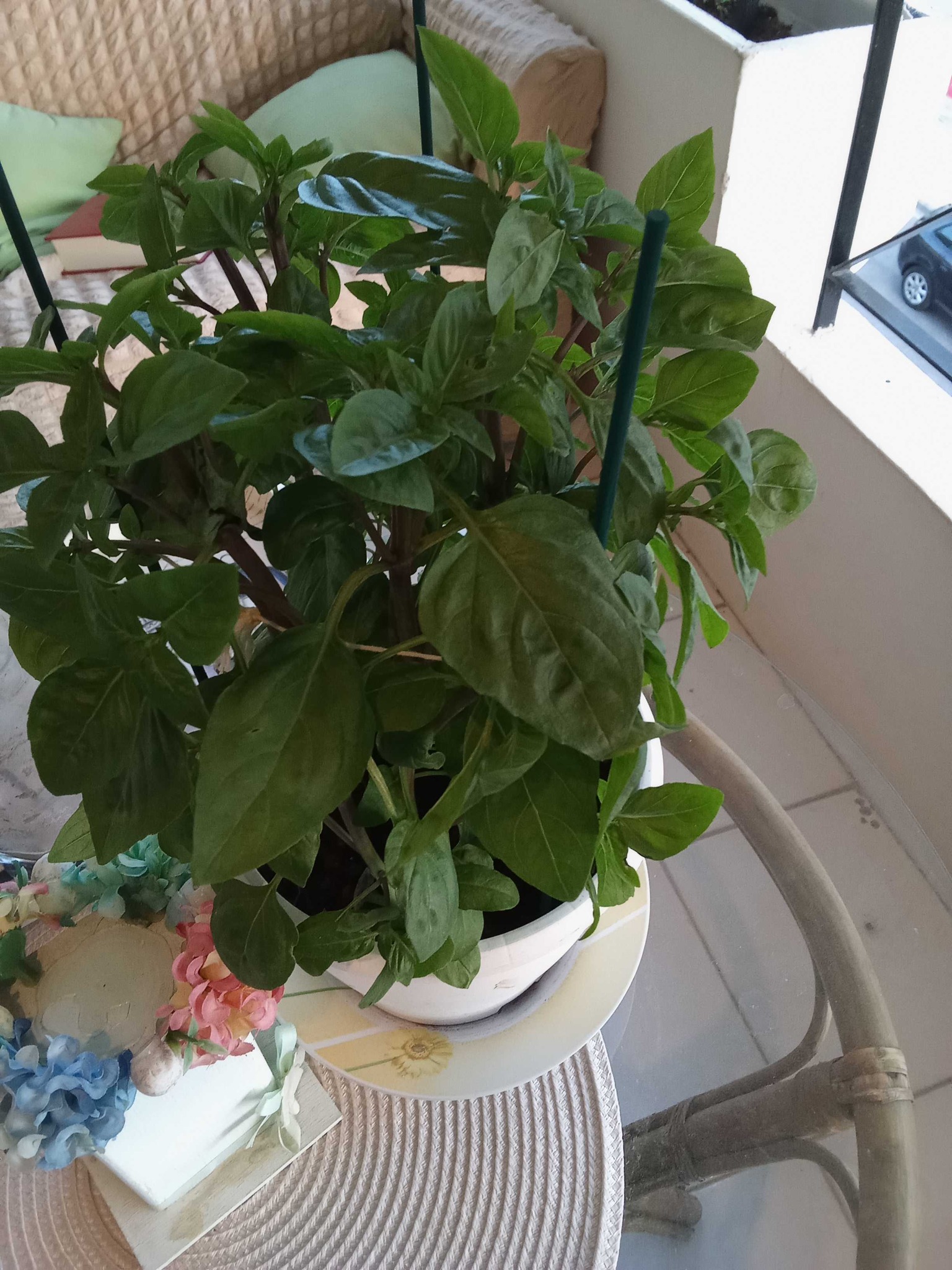
A lush herb with pointed, green leaves, reddish-purple stems, and a distinct spicy, anise-like scent. Unlike sweet basil, it maintains its shape and flavor well under high cooking temperatures.
Care Instructions
Thrives in warm environments with plenty of sunlight and consistent moisture. Pinch back flower buds to encourage foliage growth and harvest regularly. Fertilize lightly every 4-6 weeks during the growing season.
Medicinal Value
We do not currently provide medicinal value for plant identifications.
Sunlight
Full sun, at least 6-8 hours of direct light per day.
Watering
Requires consistent moisture; water when the top inch of soil feels dry. It is not drought-tolerant and will wilt quickly if thirsty, but recovers fast once watered.
Soil
Rich, well-draining soil with a pH between 6.0 and 7.5.
Hardiness Zone
USDA zones 10-11 as a perennial; grown as an annual elsewhere.
Growth Habit
Bushy annual or short-lived perennial, typically reaching 12-18 inches in height and spread.
Bloom Season
Late summer; produces upright spikes of small, tubular purple flowers.
Toxicity
Non-toxic to humans, dogs, and cats; generally considered safe to consume.
Propagation
Easily grown from seeds or by rooting stem cuttings in water or moist soil.
Common Pests & Issues
Susceptible to aphids, whiteflies, and spider mites. Overwatering can lead to root rot or downy mildew.
Similar Species
Sweet Basil (Ocimum basilicum) has rounder, lighter green leaves and green stems. Holy Basil (Tulsi) has a more musky scent and slightly hairy leaves.
Interesting Facts
In some cultures, Thai Basil is believed to ward off evil spirits. Its unique flavor comes from high levels of estragole and anethole, giving it a licorice-like aroma.
Created At: 2026-05-15T17:14:35.428715