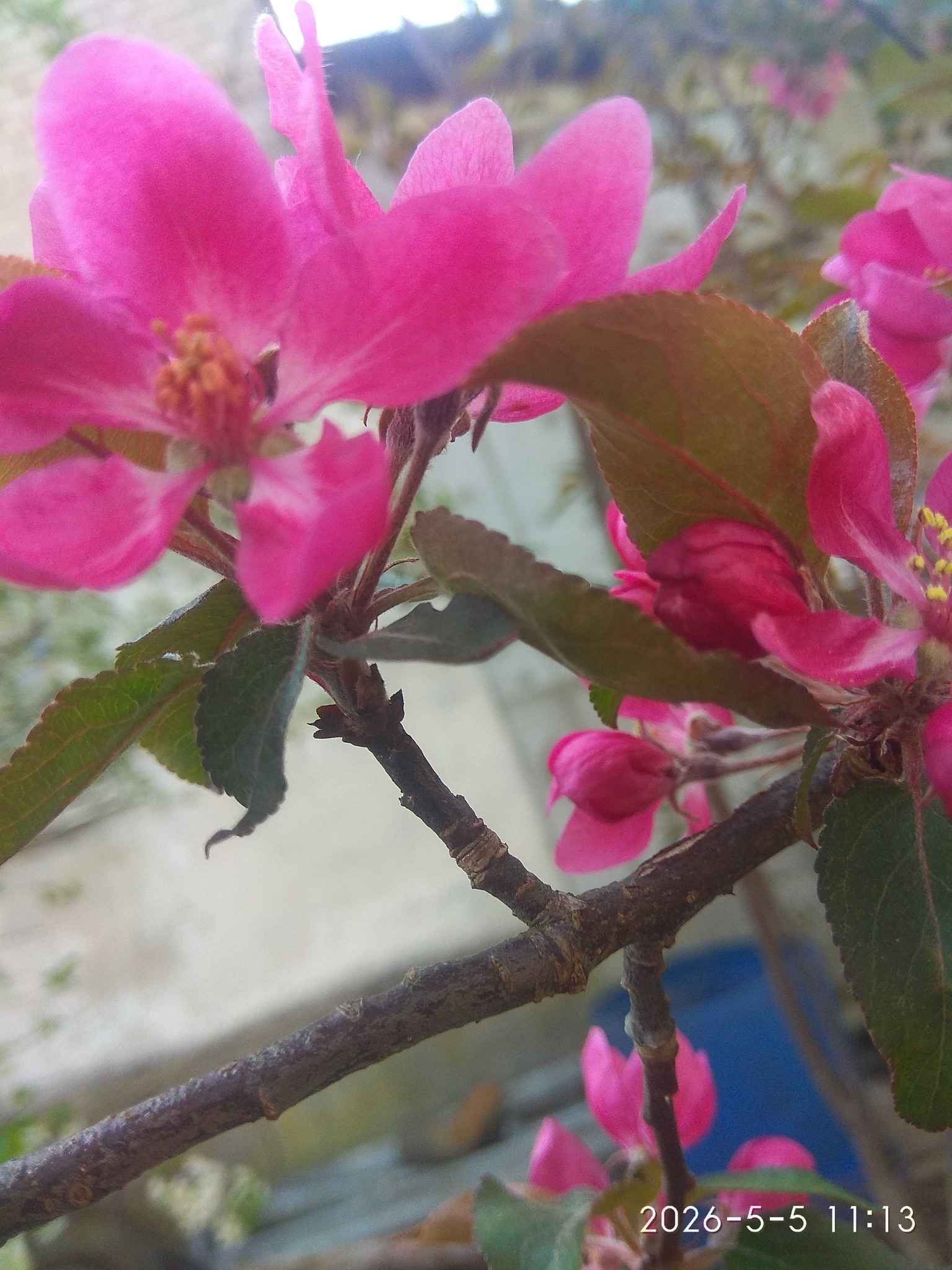
Purple Flowering Crabapple
Scientific Name: Malus x purpurea
Plant Family: Rosaceae
Native Region: Cultivated origin (hybrids of Malus species from Europe and Asia)
Brief Description
A small deciduous tree featuring showy dark pink to reddish-purple flowers and purple-tinged foliage that turns green as it matures.
Care Instructions
Thrives in full sun with well-draining soil. Requires regular watering during establishment and dry spells. Prune in late winter for shape and air circulation.
Medicinal Value
We do not currently provide medicinal value for plant identifications.
Sunlight
Full sun (at least 6-8 hours per day) for best flowering and disease resistance.
Watering
Intermediate; water once or twice a week during dry periods. Signs of overwatering include yellowing leaves and root rot.
Soil
Loamy, well-draining soil with a slightly acidic to neutral pH (6.0 to 7.0).
Hardiness Zone
USDA Zones 4-8
Growth Habit
Perennial deciduous tree; upright or rounded habit reaching 15-25 feet in height and spread with a moderate growth rate.
Bloom Season
Spring (April to May); flowers are fragrant, simple or semi-double, and vibrant magenta or deep pink.
Toxicity
Seeds contain cyanogenic glycosides which are toxic if ingested in large quantities by humans, dogs, or cats.
Propagation
Commonly propagated by softwood cuttings in summer or grafting onto hardy rootstock.
Common Pests & Issues
Susceptible to apple scab, fire blight, powdery mildew, and rust. Can be attacked by aphids and spider mites.
Similar Species
Malus floribunda (Japanese Flowering Crabapple) which typically has paler pink-to-white flowers, and Prunus species (Cherry Blossoms) which lack the distinct crabapple fruit.
Interesting Facts
The 'purple' in its name refers to the reddish-purple tint of the young leaves and the deep pigment of the flowers. Crabapples are considered any Malus species with fruit smaller than 2 inches in diameter.
Created At: 2026-05-05T08:14:08.884079