Miltonia cogniauxiae
Scientific Name: Miltonia x cogniauxiae
Plant Family: Orchidaceae (Orchid family)
Native Region: Brazil
Brief Description
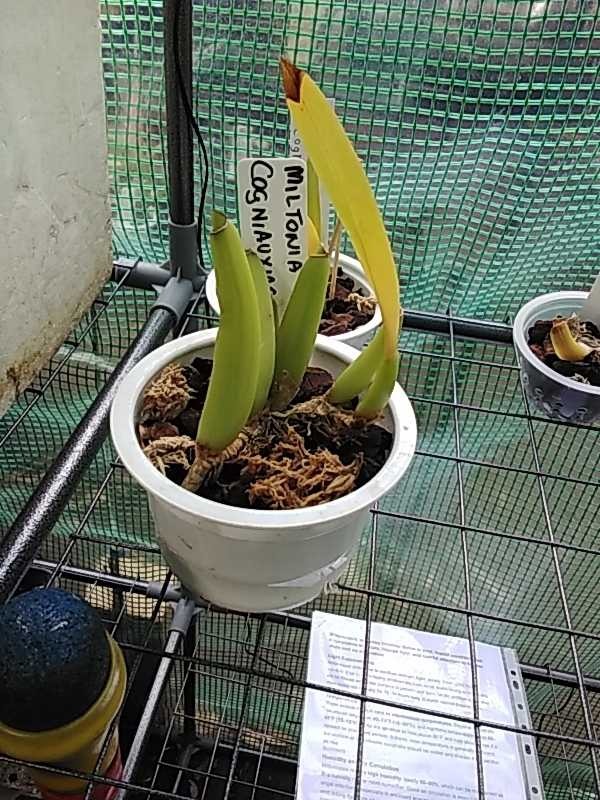
A natural hybrid orchid (Miltonia regnellii x Miltonia spectabilis) characterized by flattened, yellowish-green pseudobulbs and long, thin strap-like leaves. It produces star-shaped flowers with thin petals and a broad, colorful lip.
Care Instructions
Requires bright indirect light, high humidity, and consistent moisture. Use a specialized orchid bark mix and feed with a balanced orchid fertilizer during active growth. Maintain cool to intermediate temperatures.
Medicinal Value
We do not currently provide medicinal value for plant identifications.
Sunlight
Partial shade or filtered sunlight. Provide bright indirect light (1500–2500 foot-candles) for about 10-12 hours per day. Avoid direct midday sun which can scorch the thin foliage.
Watering
Keep the potting medium moist but not waterlogged. Water approximately 2-3 times per week depending on humidity. Signs of underwatering include shriveled pseudobulbs or pleated leaves.
Soil
Requires an epiphytic mix such as fine-grade orchid bark, sphagnum moss, or perlite. Prefers a slightly acidic pH between 5.5 and 6.5.
Hardiness Zone
Zones 10-12; not frost-tolerant. Ideal temperatures are 60°F–80°F (15°C–27°C).
Growth Habit
Perennial epiphyte with a sympodial growth habit. Reaches approximately 8-12 inches in height with a moderate growth rate.
Bloom Season
Typically blooms in late summer or autumn. Flowers are often brownish-purple with a distinctive lavender or white lip.
Toxicity
Non-toxic to humans, dogs, and cats. Most Miltonia species are considered safe for pets.
Propagation
Propagated by division of pseudobulbs during repotting. Ensure each division has at least 3-4 healthy pseudobulbs.
Common Pests & Issues
Susceptible to spider mites, aphids, and scale. Overwatering can lead to root rot. Leaves may turn yellow (as seen in the image) due to excessive light or nutrient deficiencies.
Similar Species
Miltonia spectabilis (one of its parents, but has larger single flowers) and Miltoniopsis (pansy orchids, which prefer cooler temperatures and have different flower shapes).
Interesting Facts
This plant is a natural hybrid, meaning it occurred spontaneously in the wild forests of Brazil where the ranges of its parent species overlapped.
Created At: 2026-04-25T06:26:03.359378