Gardenia
Scientific Name: Gardenia jasminoides
Plant Family: Rubiaceae
Native Region: Native to tropical and subtropical regions of East Asia (China, Japan, Taiwan).
Brief Description
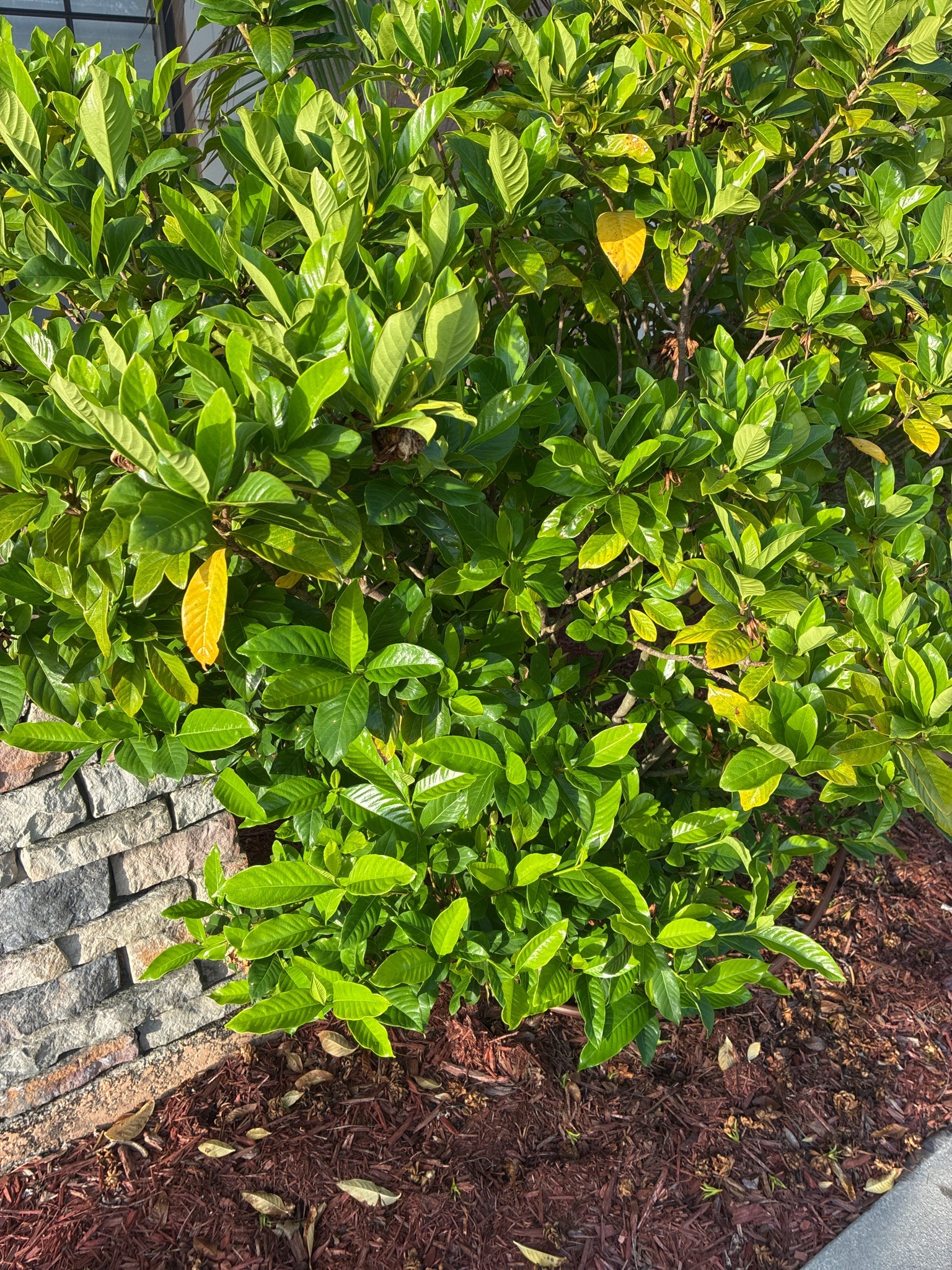
An evergreen shrub known for its glossy, dark green leaves and highly fragrant, creamy-white flowers. The leaves are typically lanceolate to ovate and have a waxy texture with prominent veins.
Care Instructions
Provide bright, indirect sunlight or morning sun with afternoon shade. Maintain consistent moisture in acidic, well-draining soil. Apply an acid-loving fertilizer in spring and summer. Avoid transplanting often as they have sensitive roots.
Medicinal Value
We do not currently provide medicinal value for plant identifications.
Sunlight
Partial shade to full sun. Ideally 6-8 hours of morning sunlight with protection from hot afternoon sun to prevent leaf scorch.
Watering
Requires regular watering to keep the soil consistently moist but never waterlogged. Do not allow the soil to dry out completely. Mulching helps retain moisture.
Soil
Rich, organic, moist, and well-drained acidic soil with a pH between 5.0 and 6.0.
Hardiness Zone
8 to 11 (USDA). They are sensitive to frost and cold winds.
Growth Habit
Perennial evergreen shrub with a rounded, bushy habit. Usually reaches 3 to 8 feet in height and width depending on the cultivar.
Bloom Season
Primarily late spring through summer. Flowers are white, turning creamy yellow as they age, and possess a heavy, sweet fragrance.
Toxicity
Contains geniposide and gardenoside, which are toxic to dogs, cats, and horses. Ingestion can cause vomiting, diarrhea, and hives.
Propagation
Best propagated through softwood cuttings taken in summer. Use a rooting hormone and provide high humidity and warmth.
Common Pests & Issues
Susceptible to whiteflies, aphids, and scale insects. Cultural issues include bud drop (caused by temperature fluctuations) and leaf yellowing (chlorosis) due to alkaline soil or iron deficiency.
Similar Species
Jasmine (Jasminum spp.) has similar fragrant white flowers but typically has thinner, non-glossy leaves and a climbing or vining habit. Tabernaemontana (Pinwheel Jasmine) looks similar but lacks the intense scent.
Interesting Facts
Gardenias are often used in perfumes and as corsages. The plant was named after Dr. Alexander Garden, a Scottish-born American naturalist and physician.
Created At: 2026-06-01T11:32:48.899947