Gynura procumbens
Scientific Name: Gynura procumbens
Plant Family: Asteraceae
Native Region: Southeast Asia, including China, Thailand, Indonesia, and Malaysia.
Brief Description
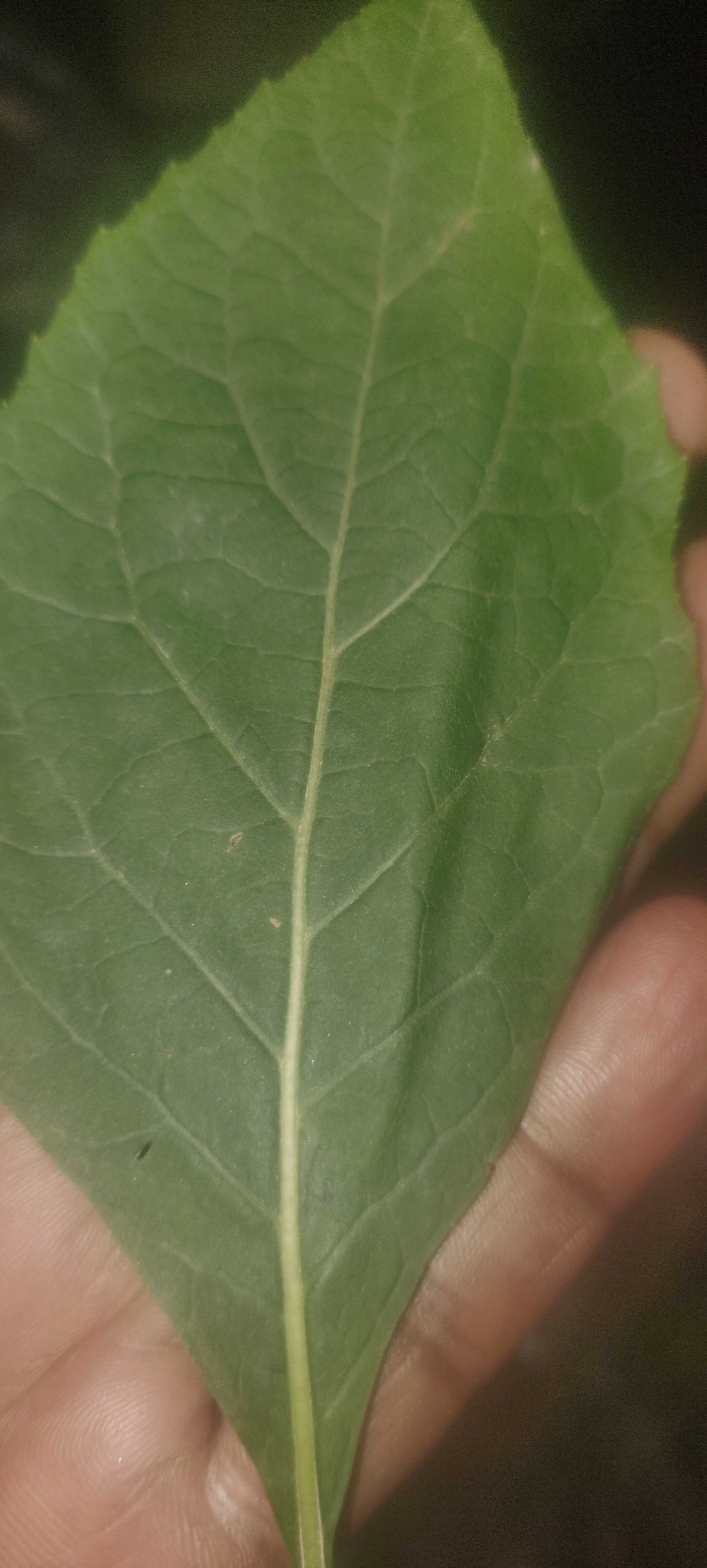
A sprawling herbaceous perennial known for its smooth, slightly fleshy green leaves with serrated margins and prominent veins. It can grow as a groundcover or a climbing vine.
Care Instructions
Thrives in warm, humid conditions. Provide bright indirect light and keep the soil consistently moist but well-drained. Feed with a balanced liquid fertilizer every 2-4 weeks during the growing season.
Medicinal Value
We do not currently provide medicinal value for plant identifications.
Sunlight
Bright, indirect light or partial shade; approximately 4 to 6 hours of filtered sunlight per day.
Watering
Requires regular watering to keep soil moist. It is not drought-tolerant and will wilt if dry, but avoid waterlogging to prevent root rot.
Soil
Rich, loamy, well-draining soil with a slightly acidic to neutral pH (6.0 to 7.0).
Hardiness Zone
USDA zones 9-11; sensitive to frost and should be brought indoors in cooler climates.
Growth Habit
Perennial evergreen; spreading or climbing habit reaching 1-2 feet in height and several feet in width. Fast growth rate.
Bloom Season
Produces small, yellow to orange thistle-like flowers, though it rarely blooms when grown as a houseplant or frequently harvested.
Toxicity
Generally considered non-toxic to humans and commonly consumed as food. No specific toxicity reported for cats or dogs, but consult a vet if large amounts are ingested.
Propagation
Easily propagated by stem cuttings in water or moist soil. Cuttings root quickly within 1-2 weeks.
Common Pests & Issues
Susceptible to aphids, spider mites, and whiteflies. Overwatering can lead to fungal issues and root rot.
Similar Species
Gynura aurantiaca (Purple Passion Plant), which has distinct purple hairs, unlike the smooth green leaves of G. procumbens.
Interesting Facts
In Indonesia, it is called 'Sambung Nyawa,' which translates to 'continuation of life' or 'prolonging life,' due to its perceived tonic properties.
Created At: 2026-06-26T07:28:18.499128