Black Nightshade
Scientific Name: Solanum nigrum
Plant Family: Solanaceae (Nightshade family)
Native Region: Native to Eurasia; naturalized worldwide including the Americas, Australia, and parts of Africa.
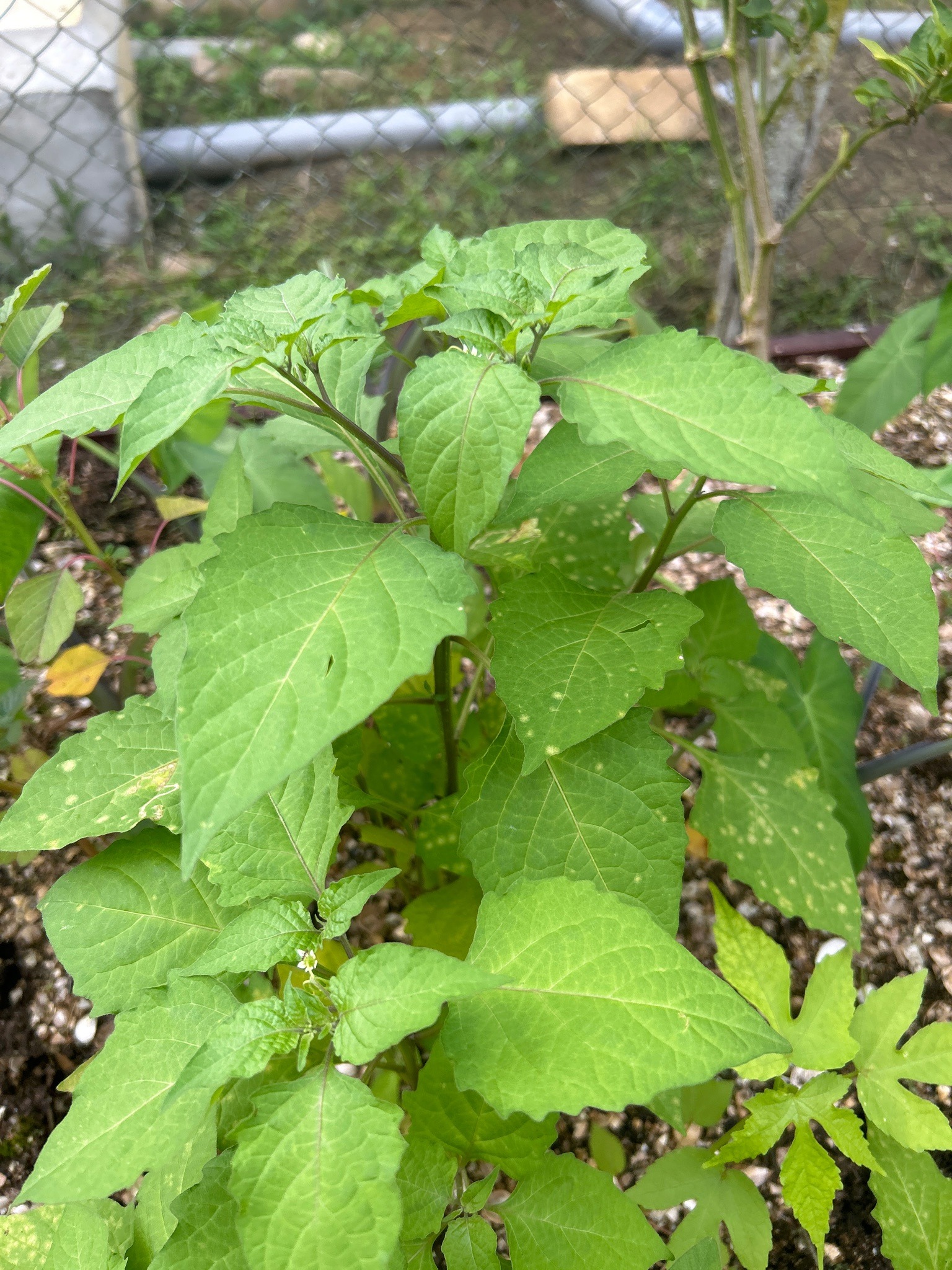
Brief Description
A common herbaceous annual or short-lived perennial characterized by ovate leaves with wavy margins, small white star-shaped flowers with yellow centers, and small green berries that turn black when ripe.
Care Instructions
This plant is often considered a weed and requires little care. It thrives in disturbed soils with full to partial sun. If cultivated, provide moderate water and well-draining soil. No fertilizer is usually necessary as it is highly adaptable.
Medicinal Value
We do not currently provide medicinal value for plant identifications.
Sunlight
Full sun to partial shade; 4-8 hours of direct light daily.
Watering
Moderate; prefers consistently moist but well-drained soil. It is moderately drought-tolerant once established.
Soil
Adaptable to various soil types, but prefers nutrient-rich, moist, loamy soils with a neutral pH (6.0-7.5).
Hardiness Zone
Typically grown as an annual in USDA zones 4-11, but can be a perennial in frost-free climates.
Growth Habit
Upright, branching herbaceous plant growing 30-60 cm (1-2 feet) tall. It has a relatively fast growth rate.
Bloom Season
Summer to early autumn; produces clusters of small white five-petaled flowers with prominent yellow anthers.
Toxicity
Contains solanine and other glycoalkaloids. Unripe (green) berries are highly toxic to humans, dogs, and cats. Symptoms include nausea, vomiting, and abdominal pain. Ripe berries are sometimes debated but generally considered unsafe for casual consumption.
Propagation
Easily propagates by seed, which are often dispersed by birds. Seeds germinate readily in warm, disturbed earth.
Common Pests & Issues
Susceptible to common nightshade pests like flea beetles, aphids, and tobacco hornworms. May host potato virus or late blight.
Similar Species
Often confused with Atropa belladonna (Deadly Nightshade), which has larger, bell-shaped purple flowers and single berries instead of clusters. Also similar to Solanum americanum.
Interesting Facts
While feared for its toxicity, variants of the Black Nightshade complex have been used as food for centuries in Africa and Asia. It was famously noted by Pliny the Elder in ancient Roman texts.
Created At: 2026-05-05T20:20:25.467453