Carnation (Dianthus)
Scientific Name: Dianthus caryophyllus
Plant Family: Caryophyllaceae
Native Region: Mediterranean region, now widely cultivated and naturalized globally
Brief Description
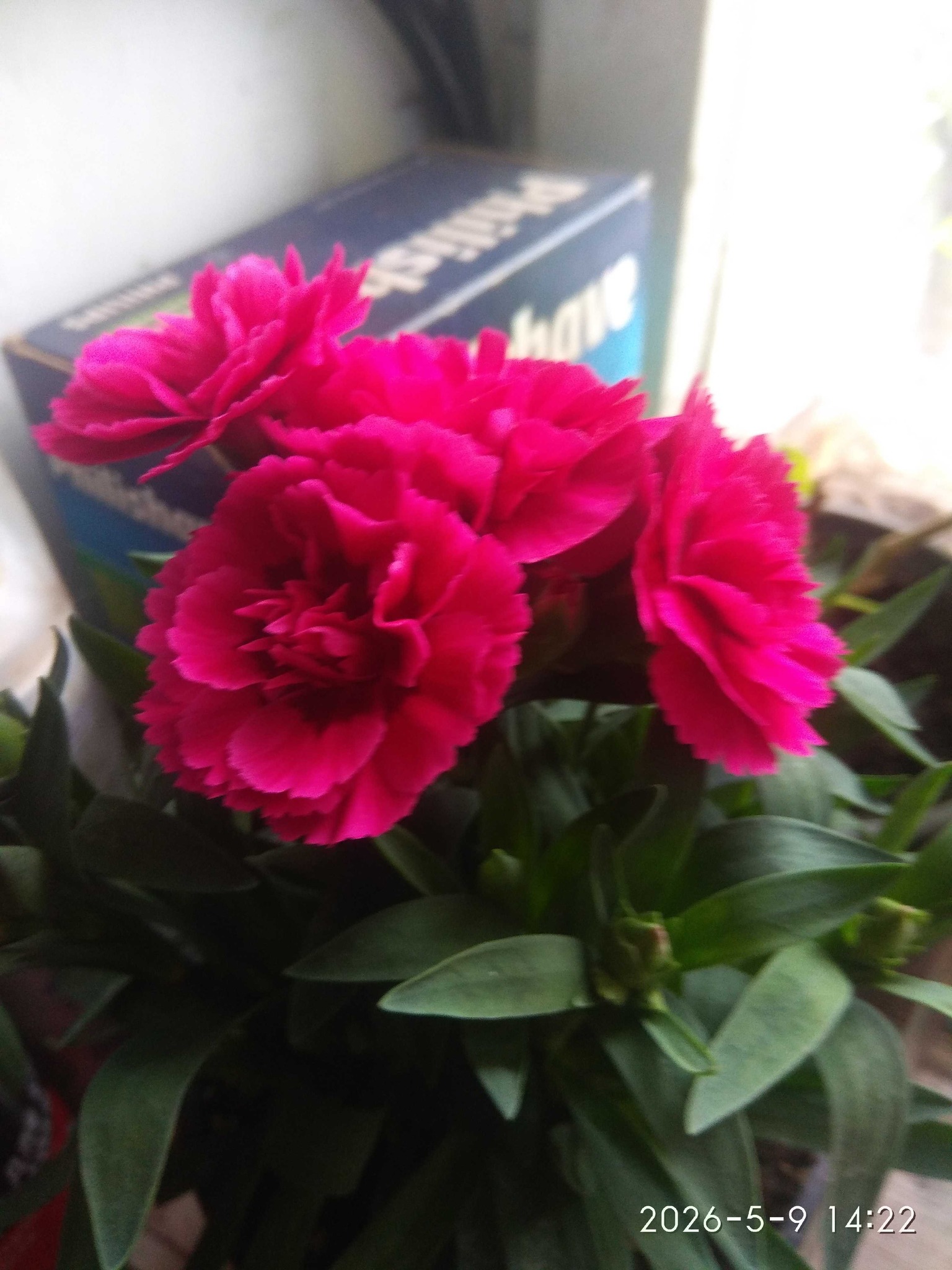
A popular herbaceous perennial known for its fringed, ruffled double flowers and glaucous, blue-green linear leaves. The flowers are often fragrant and come in various shades of pink, red, white, and bicolors.
Care Instructions
Provide at least 6 hours of sunlight and well-draining soil. Water when the top inch of soil feels dry, avoiding overhead watering to prevent fungal issues. Fertilize every 4-8 weeks during the growing season with a balanced fertilizer.
Medicinal Value
We do not currently provide medicinal value for plant identifications.
Sunlight
Full sun, requiring at least 6 to 8 hours of direct light daily for best blooming and stem strength.
Watering
Moderate watering; allow the soil to dry out slightly between waterings. Use about 1 inch of water per week. Over-watering can lead to root rot.
Soil
Well-draining, fertile, alkaline to neutral soil (pH 6.7-7.5). They do not tolerate soggy or heavy clay soils well.
Hardiness Zone
USDA Zones 4 through 9
Growth Habit
Herbaceous perennial; typically grows in a mounded habit. Reaches 12-24 inches in height and 10-14 inches in spread depending on the cultivar.
Bloom Season
Late spring through early fall, especially if deadheaded; produces ruffled, clove-scented flowers.
Toxicity
Mildly toxic to dogs and cats if ingested, potentially causing mild gastrointestinal upset or dermatitis (skin irritation).
Propagation
Easily propagated through terminal stem cuttings, division in spring, or by sowing seeds in early spring.
Common Pests & Issues
Susceptible to aphids, spider mites, and slugs. Fungal diseases like powdery mildew, rust, and fusarium wilt can occur in humid conditions or poor drainage.
Similar Species
Dianthus barbatus (Sweet William) features flatter flower clusters; Dianthus chinensis (China Pink) usually has smaller, less ruffled flowers and is grown as an annual.
Interesting Facts
Carnations are the birth flower for January and are historically associated with Mother's Day. The scientific name 'Dianthus' roughly translates to 'flower of the gods' in Greek.
Created At: 2026-05-09T11:22:34.566156