Bee Blossom (Gaura)
Scientific Name: Oenothera lindheimeri
Plant Family: Onagraceae
Native Region: Southern United States (Texas, Louisiana) and Mexico
Brief Description
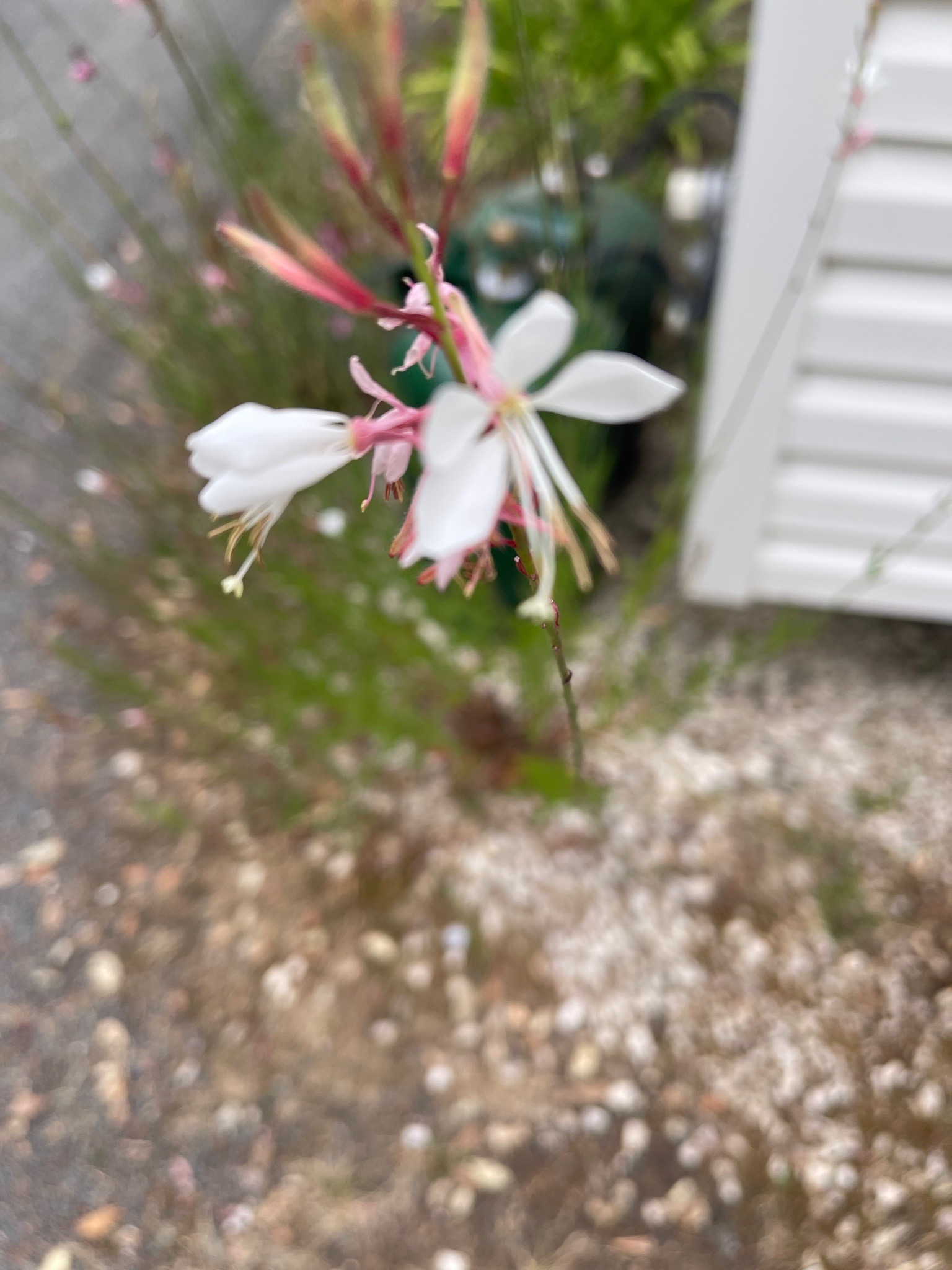
A clumping perennial known for its wispy, wand-like stems and four-petaled white or pink flowers that resemble hovering butterflies or bees.
Care Instructions
Low-maintenance plant; requires full sun and well-draining soil. Do not overwater or over-fertilize, as this leads to floppy stems. Deadhead spent flower wands to encourage a second flush of blooms.
Medicinal Value
We do not currently provide medicinal value for plant identifications.
Sunlight
Full sun (6+ hours per day). Can tolerate partial shade but may become leggy and produce fewer blooms.
Watering
Drought-tolerant once established. Water regularly during the first growing season; then only during extended dry periods. Sensitive to soggy roots.
Soil
Well-drained sandy or loamy soil; pH 5.5 to 7.0. Thrives in poor soil.
Hardiness Zone
5 through 9
Growth Habit
Herbaceous perennial growing 2 to 5 feet tall and 2 to 3 feet wide, forming an airy, upright bushy clump.
Bloom Season
Early summer to early fall; flowers open white and fade to pink, featuring long, elegant stamens.
Toxicity
Generally considered non-toxic to humans, dogs, cats, and horses.
Propagation
Easily propagated by basal cuttings in spring or by seed. Often self-seeds in the garden.
Common Pests & Issues
Relatively pest-free but can be affected by aphids or spider mites. Root rot occurs in poorly drained soils; rust and powdery mildew can occur in humid conditions.
Similar Species
Gaura biennis (hairy/biennial gaura) is taller and more aggressive; Clarkia species have similar flower structures but different growth habits.
Interesting Facts
The genus was formerly named Gaura, meaning 'superb.' Its common name 'Whirling Butterflies' refers to how the flowers move in the slightest breeze.
Created At: 2026-06-20T15:20:05.997474