Yaupon Holly
Scientific Name: Ilex vomitoria
Plant Family: Aquifoliaceae
Native Region: Southeastern United States, from Virginia south to Florida and west to Texas
Brief Description
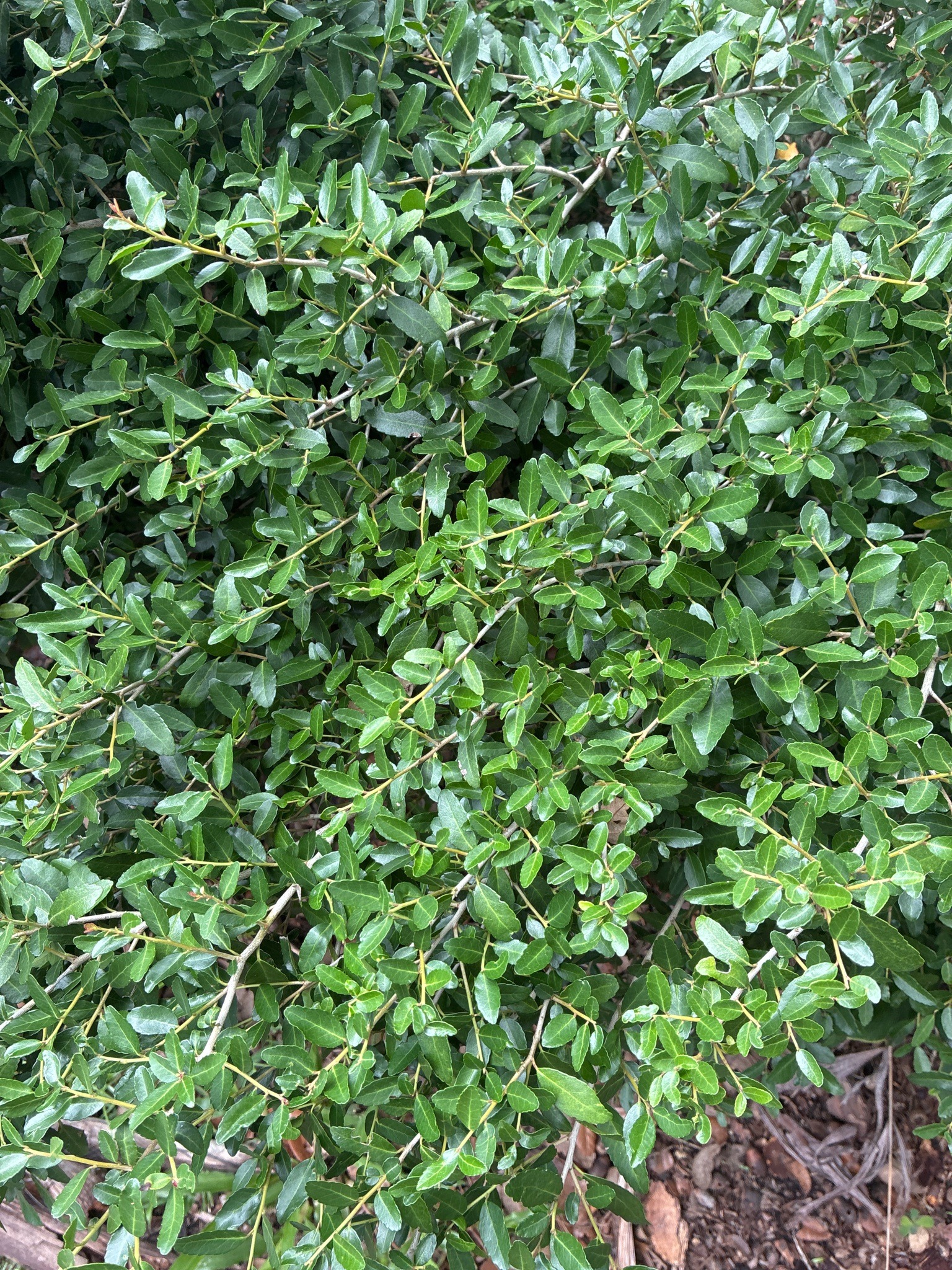
An evergreen shrub or small tree with small, leathery, dark green oval leaves with toothed margins and gray bark. Female plants produce bright red berries in winter.
Care Instructions
Highly adaptable and hardy. Plant in full sun to partial shade in well-draining soil. It is drought-tolerant once established but benefits from regular watering during dry spells. Mulch to retain moisture and prune to maintain shape.
Medicinal Value
We do not currently provide medicinal value for plant identifications.
Sunlight
Full sun to partial shade (4-8 hours of sunlight per day). More sun results in denser growth and more berries.
Watering
Moderate water needs. Highly drought-tolerant once established. Water weekly during the first growing season; thereafter, it can survive on natural rainfall unless in extreme heat.
Soil
Adaptable to various soils including sandy, loamy, or clay. Prefers slightly acidic to neutral pH (5.0-7.0) and tolerates salt spray.
Hardiness Zone
USDA zones 7-9
Growth Habit
Perennial evergreen shrub or small tree. Can reach 15-25 feet tall and 10-15 feet wide, though dwarf cultivars (3-4 feet) are common in landscaping. Moderate growth rate.
Bloom Season
Small, inconspicuous white flowers bloom in spring (April-May). Females produce red drupes (berries) that persist through winter.
Toxicity
Berries are mildly toxic to humans, dogs, and cats if ingested, potentially causing vomiting and diarrhea. Safe for birds.
Propagation
Commonly propagated by semi-hardwood cuttings in summer or by seeds (though seeds require a long stratification period).
Common Pests & Issues
Generally pest-resistant. May occasionally face leaf miners, scale, or aphids. Root rot can occur in poorly drained, soggy soil.
Similar Species
Dwarf Burford Holly (leaves are larger/glossier with a single terminal spine) and Boxwood (leaves are opposite, whereas Yaupon leaves are alternate).
Interesting Facts
The species name 'vomitoria' comes from the mistaken belief that the plant induced vomiting; it was actually other ingredients in the Native American ceremonial tea that caused the effect.
Created At: 2026-05-30T17:45:18.981369