Common Vetch
Scientific Name: Vicia sativa
Plant Family: Fabaceae (Legume family)
Native Region: Europe, North Africa, and West Asia; now naturalized worldwide.
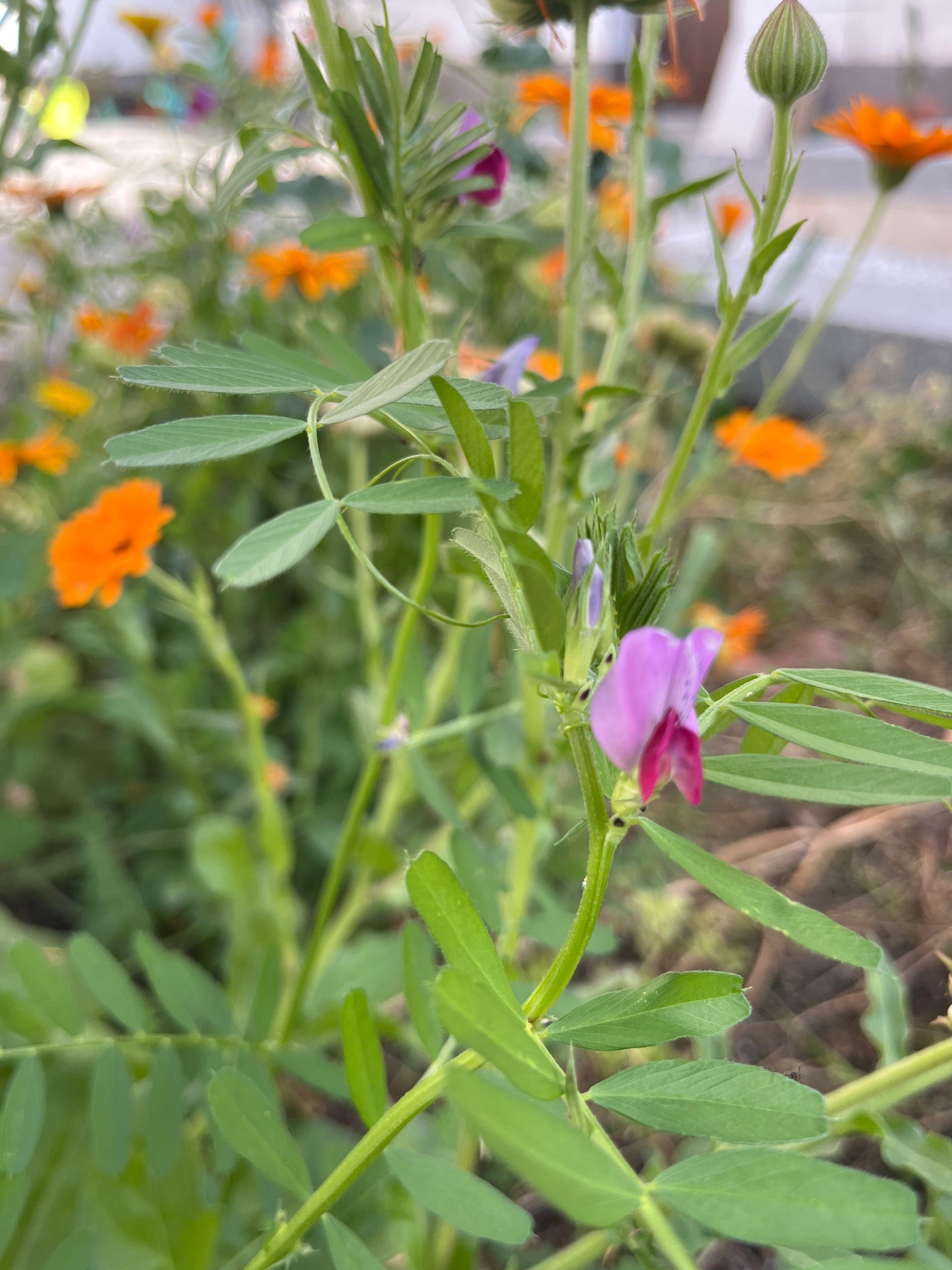
Brief Description
A climbing or scrambling annual legume with pinnate leaves ending in tendrils. It produces pea-like purple to reddish-pink flowers and slender green pods.
Care Instructions
Low maintenance. Requires full sun and well-drained soil. It often grows as a cover crop or wildflower and needs little water once established.
Medicinal Value
We do not currently provide medicinal value for plant identifications.
Sunlight
Full sun to partial shade; ideally 6+ hours of direct light.
Watering
Moderate; prefers moist but well-drained soil. Drought tolerant once established but will yellow if kept waterlogged.
Soil
Adaptable to various soils but thrives in loam or sandy soils with a pH of 6.0 to 7.5.
Hardiness Zone
USDA zones 3-11; grown as a winter annual in warmer climates and a spring annual in cooler ones.
Growth Habit
Climbing, scrambling annual herb. Reaches 1-3 feet in height/length using tendrils for support.
Bloom Season
Spring to early summer. Flowers are typically paired, butterfly-shaped, and violet-purple.
Toxicity
Contains cyanogenic glycosides and vicianin. Primarily toxic to humans and horses if seeds are consumed in large quantities; can cause favism in susceptible individuals.
Propagation
Easily propagated by seed sown in autumn or early spring.
Common Pests & Issues
Generally hardy but can be affected by pea aphids, downy mildew, and root rot in poorly drained soils.
Similar Species
Hairy Vetch (Vicia villosa), which has more flowers per cluster and hairy stems, and Bush Vetch (Vicia sepium).
Interesting Facts
Common vetch is a nitrogen-fixer, meaning it improves soil fertility by converting atmospheric nitrogen into a form plants can use.
Created At: 2026-05-01T16:30:12.418710