Redroot Pigweed
Scientific Name: Amaranthus retroflexus
Plant Family: Amaranthaceae
Native Region: Native to tropical Americas; naturalized globally as a common agricultural weed.
Brief Description
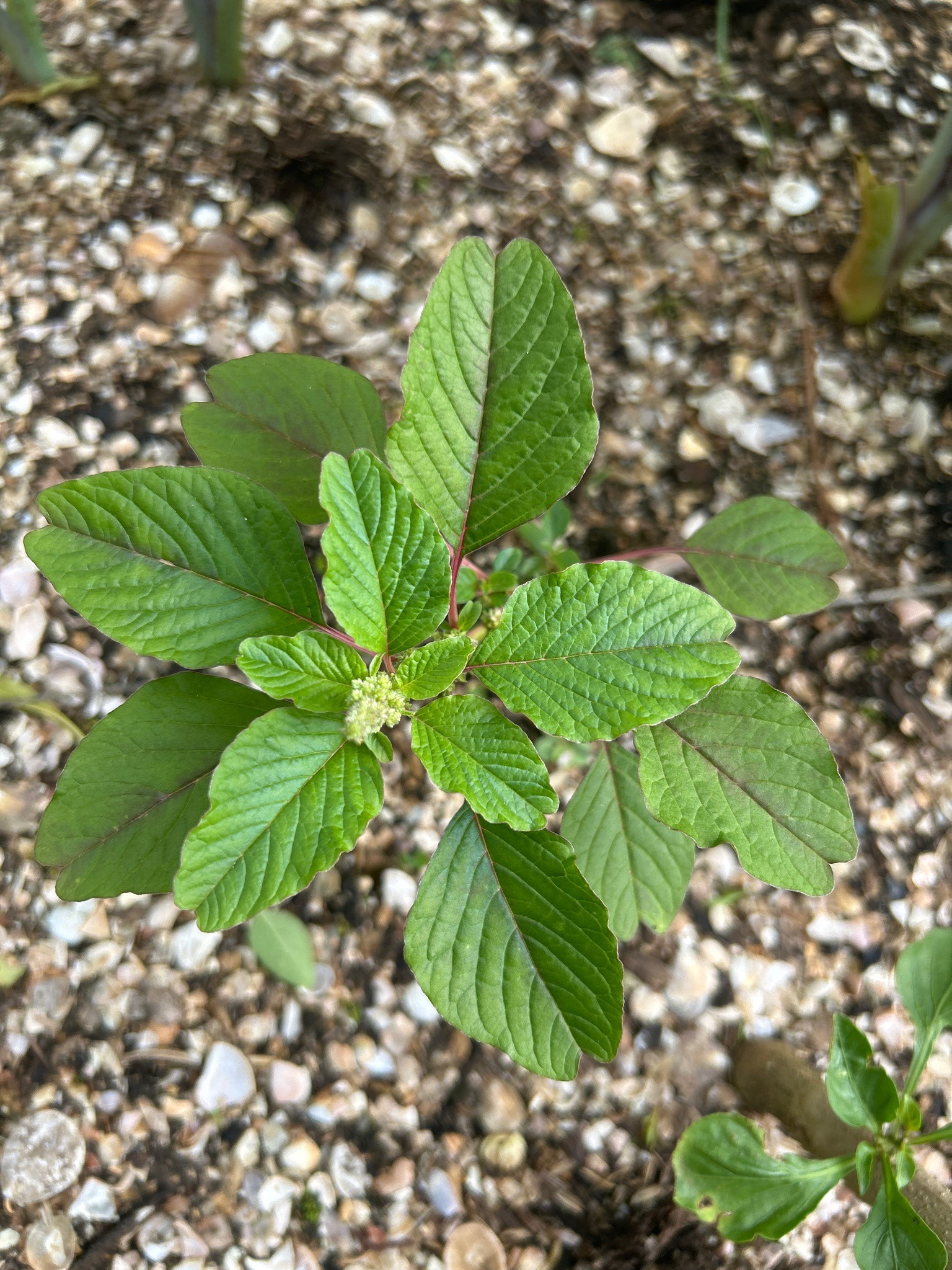
An erect, annual herb with dull green, egg-shaped leaves and a rough, hairy stem often tinged with red toward the base. It features compact, bristly green flower spikes.
Care Instructions
As a prolific weed, it requires little care. It thrives in disturbed soils with full sun and moderate moisture, but can survive in poor, dry conditions. No fertilization is needed.
Medicinal Value
We do not currently provide medicinal value for plant identifications.
Sunlight
Full sun (6+ hours per day); it is a C4 plant that thrives in high heat and intense light.
Watering
Moderate; highly drought-tolerant once established but grows more vigorously with regular moisture. Avoid waterlogging.
Soil
Prefers nitrogen-rich, well-draining loamy soils with a pH of 5.5 to 8.0.
Hardiness Zone
Annual; grows in USDA zones 2-11 during frost-free months.
Growth Habit
Summer annual with an upright growth form, typically reaching 1 to 3 feet in height, though it can grow taller in optimal conditions.
Bloom Season
Mid-summer to early autumn; flowers are small, green, and clustered in dense, terminal bristly panicles.
Toxicity
Can be toxic to cattle, sheep, and horses if consumed in large quantities due to high nitrate levels and oxalates, potentially causing kidney failure. Generally safe for humans in small culinary amounts if cooked.
Propagation
Propagates solely by seed; a single plant can produce over 100,000 tiny black seeds that remain viable for decades.
Common Pests & Issues
Susceptible to aphids and flea beetles. Often hosts viruses that affect commercial crops like beets and spinach.
Similar Species
Amaranthus hybridus (Smooth Pigweed) which has smoother stems and less bristly flower spikes, and Chenopodium album (Lambsquarters) which has mealy, triangular leaves.
Interesting Facts
The seeds of Amaranthus retroflexus were a significant food source for many Native American tribes. Today, it is mostly known as an herbicide-resistant 'superweed' in commercial agriculture.
Created At: 2026-05-05T20:24:52.255537