Lavender Cotton
Scientific Name: Santolina chamaecyparissus
Plant Family: Asteraceae
Native Region: Western and Central Mediterranean region of Europe and North Africa
Brief Description
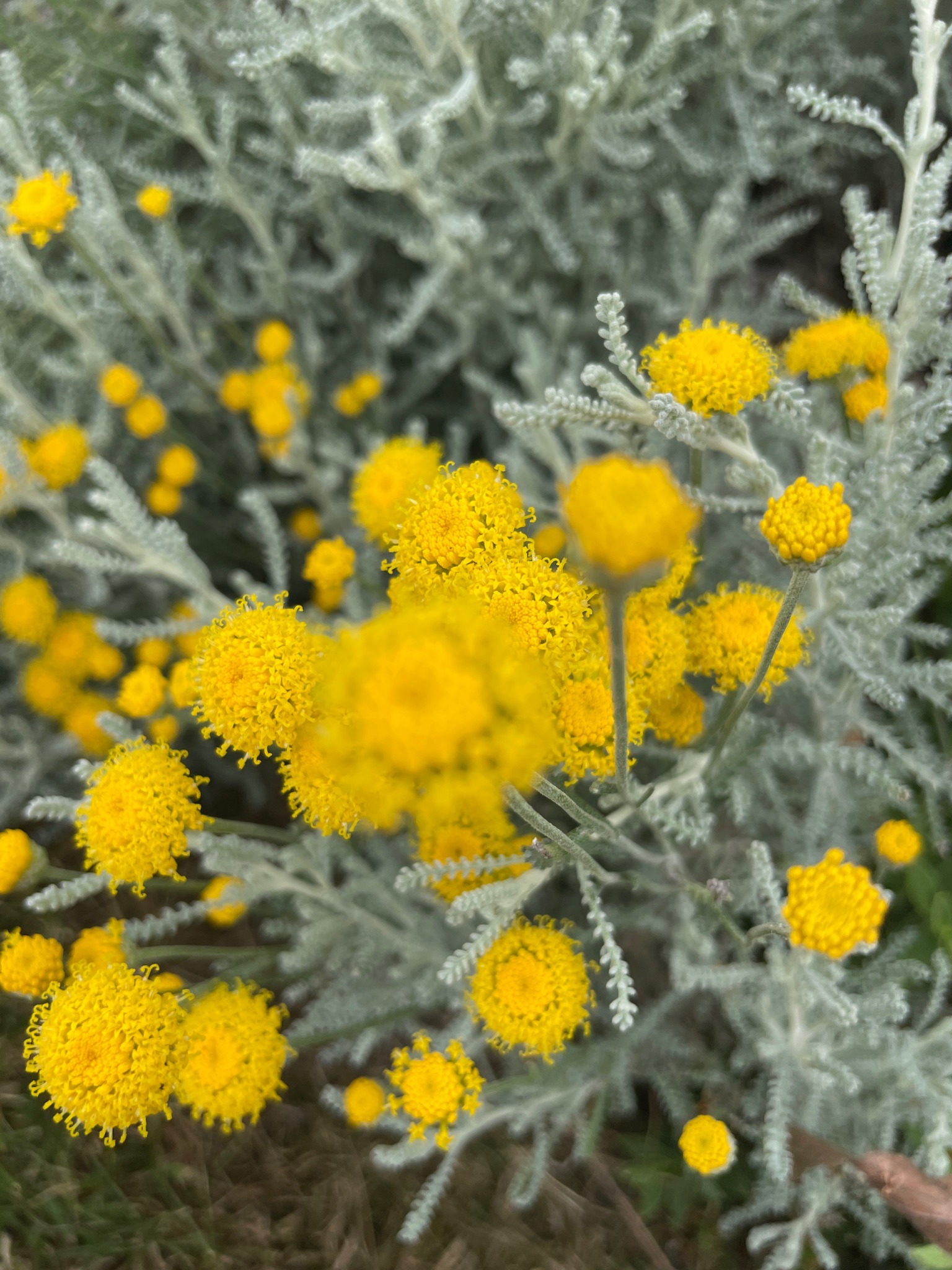
An evergreen, woody-based perennial or small shrub known for its dense, silvery-grey, finely divided aromatic foliage and bright yellow button-like flowers.
Care Instructions
Provide full sun and exceptionally well-draining soil. It is drought-tolerant once established and prefers lean soil with little to no fertilizer. Prune hard in spring to maintain shape and prevent woodiness.
Medicinal Value
We do not currently provide medicinal value for plant identifications.
Sunlight
Full sun, requiring at least 6 to 8 hours of direct light per day for best foliage color and flower production.
Watering
Low watering needs. It is very drought-tolerant; allow the soil to dry out completely between waterings. Overwatering leads to root rot.
Soil
Well-drained, sandy or gravelly soil; prefers alkaline to neutral pH (6.5 to 8.0) and thrives in poor soil conditions.
Hardiness Zone
USDA Hardiness Zones 6-9
Growth Habit
Evergreen mounding shrub that grows 1 to 2 feet tall and 2 to 3 feet wide. Slow to moderate growth rate.
Bloom Season
Mid to late summer, producing small (0.5 inch), bright yellow, button-like flower heads on long stalks without ray petals.
Toxicity
Generally considered non-toxic to humans and pets, though it may cause mild stomach upset if ingested in large quantities and skin irritation in sensitive individuals.
Propagation
Propagated by semi-ripe cuttings taken in summer or by division in spring.
Common Pests & Issues
Susceptible to root rot in heavy, wet soils. May suffer from fungal diseases like pythium in humid climates. Spittlebugs occasionally appear.
Similar Species
Artemisia species (Wormwood) have similar silver foliage but different flower structures. Tanacetum vulgare (Tansy) has similar yellow buttons but green, fern-like foliage.
Interesting Facts
Despite its common name, it is related to daisies, not lavender. Its fragrant foliage is used in Mediterranean 'knot gardens' because it tolerates heavy shearing.
Created At: 2026-06-29T12:56:01.835996