Naranjilla
Scientific Name: Solanum quitoense
Plant Family: Solanaceae (Nightshade family)
Native Region: Northwestern South America (Ecuador and Colombia)
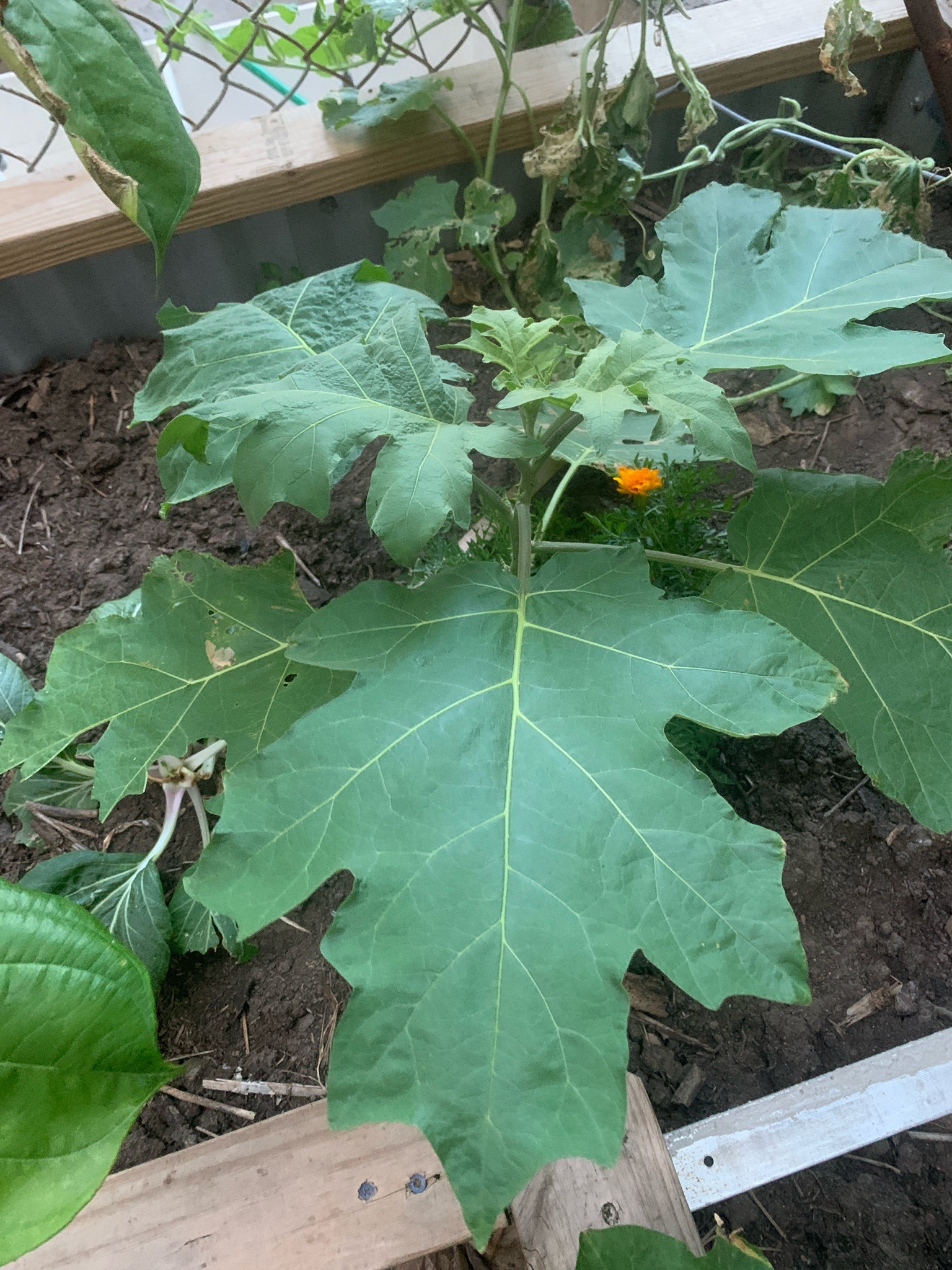
Brief Description
A perennial shrub with very large, velvety, heart-shaped leaves that often have purple veins and spines. The plant produces small orange fruits covered in short, bristly hairs.
Care Instructions
This plant thrives in humid, subtropical conditions. It requires bright but filtered light, consistent moisture without waterlogging, and fertile, well-draining soil rich in organic matter. Provide high humidity and protection from wind.
Medicinal Value
We do not currently provide medicinal value for plant identifications.
Sunlight
Partial shade to full sun. Specifically, it prefers filtered sunlight (4-6 hours) to protect its large leaves from scorching in intense heat.
Watering
Requires frequent watering to keep the soil consistently moist but never soggy. It has low drought tolerance and will wilt quickly if dry.
Soil
Rich, loamy, organic soil that is well-drained. Prefers slightly acidic pH between 5.5 and 6.5.
Hardiness Zone
9-11 (USDA). It is very sensitive to frost and cool temperatures below 50°F (10°C).
Growth Habit
Perennial shrub reaching 5 to 8 feet in height and width. It has a fast growth rate under ideal conditions.
Bloom Season
Year-round in tropical climates. Produces clusters of white, star-shaped flowers with yellow centers.
Toxicity
The ripe fruit is edible. However, like many Solanaceae, the leaves and stems contain alkaloids that are toxic if ingested by humans, cats, or dogs.
Propagation
Typically propagated by seeds in spring or by taking semi-hardwood cuttings. Seeds germinate best in warm, humid environments.
Common Pests & Issues
Susceptible to root-knot nematodes, aphids, and spider mites. In poor drainage, it is prone to root rot. Leaves are easily damaged by wind.
Similar Species
Solanum sessiliflorum (Cocona), which has similar fruits but different leaf textures, and various Datura species, which have similar large leaves but different trumpet-shaped flowers.
Interesting Facts
The name 'Naranjilla' means 'little orange' in Spanish, referring to the fruit's appearance, though internally the pulp is a striking translucent green.
Created At: 2026-05-22T13:21:40.964738