Eggplant (or Aubergine)
Scientific Name: Solanum melongena
Plant Family: Solanaceae (Nightshade family)
Native Region: Native to South and Southeast Asia; now cultivated globally in tropical and temperate climates.
Brief Description
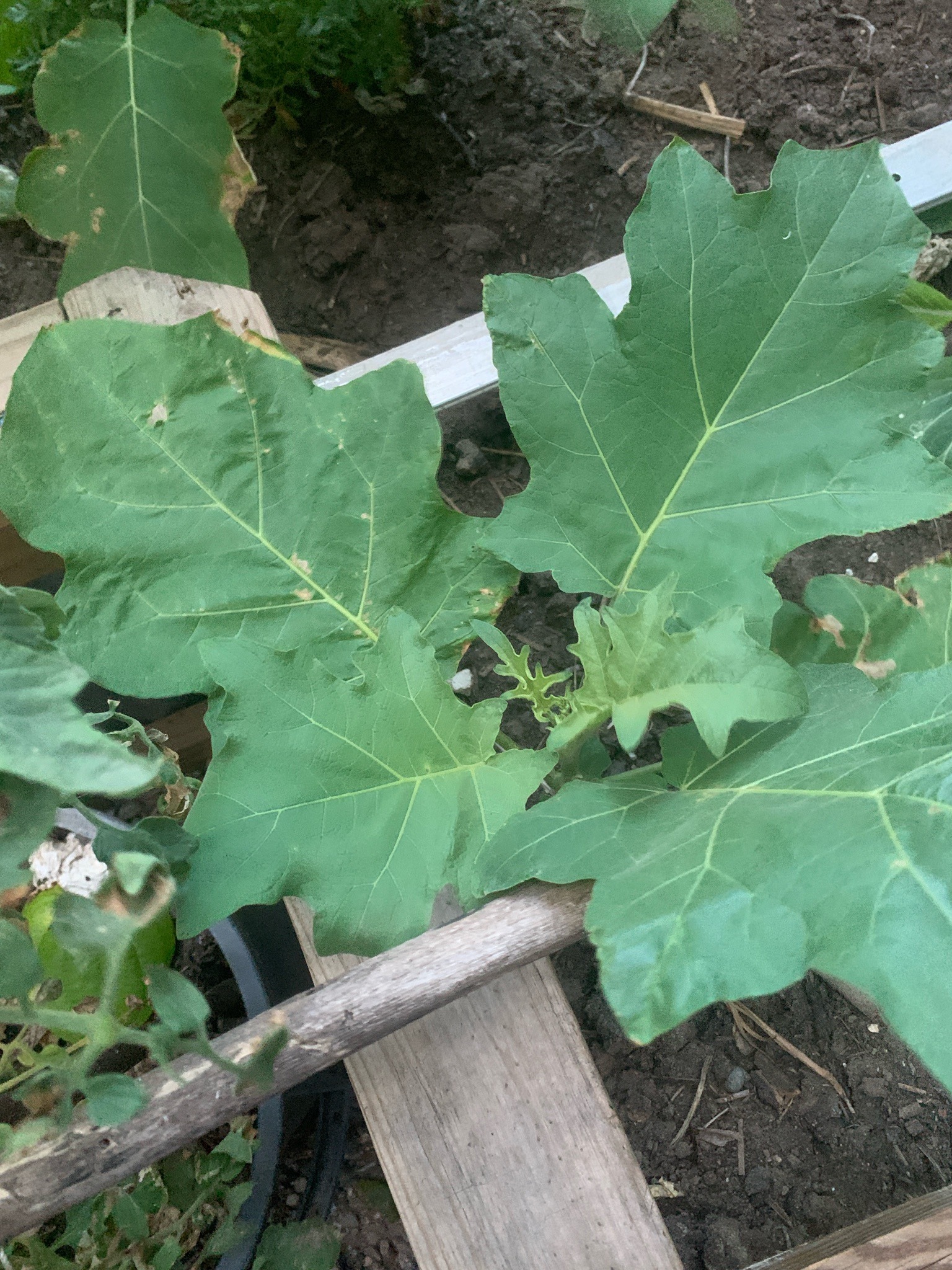
A bushy herbaceous perennial (often grown as an annual) with large, coarse, lobed green leaves that sometimes feature small prickles on the stems and undersides.
Care Instructions
Requires full sun, consistent moisture, and fertile, well-draining soil. Provide a balanced fertilizer every few weeks and consider staking as the heavy fruit develops.
Medicinal Value
We do not currently provide medicinal value for plant identifications.
Sunlight
Full sun; at least 6 to 8 hours of direct sunlight daily for fruit production.
Watering
Requires regular, deep watering to keep the soil consistently moist but not waterlogged. Mulching helps retain moisture.
Soil
Rich, loamy, well-drained soil with a slightly acidic to neutral pH (5.5 to 7.0).
Hardiness Zone
USDA zones 9 to 11 (grown as an annual in cooler zones). Very sensitive to frost.
Growth Habit
Upright, bushy growth habit. Typically reaches 2 to 4 feet in height and spread depending on the variety.
Bloom Season
Summer; produces star-shaped, purple to white flowers with prominent yellow anthers.
Toxicity
The leaves and stems contain solanine and are toxic to humans, dogs, and cats if ingested in significant quantities. The fruit is edible when ripe.
Propagation
Most commonly propagated by seed started indoors 6 to 8 weeks before the last frost.
Common Pests & Issues
Flea beetles, aphids, spider mites, and Colorado potato beetles. Susceptible to verticillium wilt and tobacco mosaic virus.
Similar Species
Potato (Solanum tuberosum) and various Nightshades (Solanum nigrum); distinguished by larger, lobed leaves and distinctive large, glossy fruits.
Interesting Facts
Although treated as a vegetable, the eggplant is botanically a berry. It belongs to the same family as tomatoes, potatoes, and tobacco.
Created At: 2026-05-22T13:27:52.377392