Eggplant (or Aubergine)
Scientific Name: Solanum melongena
Plant Family: Solanaceae (Nightshade family)
Native Region: Native to Southeast Asia and Southern Asia; now cultivated worldwide in temperate and tropical climates.
Brief Description
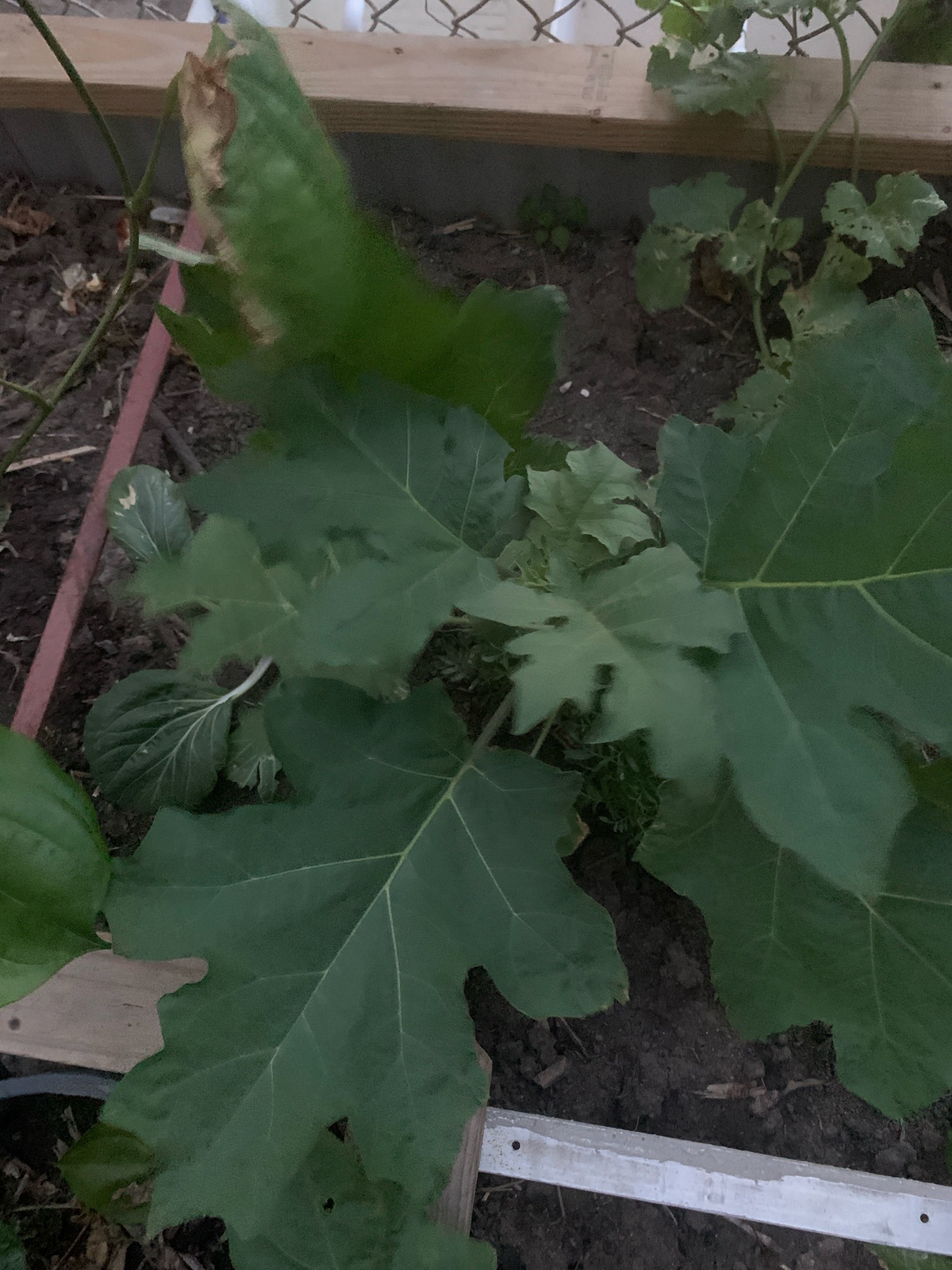
A bushy herbaceous perennial (often grown as an annual) with large, coarse, lobed green leaves. The leaves sometimes feature small prickles on the midribs.
Care Instructions
Requires full sun, warm temperatures, and fertile, well-draining soil. Provide consistent moisture and feed regularly with a balanced fertilizer during the growing season.
Medicinal Value
We do not currently provide medicinal value for plant identifications.
Sunlight
Full sun; requires 6 to 8 hours of direct sunlight per day for fruit production.
Watering
Consistent moisture is key. Water deeply 1-2 times per week, keeping the soil moist but not waterlogged. Mulching helps retain moisture.
Soil
Rich, loamy, well-draining soil with a pH between 5.5 and 7.2.
Hardiness Zone
USDA zones 9-12 (grown as an annual in cooler zones 4-8).
Growth Habit
Upright, bushy growth form. Typically reaches 2 to 4 feet in height and 2 to 3 feet in width.
Bloom Season
Summer; produces star-shaped, pale violet to purple flowers with yellow centers.
Toxicity
Leaves and stems contain solanine and are toxic if ingested by humans, dogs, or cats. The ripe fruit is edible and safe.
Propagation
Most commonly grown from seeds sown indoors 6-10 weeks before the last frost.
Common Pests & Issues
Flea beetles, aphids, spider mites, and Colorado potato beetles. Susceptible to verticillium wilt and tobacco mosaic virus.
Similar Species
Potato (Solanum tuberosum) and some wild nightshades; however, Eggplant is distinguished by its larger, more deeply lobed leaves and distinctive fruit.
Interesting Facts
Although treated as a vegetable in cooking, eggplant is botanically a berry. It was historically called 'Mad Apple' in Europe because it was wrongly believed to cause insanity.
Created At: 2026-05-22T23:44:03.302857