Sycamore Maple
Scientific Name: Acer pseudoplatanus
Plant Family: Sapindaceae
Native Region: Central, Eastern and Southern Europe, and Western Asia; now naturalized in many temperate regions including North America.
Brief Description
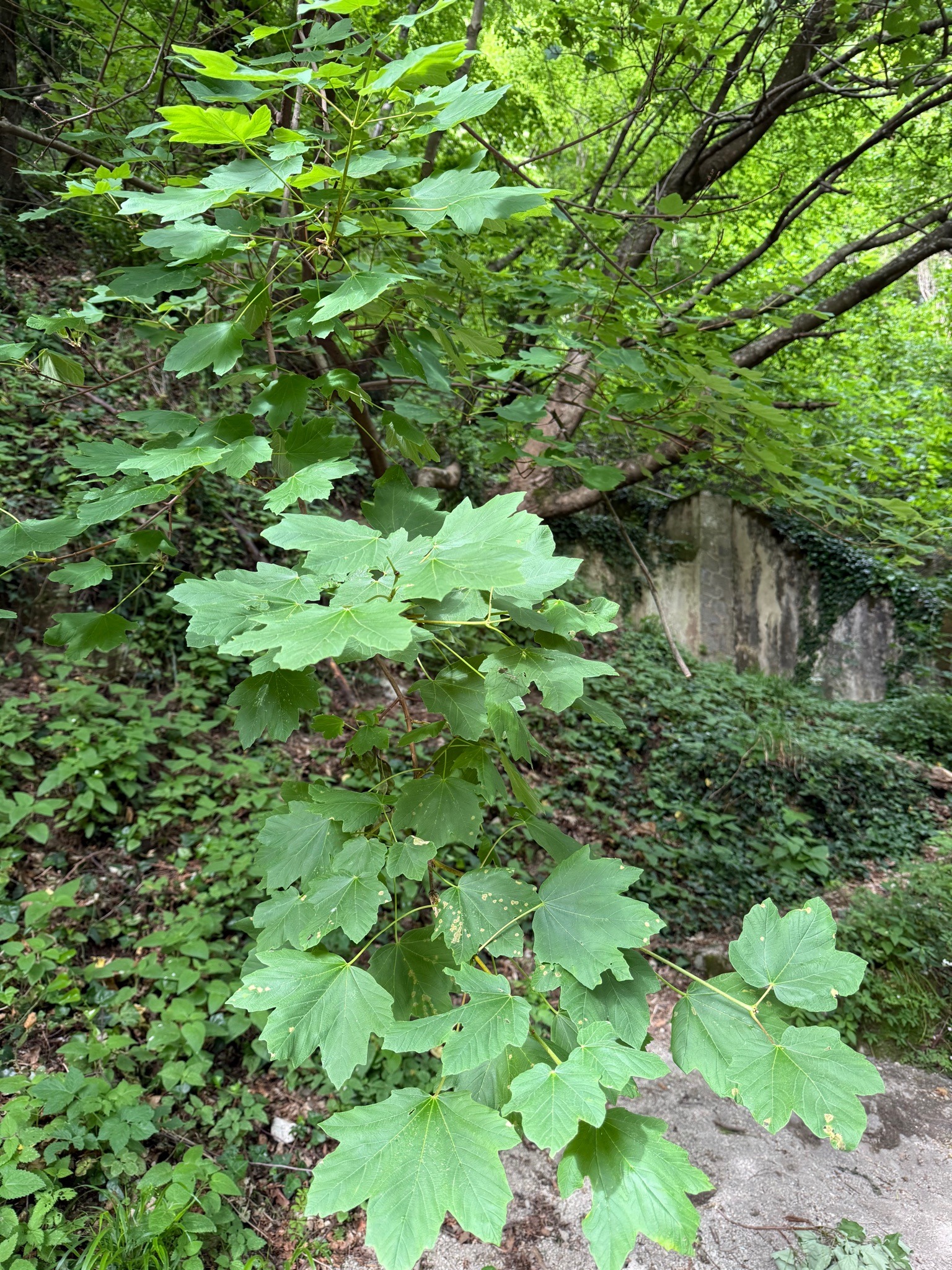
A large deciduous tree known for its broad, five-lobed leaves and distinctive peeling bark on older specimens. The leaves are dark green above and often have a lighter, slightly glaucous underside.
Care Instructions
This is a hardy, fast-growing tree that requires minimal maintenance once established. Plant in a location with plenty of room to grow. It prefers consistent moisture and full sun to partial shade.
Medicinal Value
We do not currently provide medicinal value for plant identifications.
Sunlight
Full sun to partial shade; ideally 6+ hours of sunlight per day for optimal growth.
Watering
Moderate watering needs. Young trees require regular watering to establish roots; mature trees are relatively drought-tolerant but prefer consistently moist, well-drained soil.
Soil
Adaptable to many soil types including clay, loam, and sand. Prefers a pH of 5.5 to 8.0 and requires good drainage.
Hardiness Zone
4 to 7
Growth Habit
Large deciduous perennial tree with a rounded, spreading crown. Can reach heights of 60-100 feet with a similar spread. Fast growth rate when young.
Bloom Season
Spring (April-May). Produces yellowish-green flowers in drooping clusters (panicles), followed by winged seeds called samaras.
Toxicity
Seeds and seedlings contain Hypoglycin A, which is highly toxic to horses if ingested, causing Atypical Myopathy. It is generally non-toxic to humans, dogs, and cats.
Propagation
Propagated primarily through seeds (stratification required) or by softwood cuttings in early summer.
Common Pests & Issues
Susceptible to Sooty Bark Disease (Cryptostroma corticale), aphids, and leaf spot fungus (Tar Spot). It is also considered invasive in some parts of North America and Australasia.
Similar Species
Norway Maple (Acer platanoides) which has milky sap in leaf petioles, and Sycamore (Platanus occidentalis) which has alternate leaves (maples are opposite).
Interesting Facts
The name 'pseudoplatanus' means 'false plane tree' because its leaves look like those of the Plane tree. It is famously salt-tolerant, making it a common choice for coastal plantings.
Created At: 2026-05-05T07:33:34.716067