Mountain Cornflower
Scientific Name: Centaurea montana
Plant Family: Asteraceae
Native Region: Mountainous regions of central and southern Europe; widely naturalized in North America and the British Isles.
Brief Description
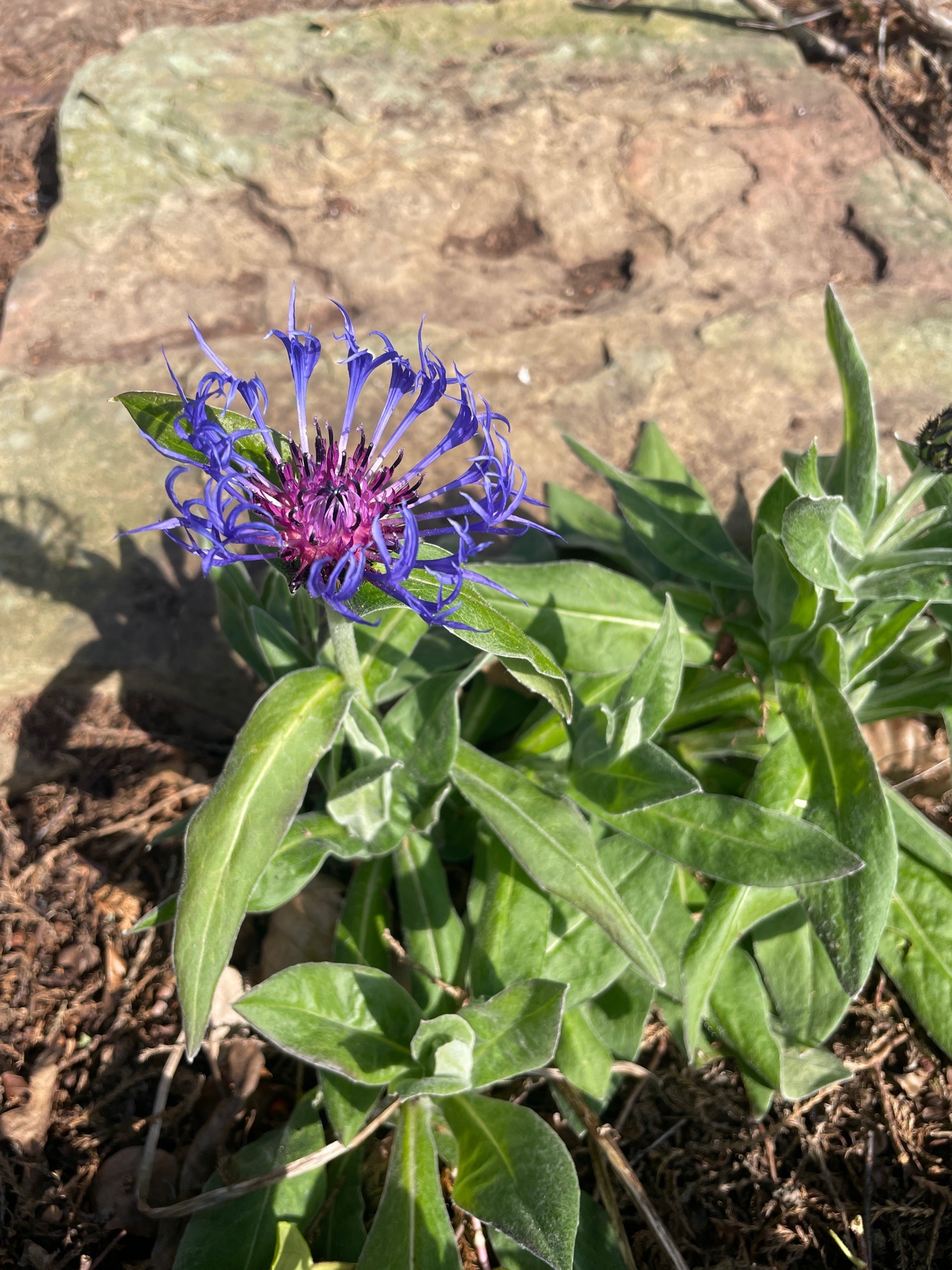
A hardy herbaceous perennial known for its striking thistle-like blue or violet flower heads with fringed petals. It features lance-shaped, grey-green foliage that is often slightly hairy or silvery.
Care Instructions
Low-maintenance. Plant in full sun to partial shade. Water regularly during the first growing season but allow to dry out once established. Do not over-fertilize, as rich soil can cause the plant to become floppy and invasive.
Medicinal Value
We do not currently provide medicinal value for plant identifications.
Sunlight
Full sun to partial shade; ideally 6+ hours of direct light for the best blooms.
Watering
Moderate. Water weekly or when the top inch of soil feels dry. It is relatively drought-tolerant once established but performs best with consistent moisture.
Soil
Well-drained soil of average fertility. Tolerates a range of pH from 6.0 to 7.5 (slightly acidic to slightly alkaline).
Hardiness Zone
USDA Zones 3-8; very cold-tolerant.
Growth Habit
Clump-forming perennial. Reaches a mature height of 1-2 feet (30-60 cm) and a spread of 1-1.5 feet. It has a fast growth rate and can spread via underground runners.
Bloom Season
Late spring to early summer (May to June). Flowers are 2 inches wide, deep blue to violet with a reddish-purple center.
Toxicity
Generally non-toxic to humans and pets, though it belongs to a family that can cause dermatitis in sensitive individuals. Always check specifically for individual pet sensitivities.
Propagation
Propagate by root division in spring or autumn, or by sowing seeds. It is known to self-seed readily in the garden.
Common Pests & Issues
Susceptible to powdery mildew, rust, and aphids. Good air circulation and avoiding overhead watering can prevent fungal issues.
Similar Species
Centaurea cyanus (Bachelor's Button) - Unlike the perennial C. montana, C. cyanus is an annual with narrower leaves and taller, thinner stems.
Interesting Facts
In the language of flowers, Centaurea represents delicacy and hope. It is widely attractive to pollinators, specifically bees and butterflies, due to its high nectar production.
Created At: 2026-04-25T08:28:44.474017