Cilantro (or Coriander)
Scientific Name: Coriandrum sativum
Plant Family: Apiaceae (Umbelliferae)
Native Region: Southern Europe, Northern Africa, and Southwestern Asia
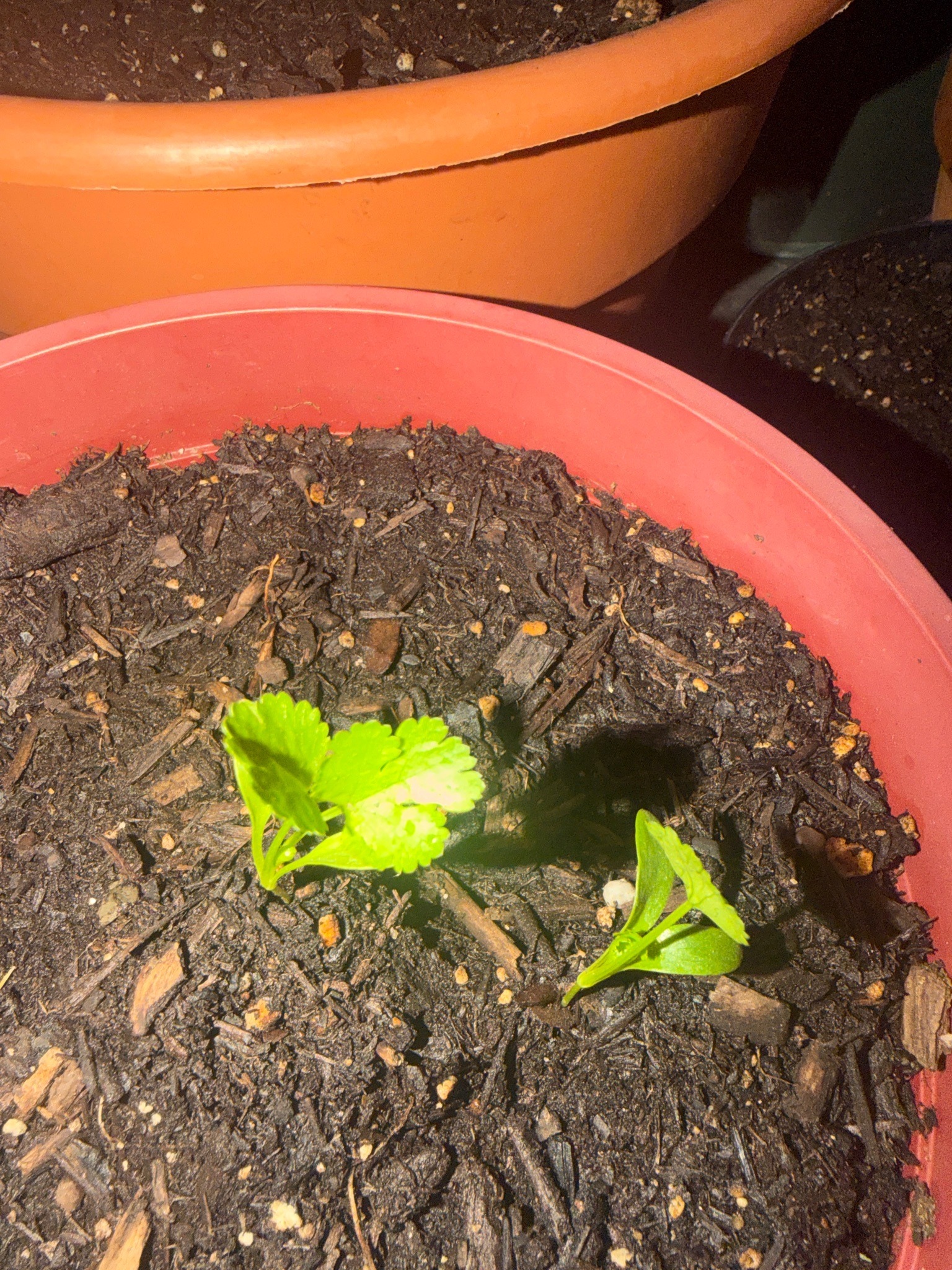
Brief Description
A small, fast-growing annual herb with bright green, deeply lobed lower leaves and feathery upper leaves. It is distinctively fragrant and grown for its leaves (cilantro) and seeds (coriander).
Care Instructions
Provide full sun to partial shade and keep the soil consistently moist but well-drained. It prefers cooler weather and may bolt (go to seed) quickly in high heat. Lightly fertilize every few weeks during the growing season.
Medicinal Value
We do not currently provide medicinal value for plant identifications.
Sunlight
Full sun to partial shade; 4-6 hours of sunlight per day is ideal, especially in hotter climates where afternoon shade prevents bolting.
Watering
Requires regular watering to keep the soil moist; do not allow the soil to dry out completely. Over-watering can lead to root rot. Signs of underwatering include wilting and premature bolting.
Soil
Well-draining, loamy soil rich in organic matter. Prefers a slightly acidic to neutral pH range of 6.2 to 6.8.
Hardiness Zone
2-11 (grown as an annual or cool-season biennial).
Growth Habit
Cool-season annual herb. Reaches 12-24 inches in height and 6-12 inches in spread. Fast growth rate.
Bloom Season
Late spring to early summer; produces small, white or pale pink flowers in delicate umbels.
Toxicity
Non-toxic to humans, dogs, and cats. It is generally safe for consumption.
Propagation
Easily propagated by seed (coriander seeds) sown directly into the soil. It does not transplant well due to its long taproot.
Common Pests & Issues
Aphids and leaf miners are common pests. Diseases include powdery mildew and leaf spot. Sensitive to 'bolting' triggered by heat or water stress.
Similar Species
Flat-leaf parsley (Petroselinum crispum) looks very similar but lacks cilantro's distinct citrusy scent and has more pointed leaf tips.
Interesting Facts
Approximately 10% of the population has a genetic trait that makes cilantro taste like soap due to sensitivity to aldehyde chemicals in the plant.
Created At: 2026-05-14T00:29:03.135522