Passion Fruit Vine (Purple/Yellow)
Scientific Name: Passiflora edulis
Plant Family: Passifloraceae
Native Region: Southern Brazil through Paraguay and northern Argentina; widely cultivated in tropical and subtropical regions globally.
Brief Description
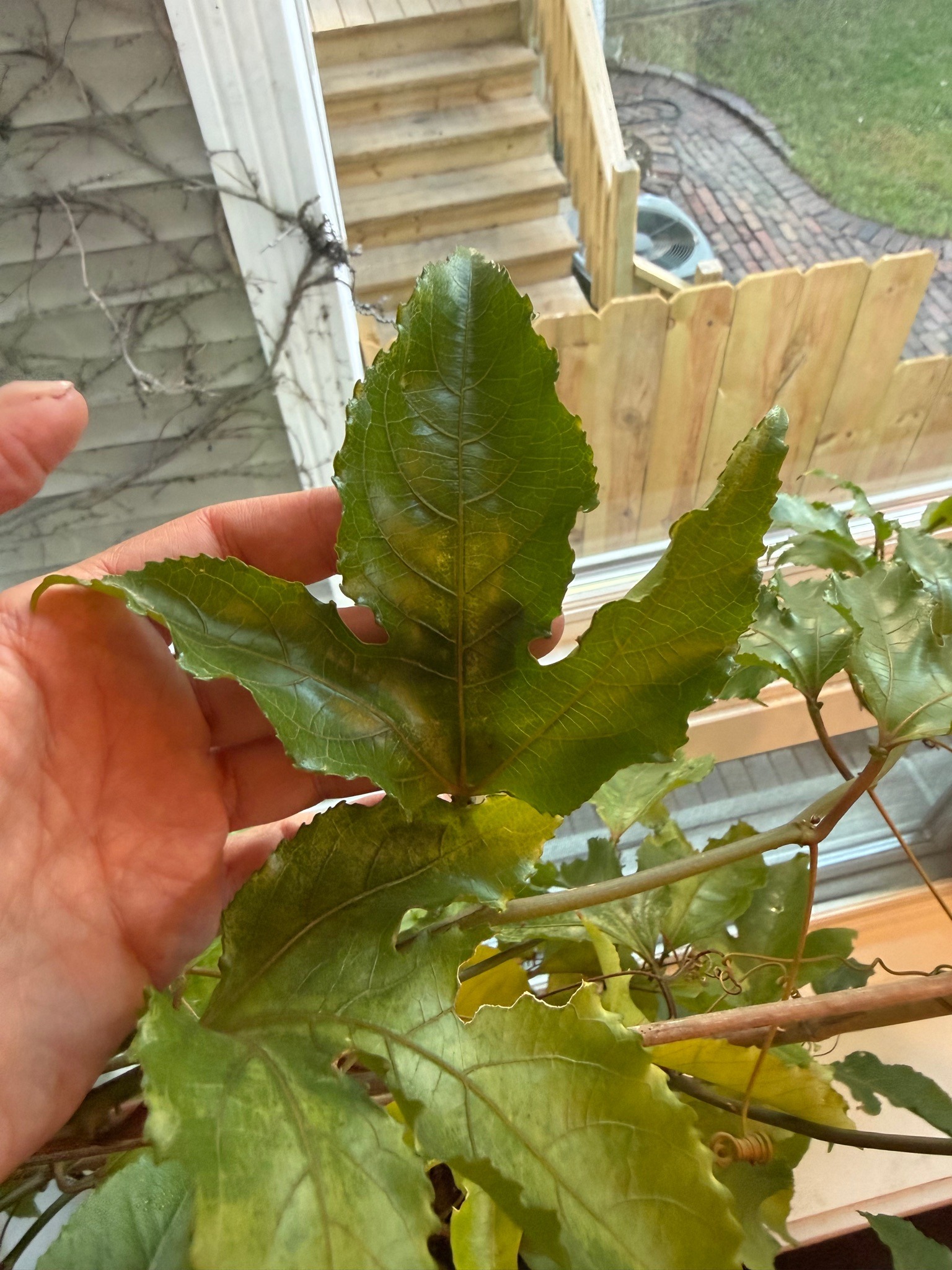
A vigorous evergreen climbing vine characterized by glossy green, typically three-lobed leaves with serrated edges and specialized tendrils for climbing.
Care Instructions
Provide a sturdy support for climbing. Place in a south-facing window with maximum light. Water consistently to keep soil moist but not waterlogged, and fertilize with a high-potassium feed during the growing season.
Medicinal Value
We do not currently provide medicinal value for plant identifications.
Sunlight
Full sun; requires 6 to 8 hours of direct light daily for fruit production.
Watering
High water needs; water roughly 2-3 times per week, ensuring the surface is moist. Avoid letting it sit in standing water.
Soil
Rich, well-draining sandy loam with a slightly acidic to neutral pH (6.5 to 7.5).
Hardiness Zone
USDA zones 9b-11; sensitive to frost and freezes.
Growth Habit
Perennial climbing vine; can grow 15-30 feet long with a rapid growth rate during warm months.
Bloom Season
Late spring through summer; produces complex white and purple fringed flowers followed by oval purple or yellow fruit.
Toxicity
The fruit is edible when ripe. However, leaves and unripe fruit contain cyanogenic glycosides and can be toxic to humans and pets if ingested in quantity.
Propagation
Easily propagated by semi-hardwood cuttings in summer or from fresh seeds, though seeds may take weeks to germinate.
Common Pests & Issues
Prone to spider mites and whiteflies indoors; root rot if overwatered. Fungal leaf spot can occur in high humidity without airflow.
Similar Species
Passiflora incarnata (Maypop), which is much hardier (Zone 5+) and has thinner, more deeply lobed leaves.
Interesting Facts
The unique flower structure was used by 16th-century Spanish missionaries to illustrate the story of the Passion of Christ, giving the plant its common name.
Created At: 2026-06-19T00:21:30.069327