Barnyard Grass
Scientific Name: Echinochloa crus-galli
Plant Family: Poaceae
Native Region: Eurasia; now naturalized worldwide across North America, Africa, and Australia
Brief Description
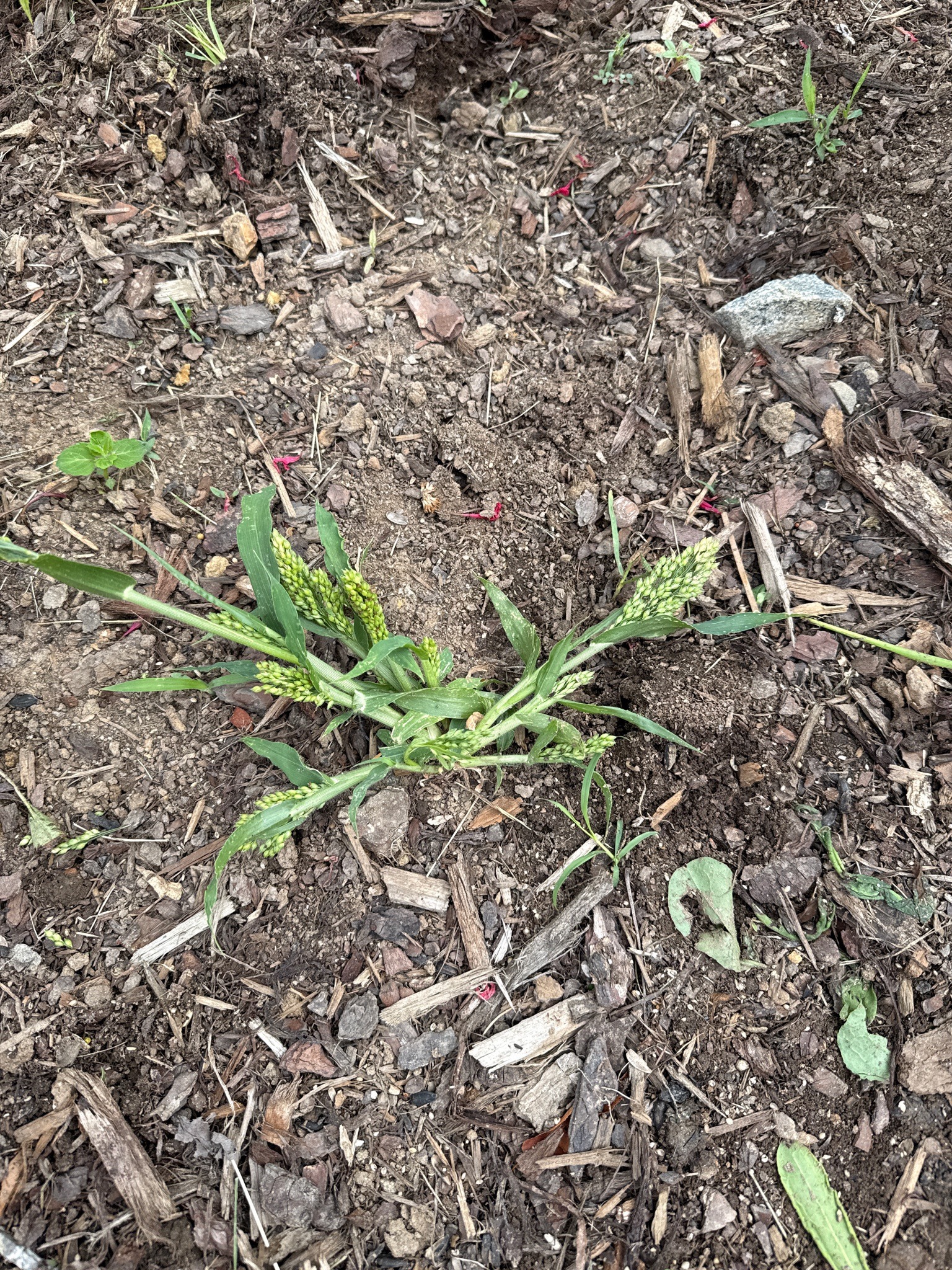
A coarse, summer annual grass that grows in tufts. It features flat, hairless leaf blades and distinctive terminal panicles with spikelets that are often awned or bristly.
Care Instructions
Typically considered a weed, it requires little to no care. It thrives in full sun and moist to wet soils. To control it, pull by hand before seeds drop or use a pre-emergent herbicide in spring.
Medicinal Value
We do not currently provide medicinal value for plant identifications.
Sunlight
Full sun, preferring 6 to 8 hours of direct light per day.
Watering
High; thrives in moist, poorly drained areas, ditches, and irrigated fields. It is moderately drought-tolerant once established but prefers wet conditions.
Soil
Adaptable to various soils but prefers fertile, heavy clay or loamy soils with a neutral to slightly acidic pH.
Hardiness Zone
Zones 3-11 (grown as a summer annual).
Growth Habit
Summer annual grass; can reach 1 to 5 feet in height with a sprawling or upright clump-forming habit.
Bloom Season
Mid-summer to early autumn (July to October); produces green to purplish, bristly seed heads.
Toxicity
Generally non-toxic, but can accumulate high levels of nitrates if grown in heavily fertilized soils, which can be harmful to livestock if consumed in large quantities.
Propagation
Propagates exclusively by seed; a single plant can produce thousands of seeds that remain viable for several years.
Common Pests & Issues
Highly invasive in agricultural crops (especially rice and corn). Susceptible to various smuts and leaf spots, though these rarely kill the plant.
Similar Species
Crabgrass (Digitaria spp.) has finger-like spikes, whereas Barnyard Grass has a more branched panicle. Junglerice (Echinochloa colona) is smaller and usually lacks the bristles (awns) on the seeds.
Interesting Facts
Barnyard grass is considered one of the world's worst weeds because it can significantly reduce crop yields by sequestering high amounts of nitrogen from the soil.
Created At: 2026-06-20T14:11:23.938157