Garden Croton
Scientific Name: Codiaeum variegatum
Plant Family: Euphorbiaceae
Native Region: Southeast Asia, Indonesia, Malaysia, Australia, and the western Pacific Islands.
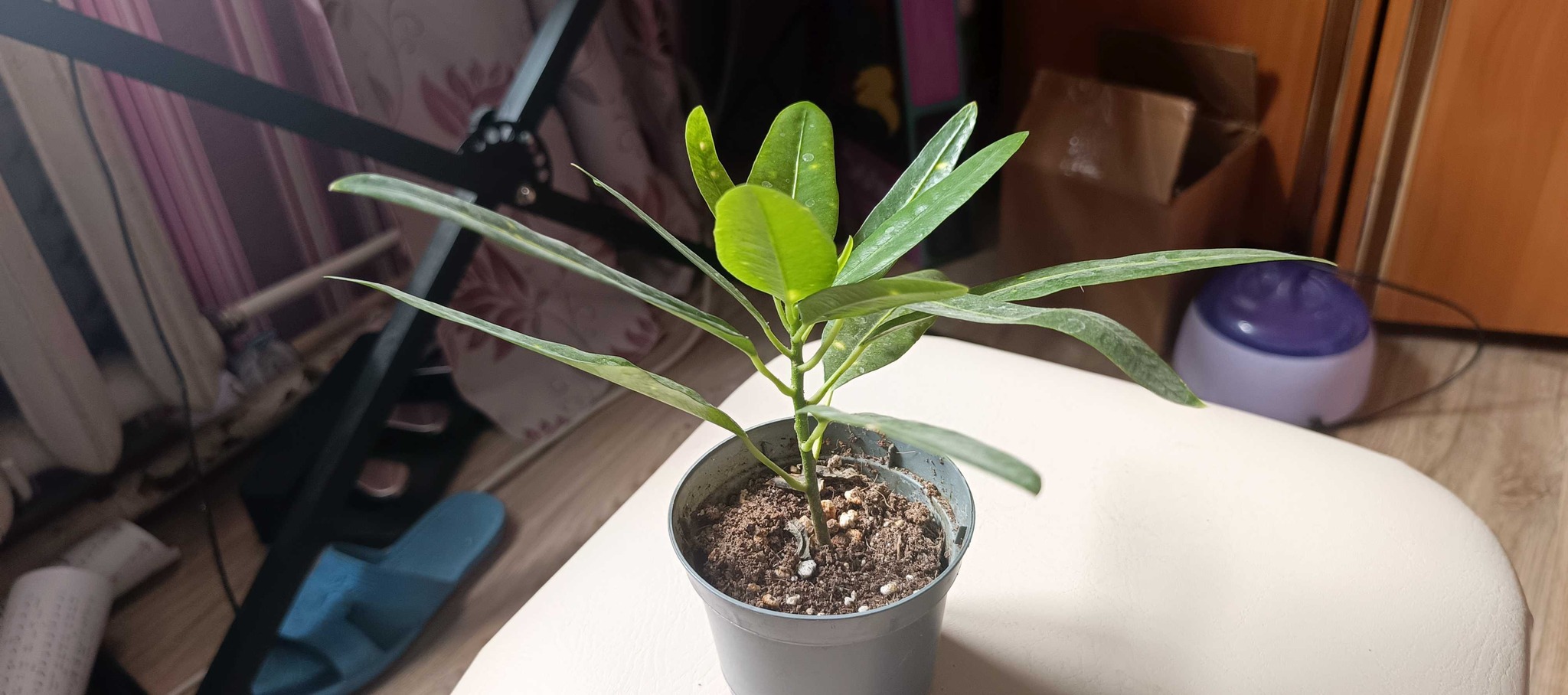
Brief Description
A tropical evergreen shrub known for its thick, leathery, and glossy foliage. This particular specimen is 'Banana' or a similar narrow-leaf variety, featuring bright green leaves with occasional yellow speckling.
Care Instructions
Requires bright light to maintain leaf color, high humidity, and consistent warmth. Keep soil moist but not soggy, and fertilize monthly during the growing season with a balanced liquid fertilizer.
Medicinal Value
We do not currently provide medicinal value for plant identifications.
Sunlight
Bright, indirect light or dappled sun. Needs at least 4-6 hours of high-intensity light to develop and keep its vibrant colors.
Watering
Water when the top inch of soil feels dry. It prefers consistently moist soil and high humidity; drooping leaves usually indicate underwatering.
Soil
Well-draining, humus-rich potting mix with a slightly acidic pH (5.5 to 6.5).
Hardiness Zone
USDA zones 10-12; very sensitive to cold and will drop leaves if temperatures fall below 50°F (10°C).
Growth Habit
Perennial evergreen shrub. In its native habitat, it can reach 10 feet, but as a houseplant, it usually stays between 2-4 feet tall.
Bloom Season
Rarely blooms indoors; outdoors, it produces small, insignificant cream-colored star-shaped flowers on long stalks during the summer.
Toxicity
Toxic to humans, cats, and dogs. The milky sap can cause skin irritation/dermatitis, and ingestion can cause vomiting, diarrhea, and mouth irritation.
Propagation
Propagated via stem-tip cuttings in spring or by air layering. Cuttings root best with bottom heat and high humidity.
Common Pests & Issues
Susceptible to spider mites, mealybugs, and scale. Leaf drop is a common reaction to sudden changes in temperature, light, or watering schedules.
Similar Species
Often confused with certain types of Dracaena or Aucuba japonica (Spotted Laurel), but Croton leaves are thicker and have more distinct, often colorful, vein patterns.
Interesting Facts
There are hundreds of cultivars of Croton with leaf shapes ranging from linear and lanceolate to lobed and twisted, displaying many colors of the rainbow.
Created At: 2026-05-26T12:34:53.274652