Mandevilla (Dipladenia types)
Scientific Name: Mandevilla sanderi
Plant Family: Apocynaceae
Native Region: Brazil
Brief Description
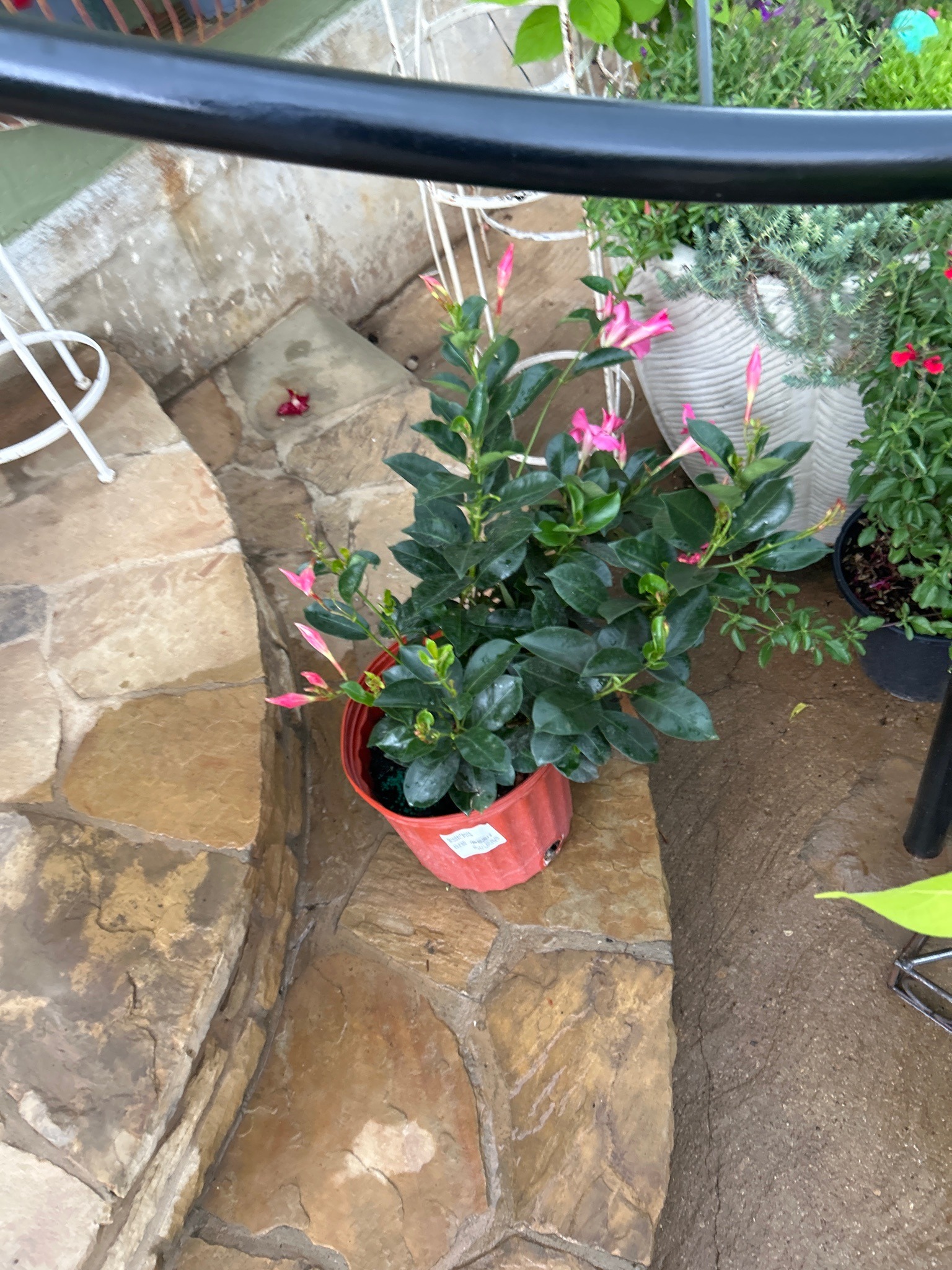
A bushy to vining tropical evergreen with glossy, dark green leathery leaves and funnel-shaped pink flowers. This specific variety is a Dipladenia-type, known for its shrubby growth habit.
Care Instructions
Provide bright, direct sunlight for most of the day. Water when the top inch of soil feels dry, and ensure the pot has excellent drainage. Feed with a high-phosphorus fertilizer every two weeks during the growing season to encourage blooming.
Medicinal Value
We do not currently provide medicinal value for plant identifications.
Sunlight
Full sun to partial shade; at least 6 to 8 hours of direct light daily is required for optimal flowering.
Watering
Keep soil consistently moist but not soggy. It is moderately drought-tolerant but will drop leaves if left dry for too long. Check roughly 2-3 times a week in hot weather.
Soil
Well-draining, peat-based potting mix with a slightly acidic pH (5.5 to 6.5).
Hardiness Zone
USDA zones 9-11; must be brought indoors if temperatures drop below 50°F (10°C).
Growth Habit
Perennial; shrubby or vining depending on variety. In containers, typically grows 1-3 feet tall and wide; if climbing, can reach up to 10 feet.
Bloom Season
Prolific bloomer from late spring through the first frost of autumn; flowers are trumpet-shaped, usually pink, red, or white.
Toxicity
Low toxicity; the milky sap can cause skin irritation or dermatitis. If ingested, it may cause mild stomach upset in humans, dogs, and cats.
Propagation
Easily propagated via 4-6 inch stem-tip cuttings in spring or early summer using a rooting hormone and high humidity.
Common Pests & Issues
Susceptible to spider mites, mealybugs, and whiteflies. Overwatering can lead to root rot; yellowing leaves often indicate poor drainage or overwatering.
Similar Species
Mandevilla laxifolia (more climbing habit, larger leaves) and Hibiscus (different leaf shape and flower center). Often confused with other Mandevilla species, but Dipladenia types stay bushier.
Interesting Facts
The genus is named after Henry Mandeville, a British diplomat and gardener. It is highly attractive to hummingbirds and bees due to its nectar-rich trumpet flowers.
Created At: 2026-05-19T17:59:54.302017