Common Mallow
Scientific Name: Malva neglecta
Plant Family: Malvaceae
Native Region: Native to Europe, North Africa, and Western Asia; now widely naturalized throughout North America.
Brief Description
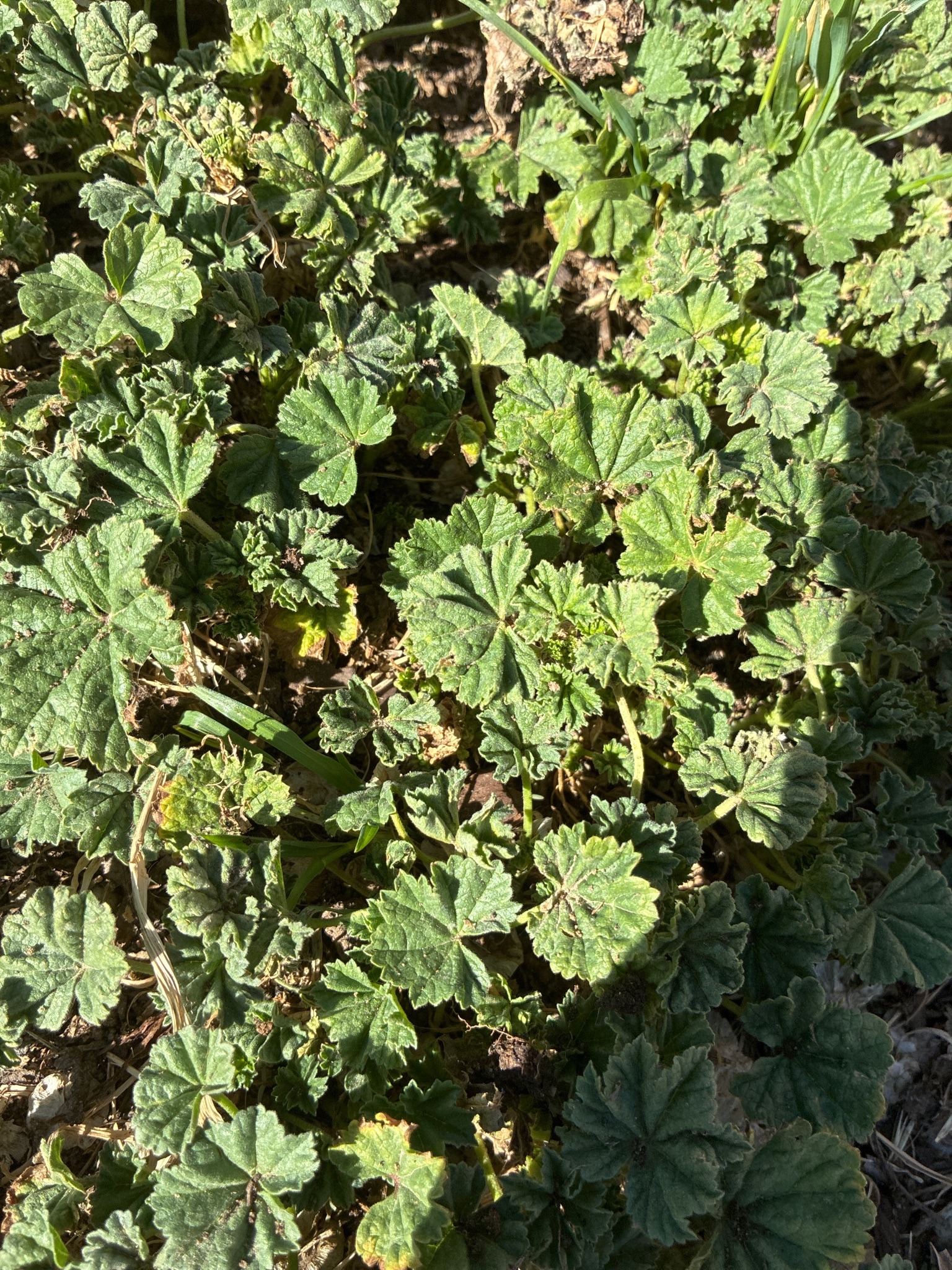
A low-growing, spreading herbaceous plant with round, heart-shaped leaves that have 5 to 7 shallow lobes and crinkled edges. The leaves are alternate and attached to long stems.
Care Instructions
This is often considered a weed and requires very little care. It thrives in disturbed soils and full sun. If cultivated, avoid over-fertilizing as it is highly adaptable to poor conditions.
Medicinal Value
We do not currently provide medicinal value for plant identifications.
Sunlight
Full sun to partial shade; prefers at least 6 hours of direct sunlight per day.
Watering
Drought-tolerant once established. Prefers regular moisture but can survive long dry periods by tapping into a deep taproot.
Soil
Adaptable to most soil types, including heavy clay, but prefers well-drained, alkaline to neutral pH (6.0-8.5) soil.
Hardiness Zone
4 to 8
Growth Habit
Annual or biennial; prostrate or decumbent growth forming mats. Can reach 4-20 inches in height and spread up to 3 feet.
Bloom Season
Early summer to mid-autumn; features small, five-petaled white to pale pink or lavender flowers.
Toxicity
Generally non-toxic to humans and pets. However, plants grown in nitrogen-rich soils may accumulate nitrates in the leaves, which can be harmful if consumed in massive quantities.
Propagation
Propagates primarily by seed. Seeds can remain viable in the soil for many years.
Common Pests & Issues
Susceptible to Hollyhock rust (Puccinia malvacearum) and occasionally attacked by aphids or spider mites.
Similar Species
Malva sylvestris (Common Mallow) which grows taller and has darker flowers, and Geranium species which have deeply divided leaves rather than shallowly lobed ones.
Interesting Facts
Commonly called 'Cheeseweed' because its round, flat seed pods resemble miniature wheels of cheese.
Created At: 2026-05-07T23:48:23.119750